
You already know the answer. You've known for weeks, maybe longer. You're here because knowing and accepting are different things, and the cards feel like a safer place to hear it than from your own gut.
So let's be direct.
The Cards That Mean Yes, He's Moved On
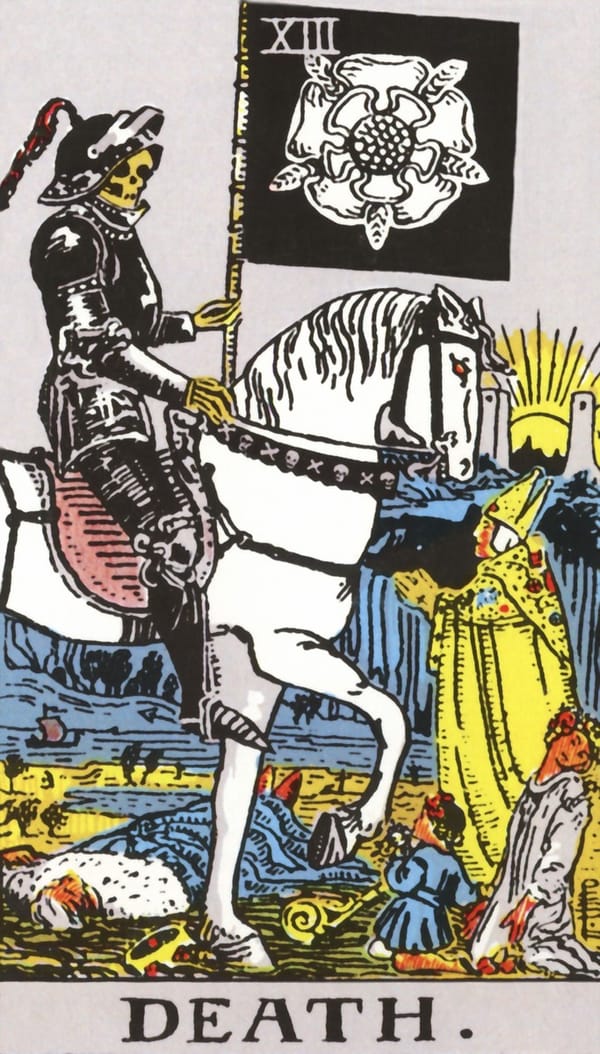
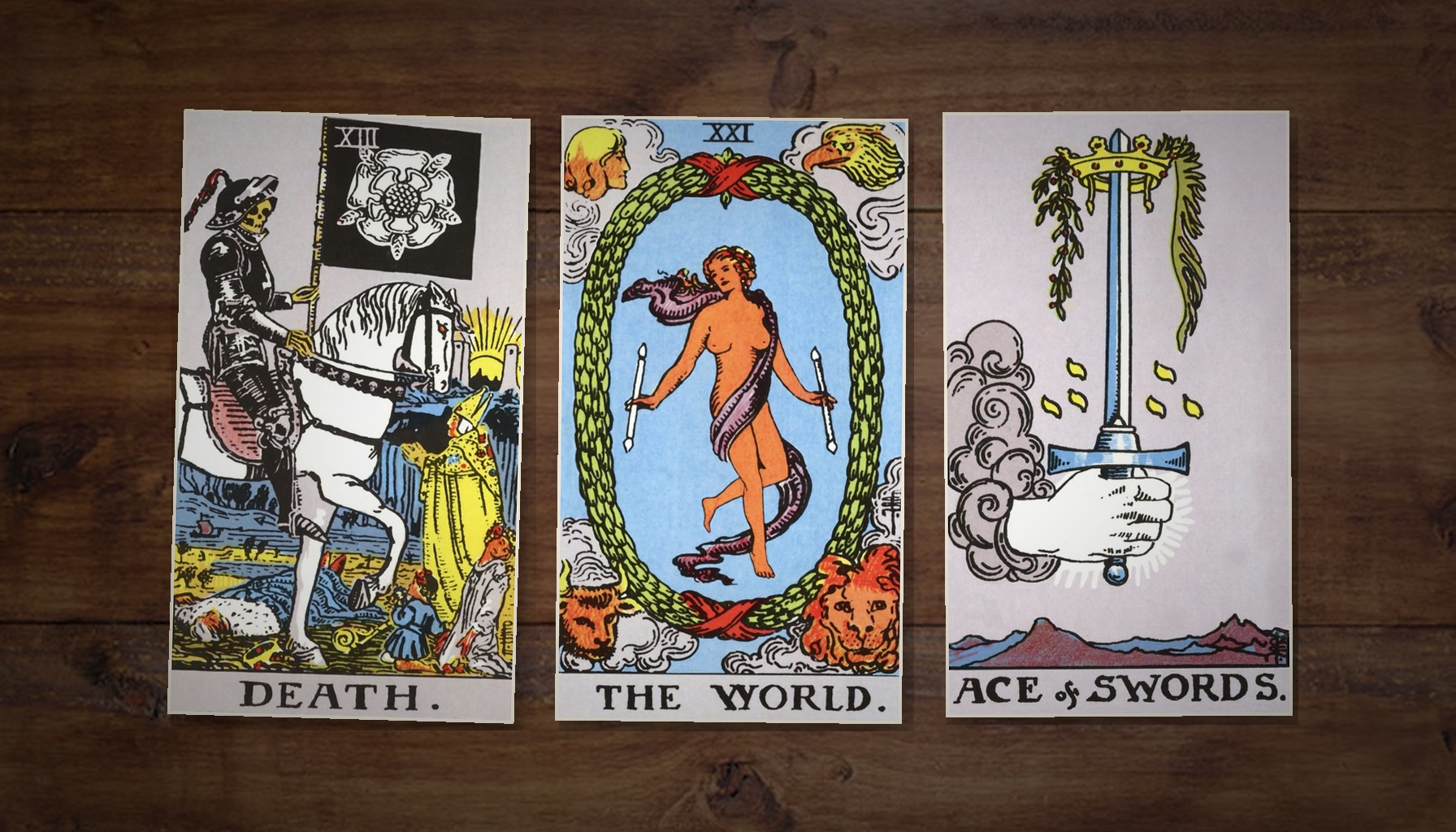
A skeleton in black armour rides a white horse. A king lies dead at the horse's feet. A bishop in gold robes stands before the rider with hands raised, trying to negotiate. A child holds up flowers. In the background, the sun rises between two grey towers.
Death in this position doesn't mean he stopped caring violently. Look at the sunrise — endings in this card come with a quiet dawn. He processed what happened between you, went through it, and came out the other side. The king at the horse's feet is the old version of him that was in the relationship. That version is gone. The bishop trying to bargain is the part of you that wants to talk him back into feeling something.
The World is even more definitive. A figure dances freely inside a completed wreath. Four creatures sit in the corners — all stable, all settled. The cycle is closed. He's not angry, not hurt, not avoiding you. He's simply done. The relationship exists in his past the way a finished book sits on a shelf. He might think of it fondly, but he's not rereading it.
The Ace of Swords — a single hand emerging from a cloud, gripping a straight sword crowned with a wreath — means a clean mental break. He made a decision. The sword cuts clearly. There's no ambiguity in this card, no lingering fog. He thought it through, chose to move forward, and did.
The Cards That Mean No, He's Not Over You
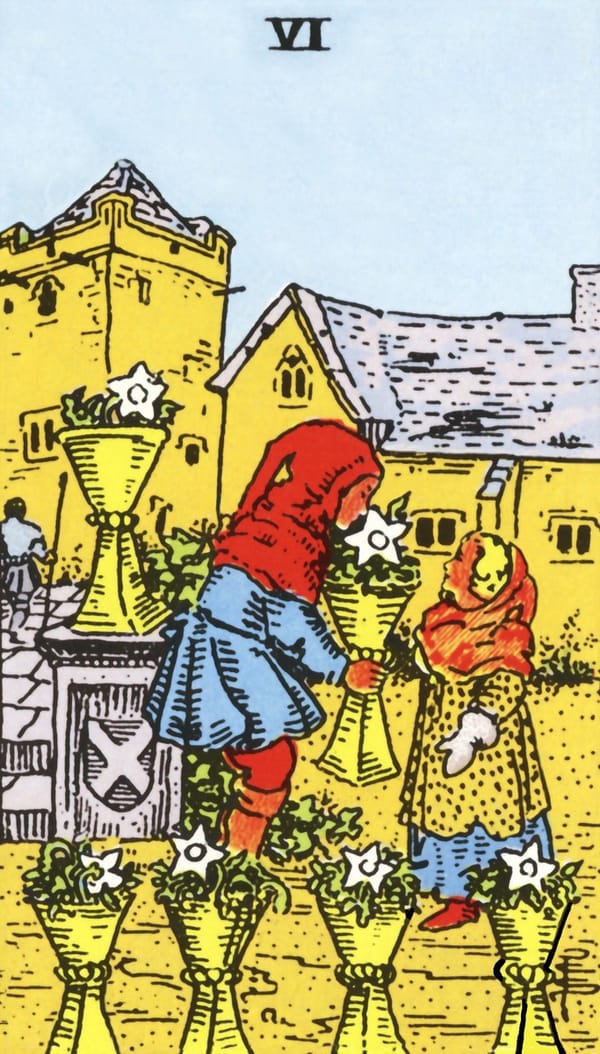
A taller figure bends down to hand a cup filled with white flowers to a smaller figure. Five more cups sit nearby, each holding flowers. A guard walks away in the background. A village setting, warm and nostalgic.
Six of Cups means he's thinking about you through a filter of nostalgia. Not the real you — the version of you that lives in his best memories. He replays your inside jokes, the way things felt in the beginning, the comfort of what you had. Whether he acts on it is another question. But he's not over it.
The Moon is murkier. A giant moon with a human face hangs in the sky. Two towers flank a winding path. A dog and wolf howl from either side, and a crayfish crawls from a pool. He's confused — about you, about what he wants, about whether what he felt was real. The Moon doesn't give clear answers because he doesn't have clear answers. He's not over you, but he can't tell you what he does feel because he doesn't know.
Five of Cups reversed is the most hopeful card for this question. Upright, a figure in a black cloak stares at three spilled cups, ignoring two cups still standing behind him. Reversed, the figure turns around. He's beginning to look at what's still there instead of what he lost. That turn doesn't happen if he's over you. You don't turn toward something you've stopped caring about.
The Ones That Are Harder to Read
The Hermit means he's pulled away, but pulling away and being over someone aren't the same thing. The Hermit stands alone on a mountaintop, holding a lantern. He's in withdrawal — processing, reflecting, needing space. Sometimes the Hermit reappears after the reflection with clarity about what he wants. Sometimes the isolation becomes permanent. This card doesn't give you an answer yet because he hasn't reached one.
The Four of Cups — a man sitting cross-legged under a tree, arms folded, ignoring a cup offered from a cloud — means he's shut down emotionally. Not moved on. Shut down. The feelings are still there; he's just refusing to look at them. Whether that changes depends on how long he sits under that tree.
The Eight of Cups is the one that hurts most because it's so deliberate. A figure walks away from eight stacked cups under a waning moon, heading toward mountains. He hasn't forgotten you. He's chosen to leave something that still has value because staying costs more than going. The cups are still standing. He just decided he couldn't keep drinking from them.
How to Read This Honestly
The temptation is to pull cards until you get the answer you want. If Death appears and you reshuffle asking the same question in slightly different words — "but does he EVER think about me?" — you've stopped reading tarot and started using it as a slot machine.
Research on uncertainty intolerance shows that not knowing is often more painful than a bad answer. Your brain would rather hear "yes, he's completely over you" than sit in ambiguity. The cards may not give you that clean answer, and that's information too.
Pull three cards: what he felt, what changed, where it stands now. Read them in order. Don't skip to the third card hoping it contradicts the first two.
What If the Cards Confirm It
If the reading says he's moved on, here's what that means practically: his emotional arc with you has resolved. That says nothing about your worth, your future, or whether you'll find something better. It says his chapter closed.
You might need your own Death card moment — the transformation that comes from accepting an ending instead of fighting it. The sunrise in Death's background isn't decorative. Something does come after this.
But you have to let the king fall first.