
Look at Who's in the Path
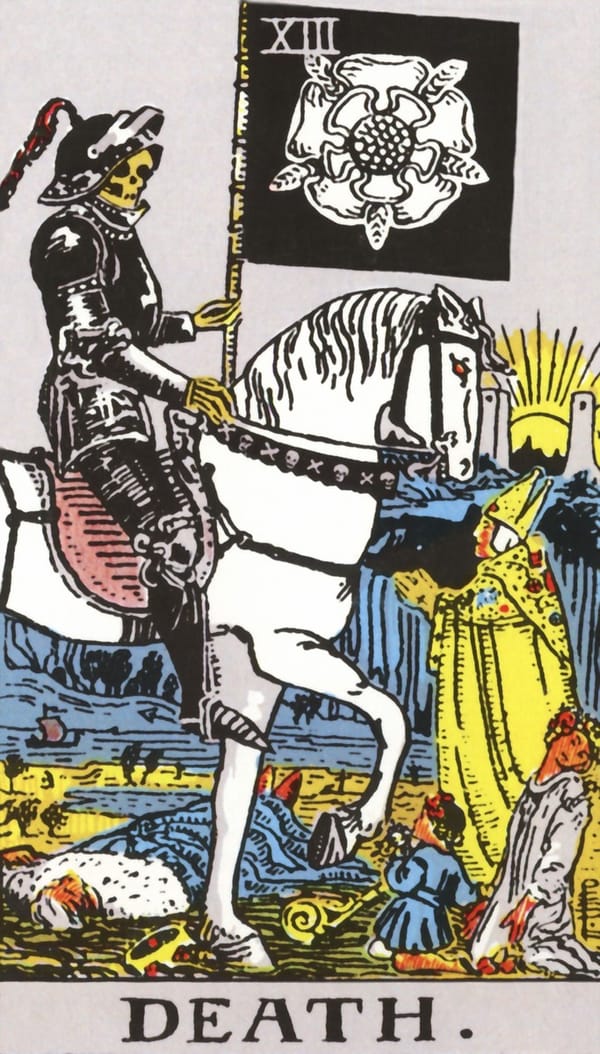
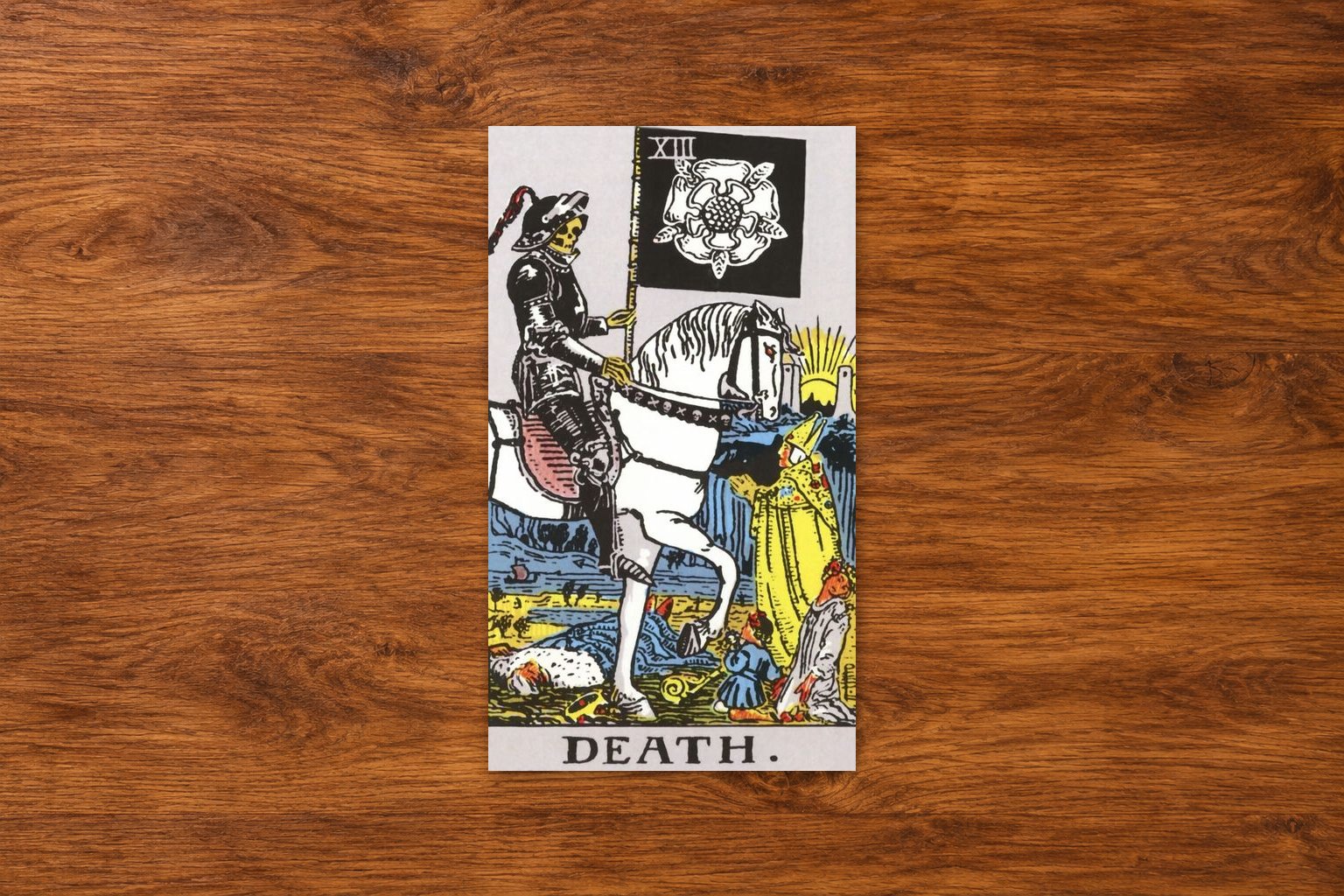
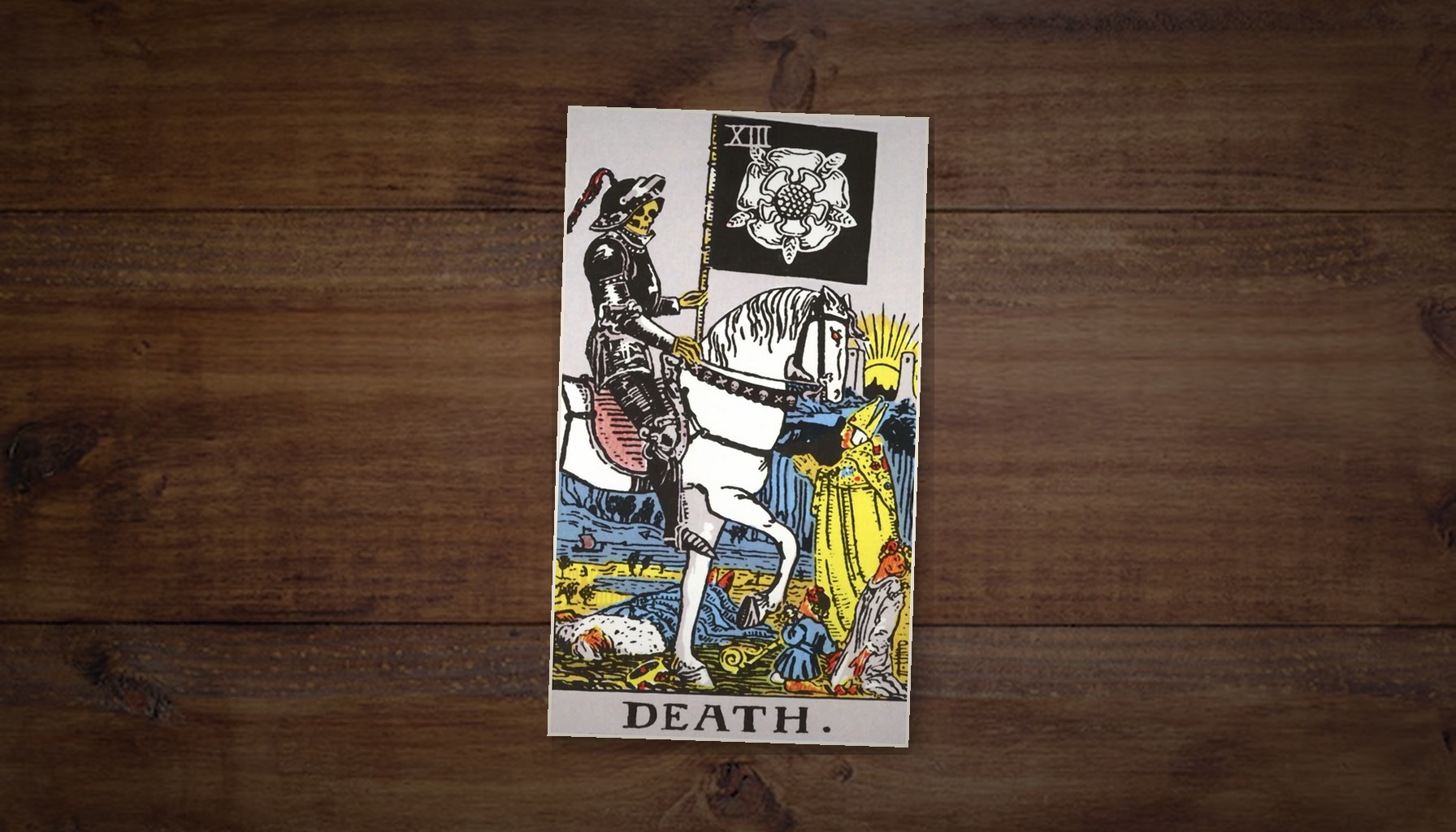
A skeleton in black armor rides a white horse. He carries a black flag emblazoned with a white five-petaled rose — the symbol of transformation, of beauty persisting through destruction. He's not charging. The horse walks steadily, inevitably, the way a tide comes in.
Look at the figures in his path. A king lies fallen on the ground, his crown tumbled off — power means nothing here. A bishop in gold vestments stands facing the rider with raised hands, praying, negotiating, trying to make a deal with something that doesn't bargain. A woman turns away, unable to look. And a child — this is the detail that changes everything — a small child holds out flowers to the rider, unafraid. The child doesn't know to be scared. The child just sees what's coming and offers something beautiful.
Behind all of this, a river flows toward two towers and a rising sun. Whatever the rider brings, there's morning on the other side of it.
This card also has a powerful dynamic when paired — see Death and The Tower.
Waite's Pictorial Key to the Tarot from 1910 offers the original textual description, though Pamela Colman Smith's artwork carries layers of meaning that his words only begin to capture.
The Person After Whom Everything Changed
The Death person isn't the one who burns your life down. They're the one whose arrival makes the fire inevitable. They walk into your existence and suddenly the things you've been tolerating become intolerable. The job you've been enduring for the paycheck, the relationship you've been maintaining out of habit, the self-image you've been protecting past its expiration date — the Death person's presence makes the cracks visible.
They didn't do anything. They just showed up, and by showing up, they became the contrast that revealed what was already dying.
Maybe it was a therapist who asked one question that unraveled ten years of rationalizing. Maybe it was a new friend who modeled a way of living that made your current life look like the compromise it was. Maybe it was a lover who made you realize you'd been settling, not because they were better than your current partner, but because being around them made you feel alive in a way you'd forgotten was possible.
What They're Like to Be Around
The Death person has an intensity that's hard to describe without sounding dramatic. They're not necessarily loud or forceful. They might be quiet. But they have a quality of presence that makes superficial conversation feel impossible. Small talk dies in the air around them. If you're going to be in their space, you're going to be real.
They ask direct questions. "Are you happy?" "Why are you still doing that?" "What would happen if you stopped?" These aren't rhetorical. They actually want to know. And the experience of being asked these things by someone who is genuinely listening is enough to destabilize the stories you've been telling yourself.
They're not afraid of endings. Where most people cling to things that are dying — relationships, identities, habits — the Death person recognizes when something is over and says so. This makes them seem harsh to people who aren't ready to hear it. It makes them seem like a lifeline to people who are.
What psychologists call personal transformation is what the Death person catalyses in everyone they meet.
Dating the Death Person
Relationships with a Death person are transformative, which sounds romantic until you realize transformation hurts. They won't let you be a lesser version of yourself. Not through criticism — through expectation. They see who you could be, and the gap between that and who you're currently being is something they're not willing to ignore.
They push you toward growth by existing. Their own commitment to authenticity makes your compromises visible. Dating them means confronting every place where you've been settling, performing, or hiding. This is exhilarating when you're ready for it and devastating when you're not.
They're loyal but not sentimental. If the relationship runs its course, they'll name that clearly rather than letting it decay. They'd rather have a clean ending than a slow death, which is ironic for a card called Death but perfectly consistent with the card's actual meaning.
At Work
The Death person at work is the one who gets hired to clean house, restructure the department, or lead the project that everyone knows will require killing some sacred cows. They're not afraid to discontinue the product line that isn't working, end the partnership that's dragging the company down, or fire the person who's been coasting for three years.
They're excellent in turnaround situations, change management, emergency medicine, hospice care — any role where the ability to face endings is an asset rather than a liability. They do what needs to be done with a kind of compassionate efficiency that doesn't waste energy on sentiment.
They struggle in maintenance roles. Keeping the status quo running smoothly isn't their gift. They need something to transform. When nothing needs to change, they get restless, and their restlessness can make them start seeing things that need to die when they don't.
The Rising Sun Behind the Rider
The most important part of this card isn't the skeleton or the fallen king or the praying bishop. It's the sunrise in the background, between the two towers, past the river. The Death person doesn't bring destruction for its own sake. They bring the kind of ending that precedes a beginning.
The child with the flowers understands this instinctively. The child doesn't resist. The child offers beauty to the process of change, which is the healthiest response to the Death person: meet them with openness instead of fear.
If you have a Death person in your life, pay attention to what falls away when they're around. It probably needed to go. And if you love one, know that loving them means being willing to let the old versions of yourself die so new ones can emerge. The sun is rising on the other side. But you have to cross the river first.
Keep Reading
For how this card reads as someone's emotional state, see Death as feelings.
The full Death page covers upright and reversed meanings across love, career, money, and practical advice.
When trust is the real question, tarot when someone is lying covers the cards that speak to deception.
When the reading is really about whether you can trust someone, tarot for trust issues goes deeper.