Trust doesn't break the way people think. It doesn't shatter in one moment — it cracks, and then you notice all the places it was already thin. By the time you're pulling tarot cards about it, the crack has been there for a while. You're just finally looking at it.
This isn't about whether someone lied to you once. If it were that simple, you wouldn't need cards. This is about the place where your nervous system rewired itself to scan for threats in people who say they love you.
The Card That Shows What Broke
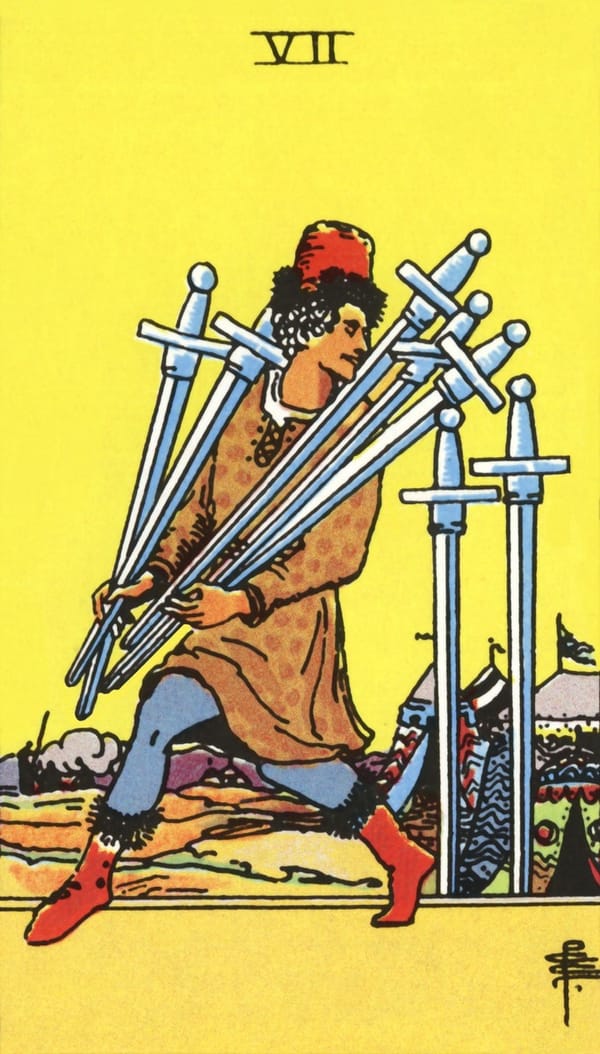
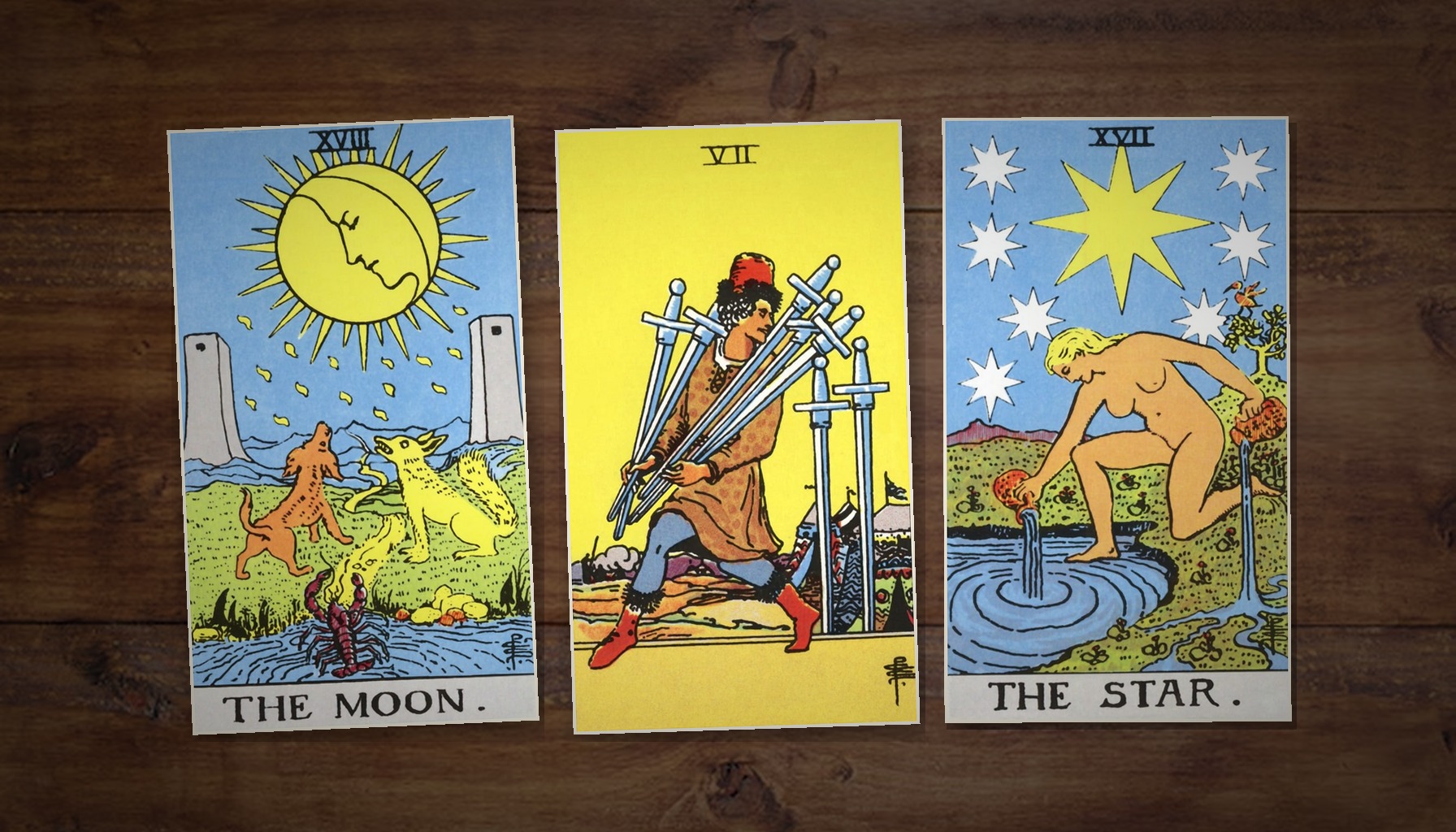
A figure in a yellow tunic and red cap tiptoes away from a military encampment. He carries five swords awkwardly in his arms, blades pointing in different directions. Two more swords remain stuck in the ground behind him. He glances back over his shoulder — not at the swords he left, but at the tents he's leaving. People are in those tents. They don't know he's taking something.
The Seven of Swords in a trust reading is confirmation: something was taken from you without your knowledge or consent. Maybe information. Maybe fidelity. Maybe the truth about who this person really was. The backward glance tells you the person was aware — this wasn't an innocent mistake.
But look at the two swords left behind. He couldn't carry everything. Whatever was taken, something remains. In trust readings, this often means the betrayal wasn't total. There's still something real between you, even if the dishonesty makes it hard to see right now. The question is whether what's left is enough to rebuild on.
For how this energy connects to deception specifically, see tarot when someone is lying.
The Moon — When You Can't See Straight
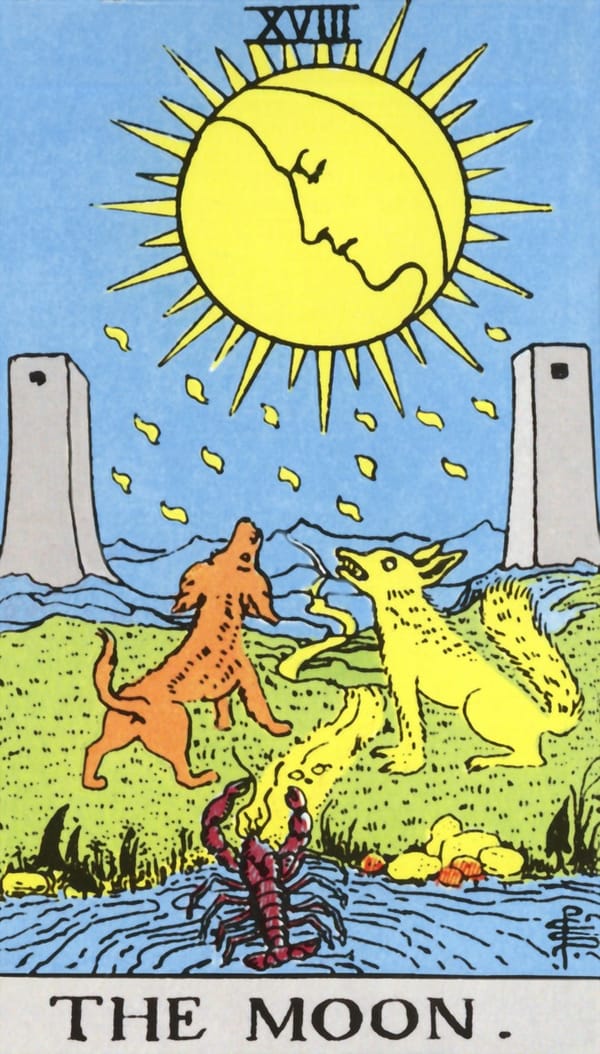
The Moon appears in trust readings more than almost any other card. That stern-faced moon hanging between the towers, the dog and wolf howling, the crayfish crawling out of the dark water — everything in this image is about uncertainty and the anxiety it produces.
When trust is broken, your perception shifts. Ordinary behavior becomes suspicious. A late reply that meant nothing last month now triggers a spiral. The Moon confirms what you already feel: you cannot see this situation clearly right now. The fog between those towers is real, and no amount of analyzing will penetrate it.
This doesn't mean your suspicions are wrong. It means you can't tell the difference between reasonable concern and hypervigilance. The Moon doesn't resolve — it holds you in the uncertainty until more information arrives or your nervous system settles enough to process what you already know.
Ace of Swords — Cutting Through
When the Ace of Swords appears in a trust reading, clarity is coming. A single sword pierces through clouds, crowned with a wreath and laurel. The blade points straight up. No ambiguity, no softness. This is the card of truth cutting through the fog The Moon created.
In practical terms, the Ace of Swords means you're about to see the situation as it actually is. This might mean discovering the full truth about what happened. It might mean realizing your fear was worse than reality. Either way, the mental fog lifts and you can make a decision based on what's actually there instead of what you're afraid might be there.
The sword cuts both ways. Clarity doesn't always confirm your fears — sometimes it reveals that the person is trustworthy and your broken trust pattern is projecting the last betrayal onto the current relationship.
A Spread for "Can I Trust Them Again"
Pull five cards in a line:
Card 1: What actually happened. Not the story you've been telling yourself — the energetic truth of the breach.
Card 2: Where the trust was already thin before this. Trust rarely breaks in one clean snap. This card shows the existing fracture.
Card 3: What they've actually done about it since. Not what they've said. Not their apologies. Their behavior. Have they changed, or have they just been sorry?
Card 4: What rebuilding would require from you. Trust isn't rebuilt by the person who broke it. They do the repair work. You do the reopening. This card shows what that would cost you.
Card 5: What happens if you choose not to trust again. Not as punishment — as honest assessment. Sometimes the answer is that walking away protects your peace more than staying and trying to rebuild protects the relationship.
The Star — Healing Is Possible But Not Fast
The Star after trust betrayal cards is the most hopeful sign in a reading. The naked figure kneeling at the water, pouring from two vessels under a sky full of stars — this is vulnerability after devastation. The Star literally follows The Tower in the Major Arcana. Destruction came first. Then this.
But The Star is alone in the card. The healing happens without the other person present. You have to tend to your own wounds before you can accurately assess whether someone else is safe to trust again. Rebuilding trust while still bleeding from the break usually means accepting less than you deserve because you're too tired to hold the standard.
Cards That Show Real Change vs. Empty Apology
Death in the "what they've done about it" position means genuine transformation. The old pattern has ended. This person isn't just promising to be different — something in them has actually died and been replaced.
Five of Cups in the same position means they're sorry but haven't changed. They're staring at what they spilled — genuinely grieving the damage — but look at the figure's posture. He's facing the three spilled cups, back turned to the two that remain standing. Remorse without action isn't repair. It's self-pity wearing repair's clothes.
Judgement signals a wake-up call that actually landed. The trumpet sounded and they heard it. This is someone who had a genuine reckoning with what they did, not just a fear of consequences.
When the Issue Is You, Not Them
Sometimes the trust reading reveals that the current person hasn't done anything wrong. The cards point backward — Nine of Swords, The Moon, reversed Queen of Cups — showing that your trust system broke in a previous relationship and you're running the old damage through a new person.
This isn't a comfortable reading. But it's one of the most useful things tarot can do: show you that the threat you're scanning for doesn't live in the person sitting across from you. It lives in the memory of the person who came before.
That doesn't mean your vigilance is irrational. A nervous system that learned to scan for danger is doing exactly what it was trained to do. But the training happened somewhere else, and applying it here without checking is how people push away the relationships that could actually heal them.
If your trust readings keep showing internal cards rather than betrayal cards, consider talking to someone about it — not a tarot reader, a therapist who works with attachment and trust repair. The cards can show you the pattern. A professional can help you change it.