
I'm not going to tell you to calm down.
You pulled Death and The Tower in the same reading. Your hands might literally be shaking. Every tarot site you've checked in the last ten minutes has probably used words like "devastating" and "upheaval" and "don't worry, it's transformation" in a tone that doesn't actually make you stop worrying.
So let me be straight with you: this combination is intense. It does mean something significant is ending or has already ended. But it doesn't mean what your panic-brain is telling you it means.
What You're Looking At
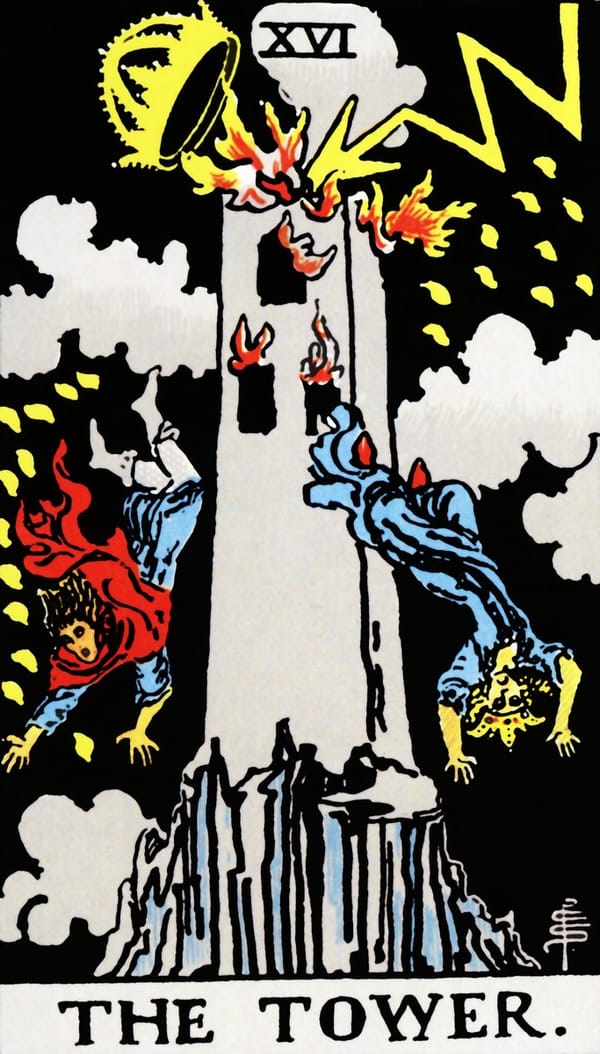
The Tower first. A tall stone structure struck by lightning, its crown blown off in flames. Two figures fall headfirst through the air against a pitch-black sky. Yellow teardrops — or flames, or divine sparks, depending on who you ask — rain down around them. Waite called the Tower "the ruin of the House of Life" — and the image earns the description. This is a building that was supposed to be permanent, and it isn't.
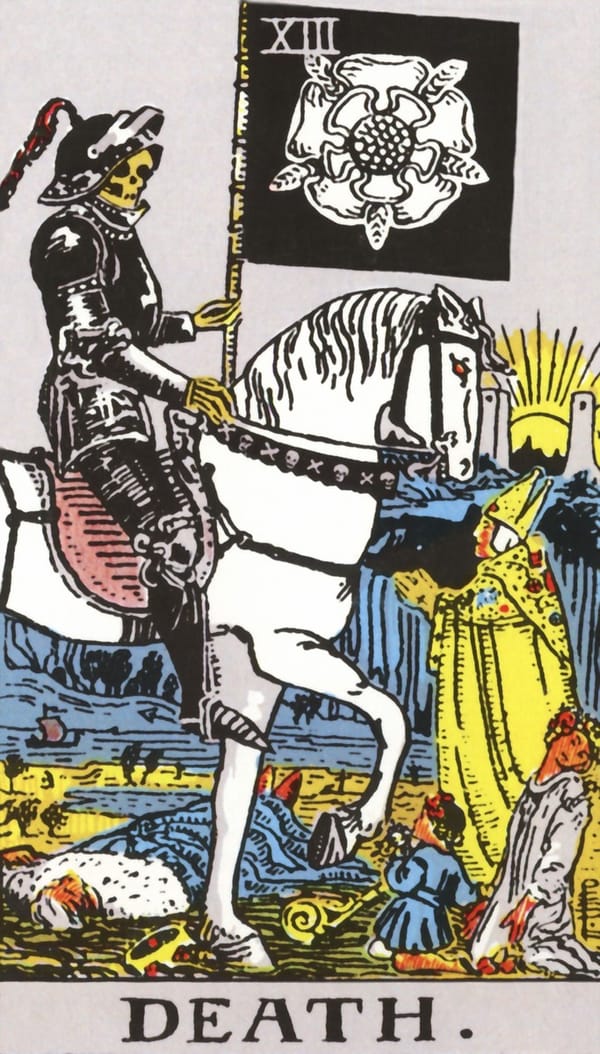
Now Death. A skeleton in black armor rides a white horse through a scene of surrender. A king already lies on the ground. A bishop in gold robes faces the rider, bargaining or praying. A child looks up without fear. And behind all of them, the sun rises between two towers — yes, towers — on the horizon.
That detail matters. Death's background has towers that are still standing. The sunrise is happening. Whatever Death takes, the world continues.
How These Cards Talk to Each Other
The Tower's destruction is sudden and external. Lightning strikes. You didn't cause it, you didn't see it coming, and you couldn't have stopped it. It's the diagnosis, the layoff email, the text that changes everything.
Death's ending is organic and inevitable. The skeleton rides steadily — no hurry, no malice. What Death takes was already dying. The relationship that stopped working two years ago. The career path that never fit. The self-image you built on someone else's expectations.
Together: the sudden external shock (Tower) accelerates the ending that was already in progress (Death). The lightning hits the building that was already structurally unsound.
The Scenario
You asked about your relationship and pulled these two cards.
Here's what I'd tell you: the Tower says something unexpected happened or is about to happen — a revelation, a betrayal, a crisis that strips away the polite surface of things. Death says the relationship was already transforming underneath that surface, and this crisis is going to force the transformation into the open.
This doesn't automatically mean divorce or a breakup. It can mean the version of the relationship you've been maintaining — the one where you both pretend certain things aren't happening — is what's dying. What emerges from the rubble might be an honest partnership that's actually stronger. Or it might be two people who finally admit they've been done for a long time.
The cards show the demolition. They don't dictate what you build on the cleared ground.
Position Matters More Than Usual
Death first, Tower second: the gradual ending you've been sensing gets punctuated by something sudden. You knew the job wasn't working, and then you got laid off. You knew the friendship was fading, and then they said something that made it undeniable.
Tower first, Death second: the shock comes first, and then you realize it exposed something that was already dead. The lightning hits, the wall falls, and behind it you find rot that's been there for years. The crisis isn't the problem — it's the reveal.
What to Do Right Now
Practical things first. If this combination is about a crisis that's already happening, focus on logistics. Do you have a place to stay? Is your money accessible? Who are the three people you trust most? Call one of them.
Don't make permanent decisions in the first seventy-two hours of a Tower event. Research on acute stress response confirms what tarot readers have always seen: the Tower's shock distorts your perception — everything looks catastrophic in the immediate aftermath. Death's timeline is longer and steadier. Let the dust settle before you decide what the rubble means.
And notice the sunrise in Death's background. It's small, it's behind everything, and it's easy to miss when you're staring at the skeleton on the horse. But it's there. It rises whether or not you're ready for it.
Six Months From Now
People who get Death and The Tower together and survive the initial chaos almost always say the same thing later: "I wouldn't go back." Not because the experience was pleasant, but because what collapsed needed to collapse, and they couldn't see that from inside it.
The building had to fall so you could see the sky.