Look at Who's in This Card
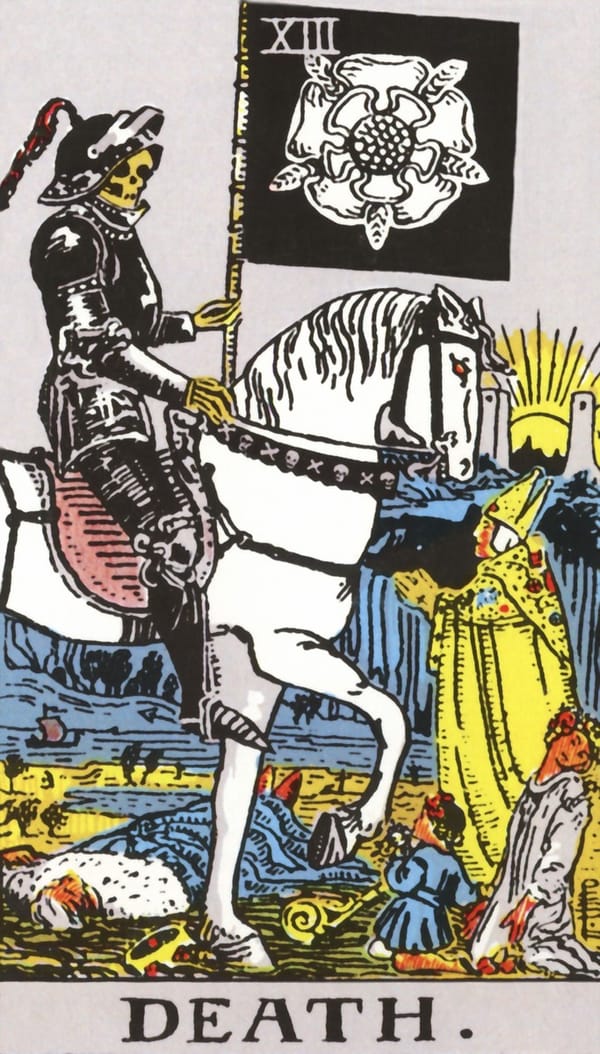
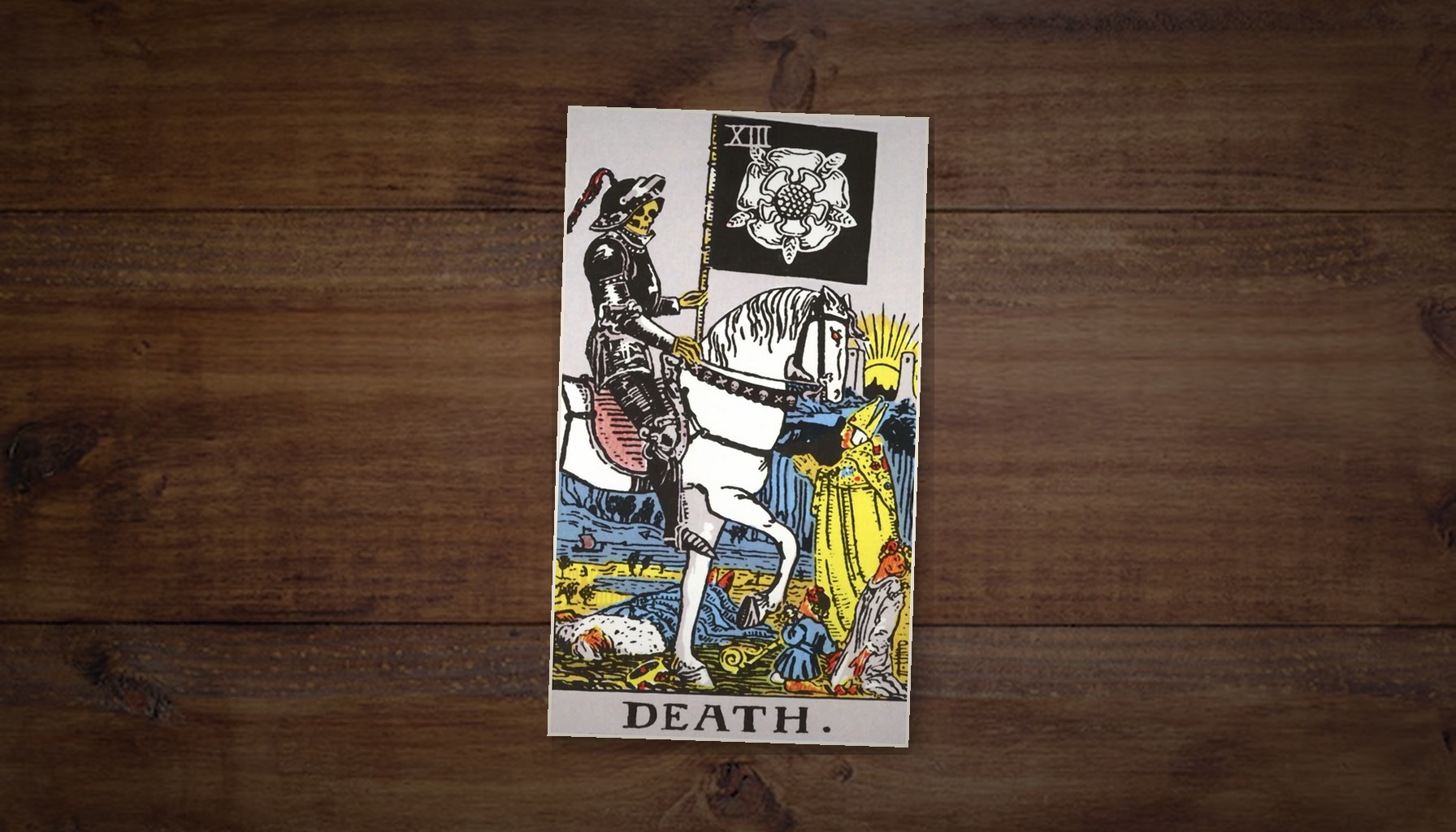
A skeleton in black armor rides a white horse. In one hand, a black flag with a white five-petaled rose. Before the horse, a king lies fallen on the ground, crown tumbled beside him. A bishop in gold robes and tall mitre stands facing the rider, hands raised — negotiating, pleading, trying to make a deal. A woman kneels with her head turned away, and a small child stands offering yellow flowers to the skeleton, unafraid.
Four different responses to the same transformation. The king is already gone. The bishop bargains. The woman can't look. The child accepts.
Waite noted that this card means "the end of something, leading to new conditions." When it shows up as feelings, someone is experiencing all four of those responses at once — part of them has already moved on, part is bargaining, part can't face it, and part is quietly ready for whatever comes next.
What Death as Feelings Actually Means
When Death appears as someone's feelings toward you, their emotional landscape is being demolished and rebuilt. The way they used to feel about you — whatever comfortable pattern had established itself — is no longer sustainable. The king is down. The old order has fallen.
This isn't the same as losing interest. Interest is the Four of Cups — someone sitting under a tree, refusing engagement. Death is active transformation. The skeleton is riding. The horse is moving. Something is happening, not nothing.
What's dying might be:
- The infatuation phase, making way for something steadier
- A fantasy about who you are, replaced by seeing the real you
- A codependent attachment, transforming into genuine love
- The comfortable dynamic between you, destroyed by new information
- The way they thought the relationship would go
The white rose on the flag matters. White roses symbolize purity and transformation. The change isn't random destruction — it carries something essential through the fire. Whatever feeling emerges on the other side of this card, it will be more honest than what came before.
The Four Reactions Inside One Person
The fallen king represents the feelings that are already gone. The part of the attraction that was based on novelty, projection, or surface chemistry — that's over. It fell when the horse arrived. There's no negotiating the king back onto his throne.
The bishop is the part of them trying to preserve the old feeling. "Maybe if I try harder." "Maybe if I look at this differently." "Maybe this is just a rough patch." The bishop wears gold and stands in a position of authority — this is the rational mind trying to use logic on something that logic doesn't control.
The kneeling woman is the part that can't face the change. Feelings changing shape is frightening. If you've ever felt your love for someone shift from passionate to quiet and wondered whether it was dying or maturing, that's her — turned away, not sure she wants to see what's coming.
The child offering flowers is acceptance. Small, innocent, undefended. This is the part of them that doesn't resist transformation. The flowers are yellow — the color of the sun, of consciousness, of things that grow toward light. The child knows, without understanding why, that what's coming is not something to fear.
In Practice
Someone feeling Death energy toward you is going through something internal that has very little to do with your behavior. You can't speed it up, slow it down, or redirect it. The horse walks at its own pace.
You might notice it as emotional distance that doesn't feel like withdrawal. They're not pulling away. They're somewhere else — processing, transforming, watching the old version of their feelings dissolve. Conversations might feel different. The jokes that used to land don't. The routines that felt comfortable feel stale. Not because anything is wrong. Because something is changing.
Attachment research shows that relationship transitions — from dating to committed, from passionate to companionate, from idealized to realistic — involve a genuine grief process. The Death card names that grief: what you had is gone. What you'll have might be better. The gap between those two things is where the pain lives.
Reversed: Refusing to Let Feelings Change
Death reversed is a person whose feelings are trying to transform and they won't allow it. The skeleton is still there, but the horse isn't moving. The king hasn't fully fallen. The bishop thinks his bargaining is working.
Reversed Death as feelings means clinging to an earlier version of the relationship. Someone who keeps trying to recreate the intensity of the first three months. Someone who won't acknowledge that their feelings have matured because they interpret maturity as loss. Someone who ghosts and comes back, ghosts and comes back, because they keep killing the connection and resurrecting it instead of letting it become what it wants to become.
This reversal can also show someone who knows the relationship needs to end but can't bring themselves to finish it. The transformation has started internally. They feel different. But they won't complete the process because completion means grief, and grief means feeling the fallen king's weight.
What to Do With This Card
If Death shows up as someone's feelings toward you, the most useful thing you can do is nothing. The transformation isn't yours to manage. Their feelings are changing shape, and they need room to let the old form go and the new one emerge.
Watch the child with the flowers. That's your role model. Don't negotiate like the bishop. Don't collapse like the king. Don't turn away like the woman. Just be present, offering something simple and genuine, and let the rider pass through.
What follows Death in the Major Arcana is Temperance — an angel standing with one foot on land and one in water, calmly pouring liquid between two cups. Integration. Balance restored. Feelings that have been broken down and rebuilt into something more durable. If you can survive the Death card in a relationship, Temperance is what waits on the other side.
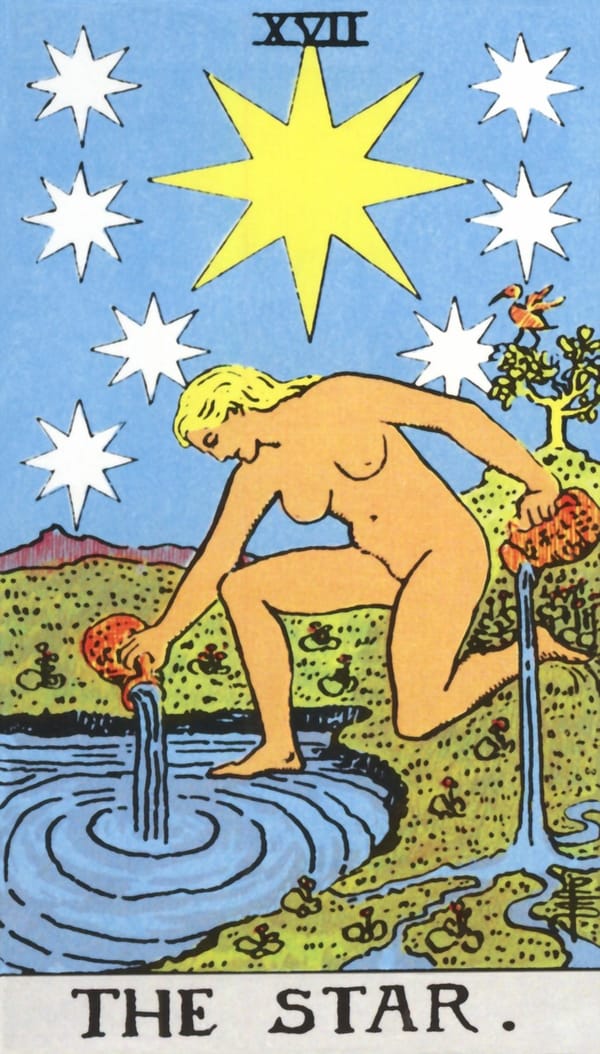
For more on transformation cards in love, see The Tower as feelings and The Star after trauma.