
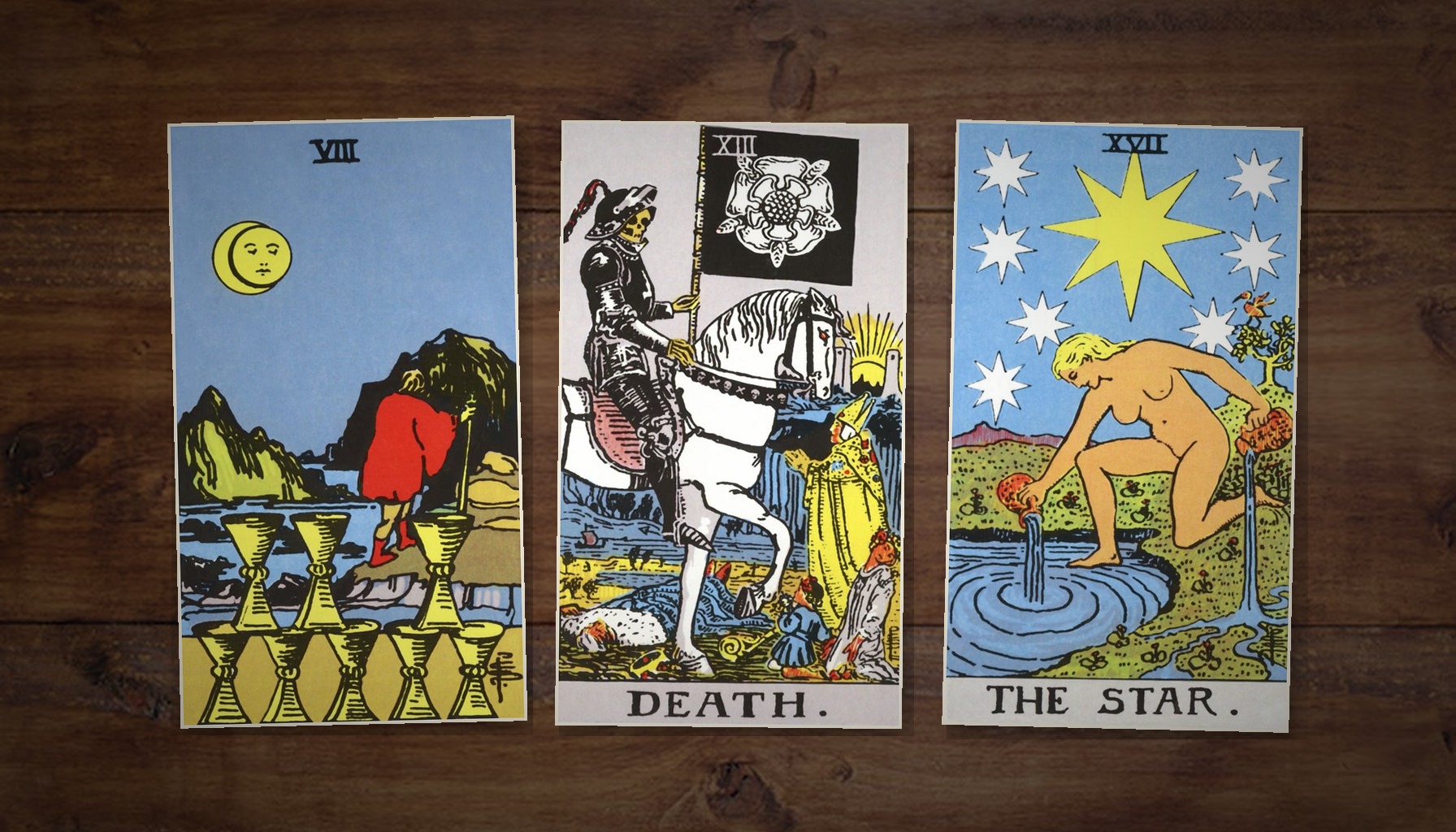
You didn't come here because you don't know what to do. You came because you know exactly what to do and you're looking for one more reading, one more sign, one more card that tells you to stay.
The cards don't negotiate. Let's see what they're saying.
The Walk Nobody Wants to Take
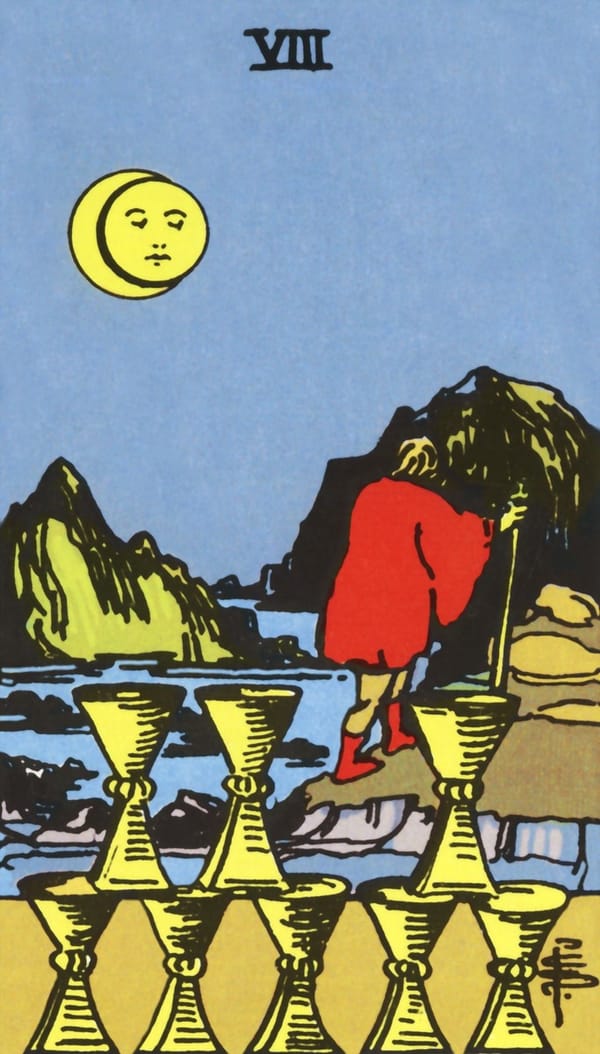
A cloaked figure walks away from eight golden cups, neatly stacked in two rows on a rocky shore. A waning moon hangs in the sky — not full, not new, but declining. The figure doesn't look back. Mountains rise ahead of him, dark and steep. The water is still.
The Eight of Cups is the most painful release card in the deck because of what it doesn't show. There's no dramatic breakup. No Tower-style explosion. No villain. The cups are still standing. Nothing is broken. He's leaving something functional, something he invested in, something that still holds value — because his continued presence there has stopped producing growth.
That waning moon tells you the timing. This isn't a crisis decision made at midnight. The light has been dimming for a while. You've watched it decline, hoping it would reverse, and it hasn't. The decision to walk isn't sudden. It's overdue.
People who pull this card and say "but the cups are still good" are missing the point. Yes, the cups are still good. That's exactly why leaving is so hard. Nobody needs tarot to help them leave something that's obviously broken. You need tarot when what you're leaving still works, just not for you anymore.
Death Doesn't Ask Permission
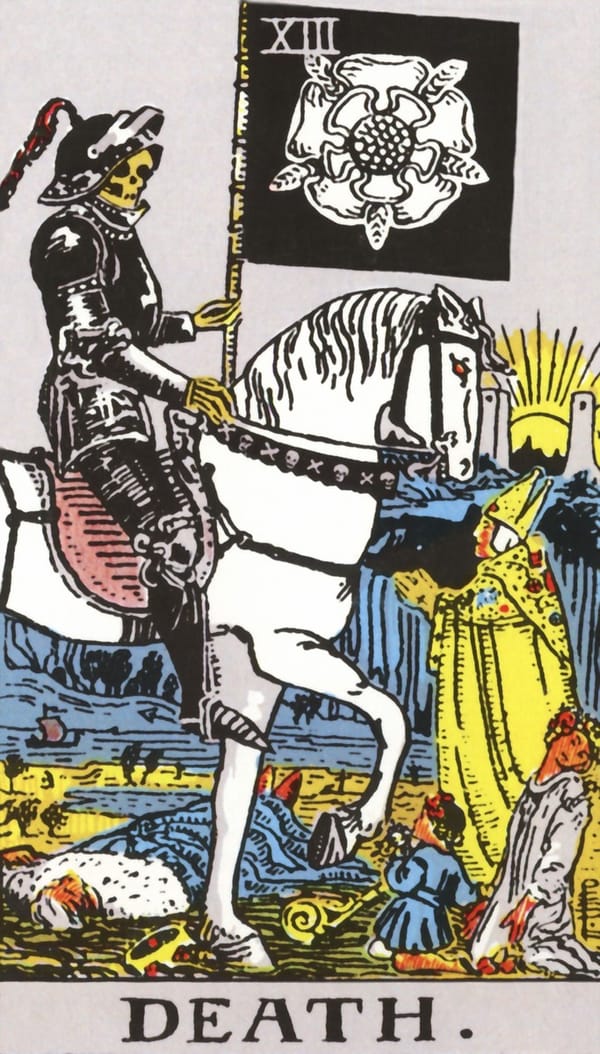
A skeleton in black armour on a white horse. A king lies fallen. A bishop raises his hands in protest. A child offers flowers. Two grey towers frame a sunrise in the background.
If the Eight of Cups is choosing to leave, Death is the leaving that happens to you. The relationship ended before you agreed to it. The feeling dried up without your consent. The dynamic changed and there's no going back to what it was.
The bishop in the card is the part of you trying to bargain. Maybe if you try harder. Maybe if you have one more conversation. Maybe if you wait a few more months. Psychologists describe this as the bargaining stage of grief — and Death is the card that says bargaining is over. The king already fell. The horse is moving forward. The sunrise behind the towers isn't visible to the bishop because he's facing the wrong direction, hands raised against something that has already passed.
The child in the card is worth your attention. While the bishop resists and the king lies dead, the child holds up flowers. Acceptance doesn't look like giving up. It looks like bringing flowers to the thing that ended, honoring what it was without pretending it's still alive.
The Star Shows What Opens After
People fixate on the loss and miss what the tarot consistently shows after release: space.
The Star follows The Tower in the Major Arcana sequence. After the demolition comes the quiet — a nude figure kneeling by still water, pouring from two vessels, eight stars overhead. There's nothing defensive about this image. No armor, no walls, no weapons. The figure is completely open.
That's what letting go makes possible. Not happiness — openness. The capacity to receive something you couldn't receive while your arms were full of something you should have put down months ago.
Your Five of Cups energy — the cloaked figure staring at three spilled cups, back turned to the two still standing — transforms into Star energy only when you stop staring at what spilled. You literally have to turn around. And you can't turn around while you're still trying to scoop the spilled water back into the cups.
A Practice for When You Know but Can't Move
You know you need to let go. You've known for weeks. Pulling cards about it repeatedly is a form of stalling. Here's something more useful:
Pull one card each morning with this question: "What is holding on costing me today?"
Not "should I let go" — you know the answer. Not "will things improve" — you've been asking that for months. What is the cost, today, right now, of staying in this position?
If you pull the Nine of Swords — the figure sitting up in bed at 3am — the cost is your sleep. If you pull the reversed Empress — the dried wheat field, the stalled waterfall — the cost is your creativity. If you pull the Four of Cups — the man under the tree refusing everything offered to him — the cost is every other opportunity you're too preoccupied to see.
After seven mornings, read the seven cards together. They're not a prediction. They're an inventory of what you're trading for the right to keep holding on.
When the Cards Say Wait, Not Go
Not every difficult reading means release. The Hanged Man hangs upside down from a tree, suspended by one ankle, face peaceful. He's not going anywhere — and that's the point. Sometimes the card says: you need a new perspective before you can make this decision. Don't leave yet. See it differently first.
Temperance also says wait — the angel patiently pouring between two cups, one foot on land, one in water. If Temperance appears when you're asking about letting go, the situation needs more time to resolve. The blending isn't done. What feels stagnant might be slowly transforming in ways you can't see yet.
The difference: the Hanged Man and Temperance show stillness with purpose. The Eight of Cups shows a figure already walking. If you have to convince yourself to stay, you've already left. The body is the last thing to catch up.
The Release Isn't the Hard Part
Letting go is a decision that takes a second. Living in the space after it is what takes months.
The Eight of Cups figure walks toward mountains. Mountains are hard to climb. The terrain after release isn't a garden — it's rugged, unfamiliar, and lonely for a while. Tarot doesn't pretend otherwise.
But the figure walks. Under a waning moon, toward something he can't see yet, leaving behind cups that still hold something. He walks because staying became more expensive than leaving.
If that sentence resonates, you already know what to do. The cards confirmed it the first time you pulled them. Every reading after that has been the bishop with his hands up, trying to negotiate with something that's already in motion.
Put the deck down. Walk.