
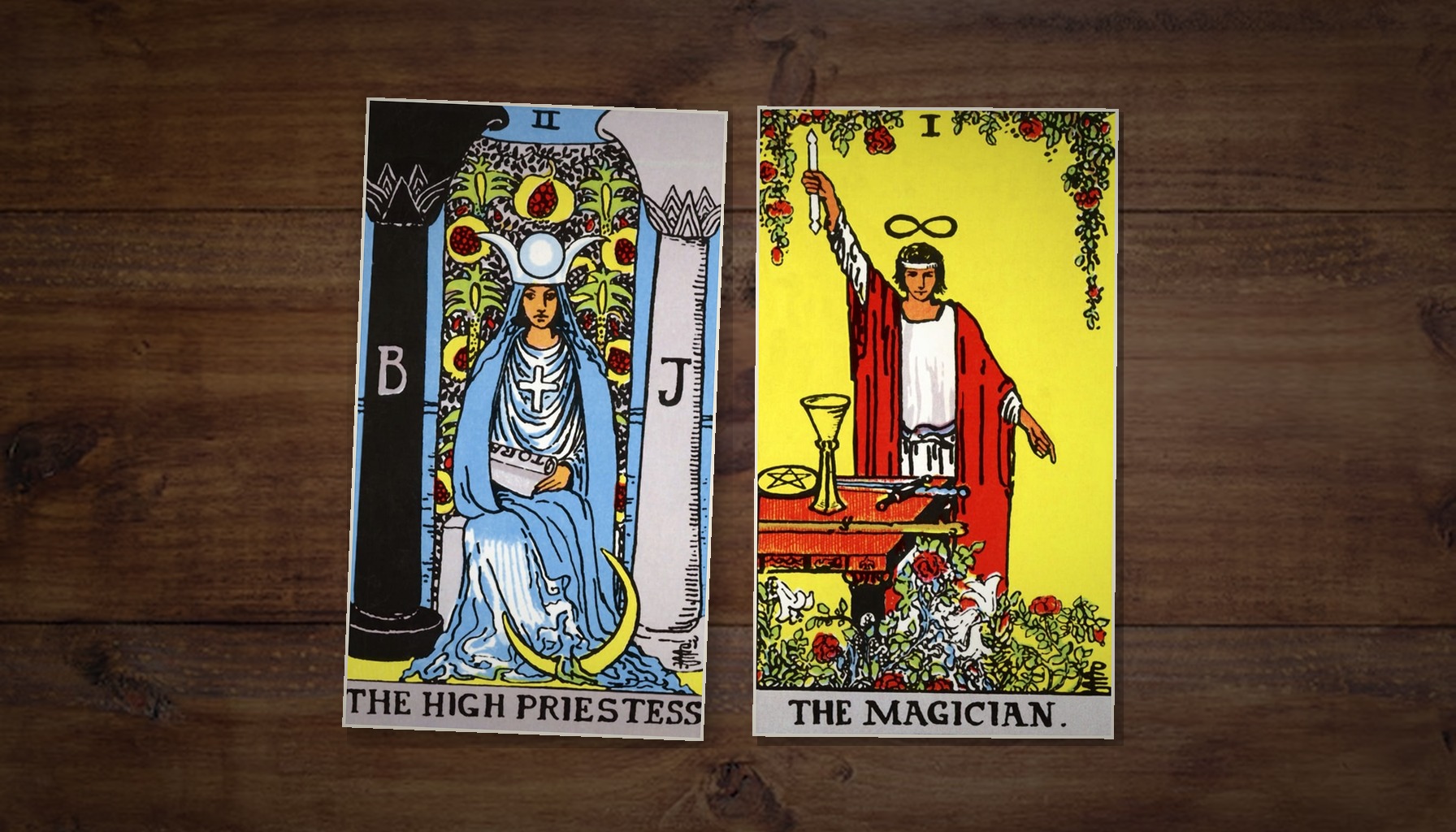
Reading for yourself is one thing. You know your context, your biases, your blind spots (or at least you should). Reading for someone else strips all of that away. You're looking at cards through a question you didn't ask, for a life you don't live, and you have to say something useful.
Here's how to do it without making it worse.
Before You Start
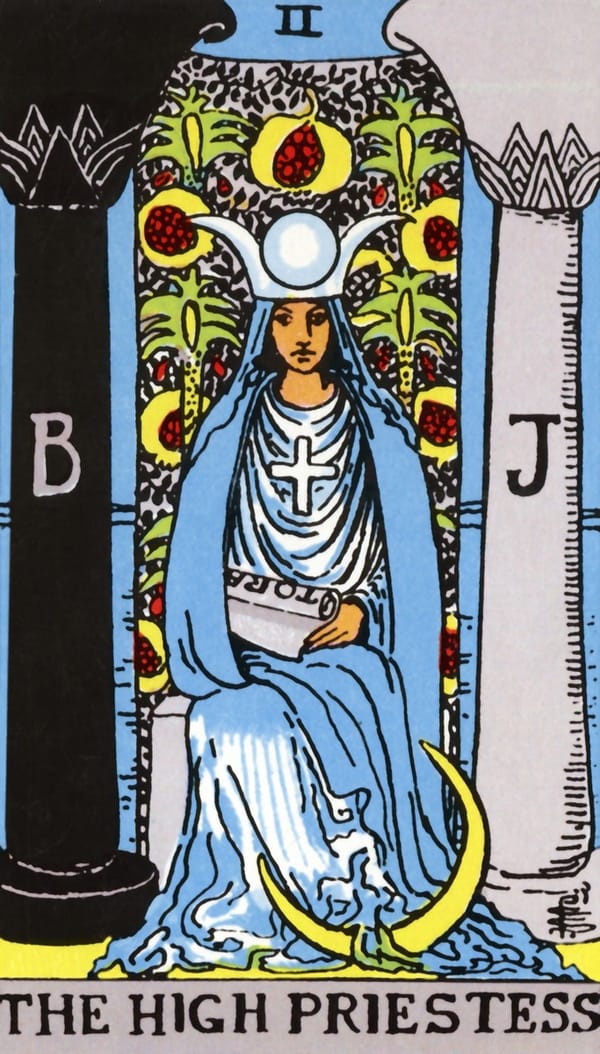
The High Priestess sits between two pillars — one black marked B, one white marked J — holding a partially hidden scroll labeled TORA. A crescent moon rests at her feet. A veil decorated with pomegranates and palm fronds hangs behind her, concealing what lies beyond.
This is your model for reading for someone else. She sits between opposites without choosing sides. She holds knowledge but doesn't thrust it forward. The scroll is partially concealed — she reveals only what's needed, not everything she sees.
Before you lay out a single card, establish three things:
Their question. Not vague ("tell me about my life") but specific enough to read against. "What's happening in my relationship right now?" works. "Tell me everything" doesn't. If they can't articulate a question, help them narrow it. The best tarot questions are open-ended and focused on one area.
Your role. You're translating cards, not prescribing actions. The difference between "this card suggests you might benefit from slowing down" and "you need to break up with him" is the difference between a reading and a directive. Stay on the translation side.
Consent for honesty. Ask them before you start: "Do you want me to be direct, even if the cards are difficult?" Most people say yes. Some mean it. Either way, you've established that honesty is part of the contract.
The Projection Problem
The biggest risk reading for someone else is projecting your own experience onto their cards. Your friend asks about her relationship. You pull the Seven of Swords — the figure sneaking away with stolen swords. Your ex cheated on you. Your brain immediately goes to infidelity.
But that's your Seven of Swords, not hers. In her context, the sneakiness might be about her partner hiding a financial problem, or her own avoidance of a difficult conversation, or a plan being made without her input. The card shows deception. Your job is to name the deception without assuming the shape of it.
Confirmation bias is real in tarot readings. You see what you expect to see, and your emotional history shapes your expectations. When reading for someone else, notice when your stomach tightens at a card. That tightness might be yours, not theirs.
Handling Difficult Cards
Your friend sits across from you. You flip a card. It's The Tower.
Don't gasp. Don't say "oh no." Don't visibly rearrange your face into a mask of neutrality that's worse than the gasp. Just describe what you see.
"Lightning striking a tower. Two figures falling. The crown blown off the top. This card shows a sudden disruption to something that felt permanent. Not a slow decline — a fast one. Something in this situation is built on an assumption that's about to prove false."
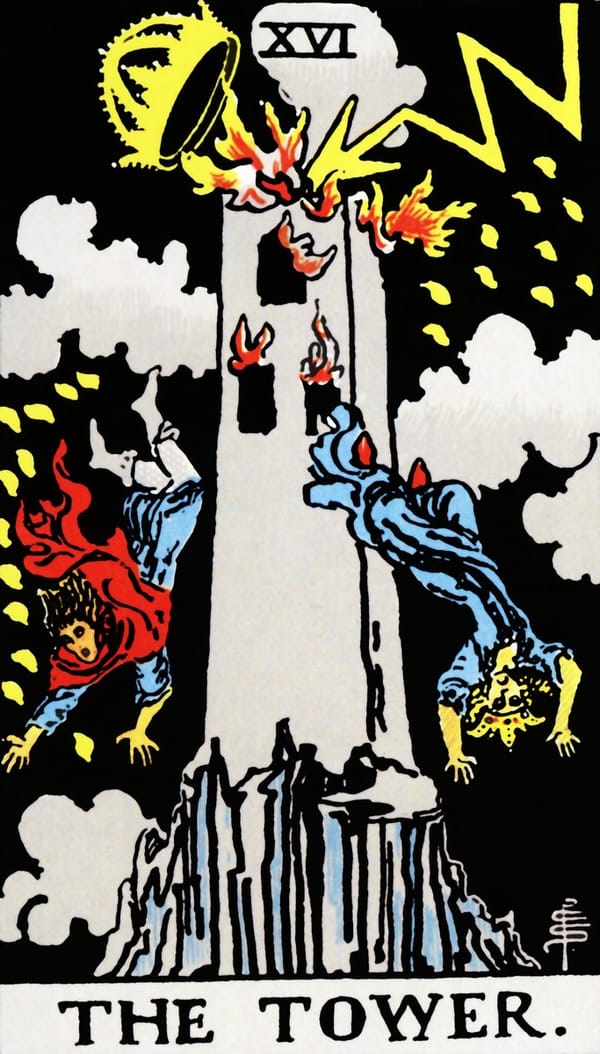
Then ask them what resonates. They know their life. You don't. Maybe the Tower is the job they're about to lose. Maybe it's the argument they've been avoiding. Maybe it's a belief about themselves that's finally cracking. Let them connect the card to their situation rather than guessing what their Tower is.
The same approach works for Death, the Ten of Swords, and the Three of Swords. Describe the imagery. Name the theme. Let them locate it in their life. You'll be right far more often than if you assumed.
What Not to Do
Don't predict death, illness, or pregnancy. These aren't your domain. The Ten of Swords doesn't mean someone will be harmed. The Empress doesn't mean someone is pregnant. Tarot operates in symbolic language, and interpreting symbols as literal medical or physical predictions is both irresponsible and inaccurate.
Don't read for someone who didn't ask. "I pulled cards about your boyfriend and..." — don't. Reading about a third party without their knowledge or consent is ethically questionable and practically useless. You're reading your own projections about someone you may barely know.
Don't create dependency. If the same person comes to you weekly with the same question, you're not helping — you're enabling an anxiety loop. The Nine of Swords energy of 3am worry gets worse, not better, with repeated readings that produce the same inconclusive results. The kindest thing you can do is refuse the reading and suggest they sit with the answer they already have.
Don't soften cards into meaninglessness. "Well, The Tower CAN be positive..." is technically true but practically useless. The Tower is a disruption. Say that. Then say what comes after — The Star, the quiet healing. The honest read with the complete arc is more helpful than a sanitized version that robs the card of its function.
A Simple Structure for Any Reading
Whether you're doing a one-card pull or a full Celtic Cross, this sequence works:
-
Describe what you see in the image. Colors, figures, posture, background. "A woman sits alone in a vineyard with a falcon on her wrist." This grounds both of you in the actual card.
-
Name the theme. "Independence. Self-sufficiency. Having what you need without relying on someone else."
-
Connect to their question. "You asked about your career. This card suggests the next phase involves building something of your own rather than contributing to someone else's project."
-
Ask what resonates. "Does that connect to anything?" Then listen. Their response will guide the rest of the reading better than any book of meanings.
After the Reading
End by asking if they have questions about any specific card. Don't summarize the entire reading — they were there. Don't prescribe actions. Don't follow up in a week asking if your predictions came true (they weren't predictions).
And if they're going through something genuinely difficult — not a career question or a love curiosity but real distress — acknowledge the limits of what you just did. A tarot reading is one perspective from one tool. It's not therapy, not medical advice, not a substitute for professional help when professional help is what's needed.
The High Priestess holds the scroll partially hidden for a reason. You don't need to reveal everything. You need to reveal what's useful, delivered with enough care that the other person can do something with it.