The Question Matters More Than the Card
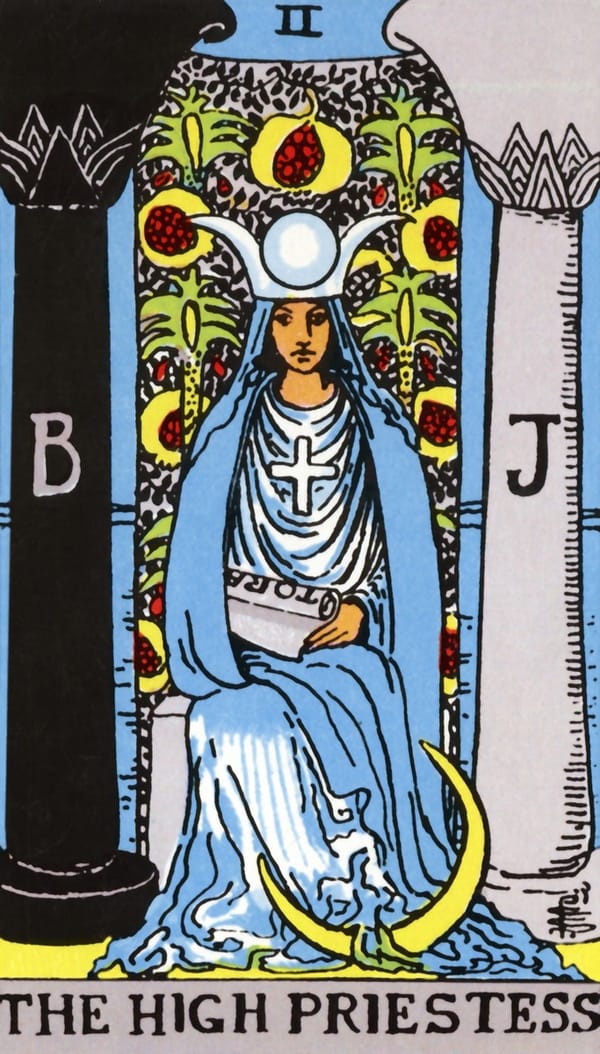
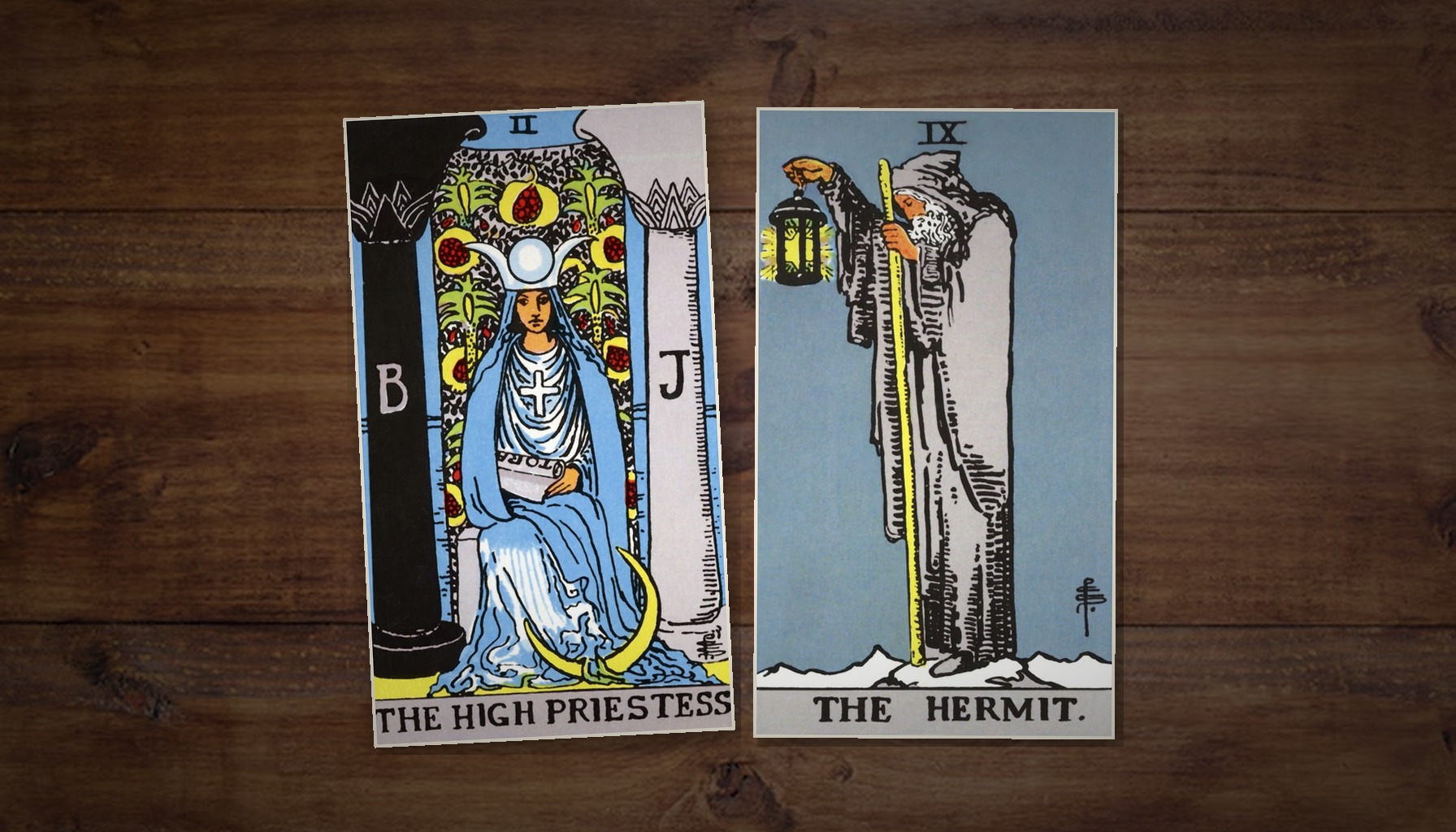
In Waite's Pictorial Key to the Tarot, the High Priestess represents hidden knowledge revealed only to those who ask correctly. She sits between two pillars — one black, one white, marked B and J. Behind her, a tapestry of pomegranates hangs between the columns, partially hiding what lies beyond. A crescent moon rests at her feet. In her lap, she holds a scroll labeled TORA, half covered by her robe. She knows something. She's not telling you everything. But she'll answer what you ask — and only what you ask.
This is how tarot works. The cards respond to your question. Ask a vague question, get a vague answer. Ask a closed question, get a limited answer. Ask the right question and the reading opens up like that tapestry pulling back.
Most people who are frustrated with their readings aren't pulling bad cards. They're asking bad questions.
What Makes a Question Bad
Bad tarot questions share three traits:
They're yes or no. "Will I get the promotion?" The cards can answer this, but they'll do it poorly. A yes is a yes without context. A no is a no without alternatives. You've taken a tool designed for depth and asked it to be a coin flip. For why this matters, see tarot yes or no.
They're about someone else's free will. "Will he call me?" The cards can't predict what another autonomous human will choose to do. They can show you the energy between you, the patterns in play, the likely trajectory — but the moment of decision belongs to the other person, not the deck.
They're looking for permission. "Should I quit my job?" You already know the answer. You came to the cards hoping they'd agree with you. The reading will reflect your own certainty back at you, which feels like validation but isn't actually insight.
What Makes a Question Good
Good tarot questions start with "what," "how," or "why." They put you in the active role. They give the cards room to tell you something you didn't already know. This mirrors what therapists call open-ended questioning — asking in a way that invites exploration rather than confirmation.
Good questions are open-ended but specific. "What do I need to know" is better than "will it happen." "What's blocking me" is better than "am I stuck." "What's the dynamic between us" is better than "does he like me."
Questions for Love and Relationships
- What energy am I bringing into my love life right now?
- What do I need to understand about the dynamic between me and [name]?
- What pattern keeps repeating in my relationships?
- What's the lesson this relationship is trying to teach me?
- What would a healthy relationship look like for me right now?
- What am I not seeing about this person?
- What do I need to know before having this conversation with my partner?
- What's keeping me from being open to new love?
For specific relationship questions, you might also find does he like me tarot or tarot for a new relationship useful.
Questions for Career and Work
- What do I need to know about this job opportunity?
- What energy should I bring into the interview?
- What's the real reason I feel stuck in my career?
- What skill or quality would change my work situation most?
- What do I need to understand about my relationship with money?
- What would it take for me to feel fulfilled at work?
- What am I overlooking about my current job?
See tarot for a job interview and tarot for a career change for spreads tailored to these situations.
Questions for Money
- What's my current relationship with money?
- What belief about money is holding me back?
- What do I need to know about this financial decision?
- What energy am I putting toward building financial security?
For money-specific readings, see tarot for money problems.
Questions for Personal Growth
- What lesson is this difficult time trying to teach me?
- What am I avoiding that I need to face?
- What part of myself have I been ignoring?
- What would growth look like for me this season?
- What's the most important thing I can do for myself this week?
- What am I ready to let go of?
- What am I not giving myself credit for?
Questions for Difficult Moments
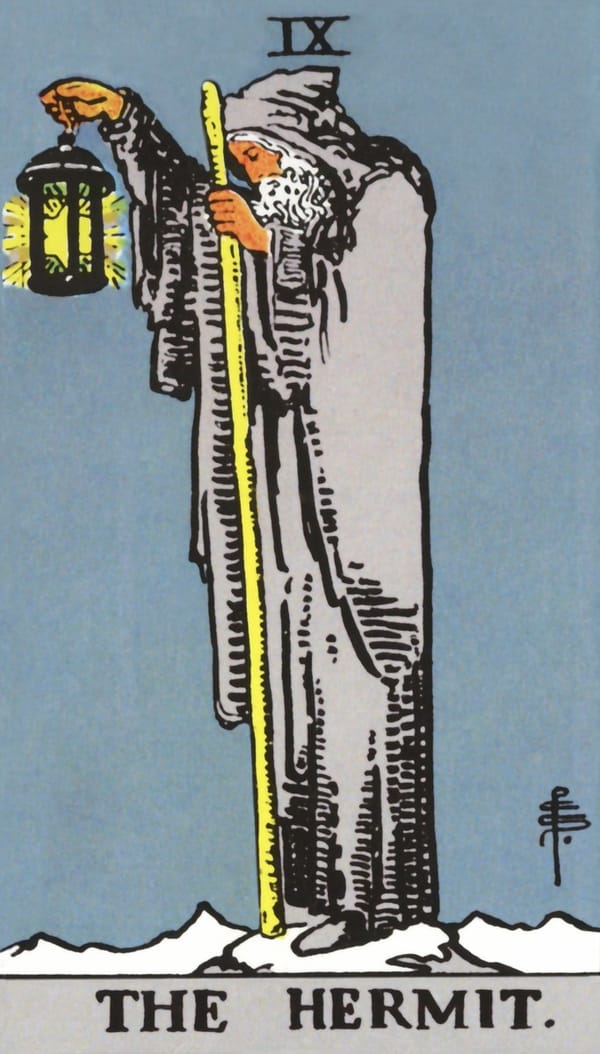
The Hermit stands alone on a mountaintop, lantern raised, the six-pointed star inside it casting a small circle of light. His grey robes blend into the grey sky. Only the lantern and the yellow staff bring color. He isn't looking for answers from anyone else. He's finding his own.
When you're in a hard place — a breakup, a loss, a season of confusion — the questions that help most are the ones that treat the difficulty as something with information inside it.
- What do I need right now that I'm not getting?
- What would comfort look like that doesn't involve someone else changing?
- What is this experience preparing me for?
- What strength do I have that I've forgotten about?
For these moments, see also tarot when stuck, tarot when lonely, and tarot for anxiety.
The One-Card Check-In
If you don't have a specific question, the simplest daily practice is a one-card pull with no question at all — just "what do I need to know today?" The card that appears sets a tone. It's less about prediction and more about attention. If the Five of Pentacles shows up, you know to watch for where you're feeling excluded or under-resourced. If the Ace of Wands appears, watch for the creative impulse that's trying to start.
For a full walkthrough of this practice, read how to do a one-card tarot pull.
One Last Thing About Asking
The best tarot questions are the ones where you're genuinely willing to hear the answer. If you've already decided what you want the cards to say, you're not asking — you're auditioning the deck until it agrees with you. That's not a reading. That's a negotiation with yourself.
Sit with your question before you shuffle. Is this something you actually want clarity on, or something you want confirmed? If it's confirmation, you don't need the cards. You already know. Act on that.
Need a quick reference for all 78 cards? Download the free printable tarot cheat sheet.
New to tarot? The learn tarot page answers the most common questions beginners ask.