You've got a question. You want a straight answer. Should I take the job? Is she interested? Will I pass the exam? You don't want three paragraphs of interpretation. You want yes or no.
Tarot can do this. It just does it badly.
Not because the cards are unclear — some of them are very clear — but because yes/no is the least interesting thing a 78-card system can tell you. It's like asking a novelist for a one-word answer. They can give you one. But everything that makes them worth asking gets left on the table.
Still, you're here for the list. So here's the list, followed by why you'll get better readings if you stop asking yes or no altogether.
Yes Cards
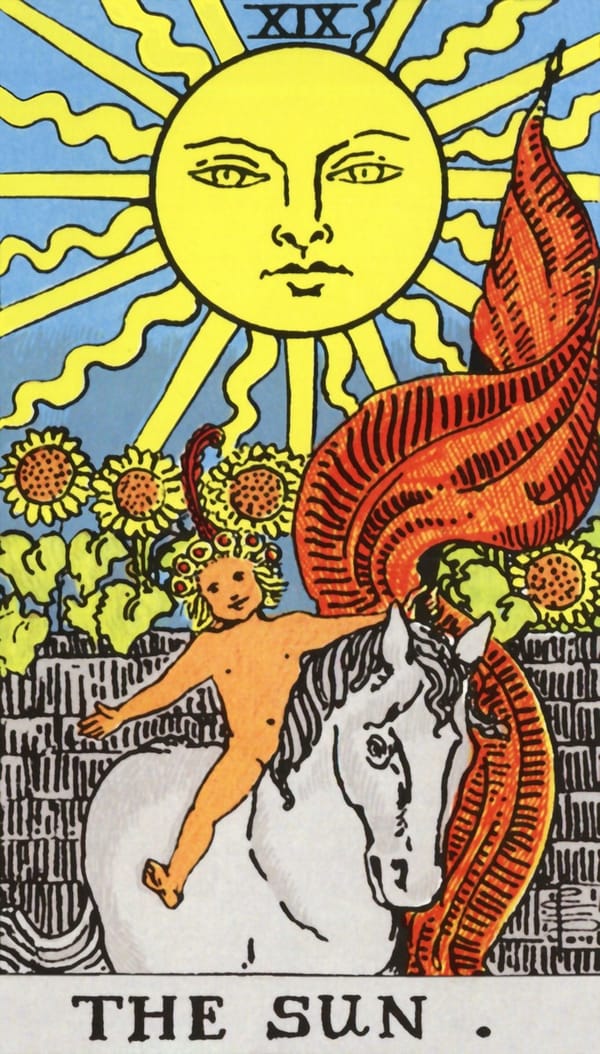
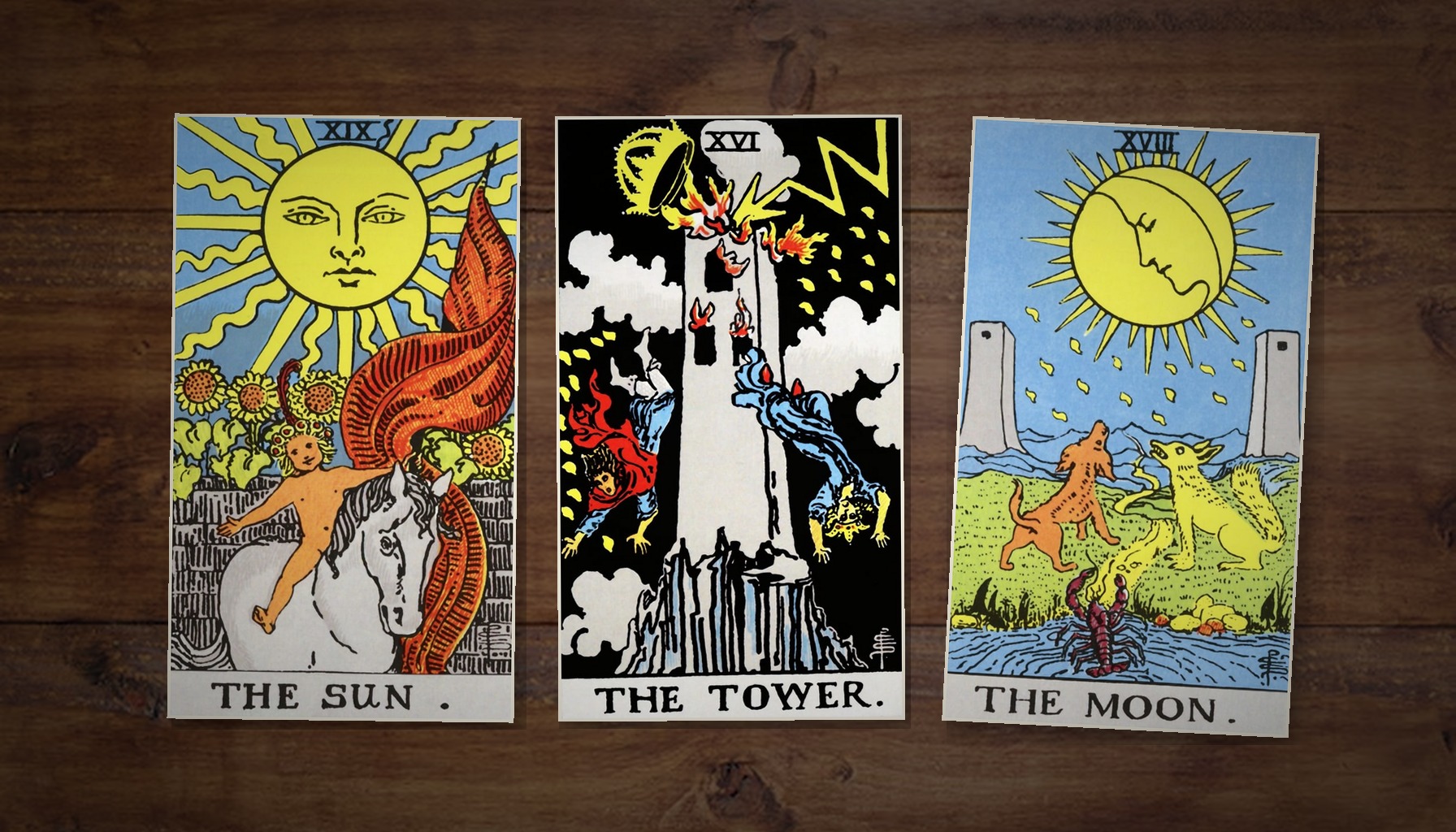
The Sun is the clearest yes in the deck. Not a qualified yes, not a cautious yes — a full, arms-open, sunlight-on-your-face yes. Look at the card: a child sits on a white horse with arms spread wide, naked and unashamed, under a golden sun that takes up half the sky. The sun has a face and it looks content. Behind the wall, sunflowers lean toward the light the way everything alive leans toward what's good for it. There is nothing in this card that holds back.
The World is a yes that means completion. The green laurel wreath forms a perfect oval, a figure dances inside it with wands in both hands, and the four fixed signs of the zodiac anchor the corners. This yes comes with the feeling of having arrived somewhere. The thing you're asking about reaches its full expression. Done. Achieved. Whole.
The Ace of Cups says yes with an emotional emphasis — a hand reaches from clouds holding an overflowing golden cup, five streams spilling into a pool of lily pads below, a dove descending into the cup. The answer is yes and it will fill you up.
Four of Wands — yes, and people will celebrate with you. The garland strung between four planted wands, the figures raising bouquets, the castle in the background. This is a public yes.
The Star — yes, but softly. Yes like dawn after a long night. Yes like healing. Not a triumphant yes, but a yes that means things are getting better.
No Cards
The Tower is the hardest no. Lightning strikes the crown off a stone tower. Two figures fall headfirst through the air. Flames pour from the windows. Small yellow drops — called yods — scatter against a black sky. Whatever you're asking about, The Tower says not only no but that the structure you built the question on is collapsing. The no is not gentle.
For more on what The Tower means in specific contexts, see The Tower in a love reading and The Tower in a career reading.
The Devil is a no that warns. The two chained figures at the base of the pedestal could leave — the chains are loose around their necks — but they don't. If you're asking about something you want, The Devil says: you might get it, but you won't like what it costs. The no here protects you.
Ten of Swords — no, and it's final. A figure lies face down with ten swords in their back. The sky is black above, but a strip of gold lines the horizon — something new will eventually come, but the thing you're asking about is over.
Three of Swords — no, and it will hurt. The heart pierced by three swords in the rain. The answer carries grief with it.
Five of Cups — no, and you'll need to mourn before you move on. The cloaked figure stares down at three spilled cups, unable to turn around and see the two cups still standing behind them.
Maybe Cards
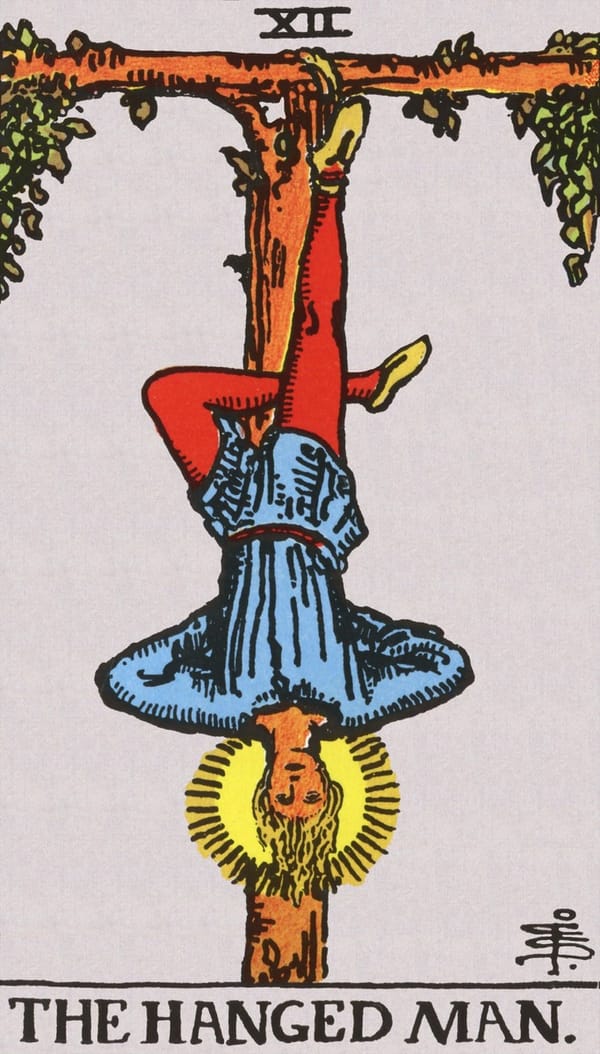
The Hanged Man is the card that refuses to answer your question. He hangs upside down from a T-shaped tree made of living wood, one leg bent behind the other, arms folded behind his back. His face is calm. A bright yellow halo surrounds his head. He's not suffering — he's seeing differently. He chose this.
When The Hanged Man answers a yes or no question, the answer is: you're asking from the wrong angle. Flip the question. Look at it from the other side. The information you need exists, but your current perspective can't reach it.
The Moon is a maybe that leans toward "you don't have enough information." The dogs howling, the crayfish in the pool, the winding path between two towers — nothing here is certain. The light is reflected, not direct. Wait for daylight before deciding.
Two of Swords — maybe, but you're the one blocking the answer. A blindfolded figure holds two crossed swords. The choice is yours and you're refusing to make it. The cards aren't withholding. You are.
The Wheel of Fortune — the answer is changing. Whatever it is right now, it won't stay that way. Yes could become no. No could become yes. The wheel turns.
Why Yes or No Readings Are Limited
Here's the problem. You pull The Tower asking "should I take this job?" The Tower says no. But it can't tell you why. Is the company about to fold? Is the role wrong for you? Will the commute destroy your mental health? Is the "no" actually a "not this job, but something better is coming"? The Tower just falls. It doesn't explain.
A better question: "What do I need to know about taking this job?" Now the cards have room to work. The Tower can tell you the company's foundation is shaky. The Seven of Pentacles can tell you the timing isn't right. The Knight of Wands can tell you a better opportunity is already on its way.
Tarot is a narrative tool. It tells stories. Waite designed the deck as a system of symbolic pictures meant to be read in combination, not as a set of binary signals. Reducing it to yes or no strips out everything that makes the reading worth doing.
What to Ask Instead
Replace every yes/no question with "what do I need to know about" or "what should I consider." This mirrors what therapists call open-ended questioning — the shift from seeking confirmation to seeking understanding.
Instead of "will I get the job?" ask "what should I know before the interview?" See tarot for a job interview.
Instead of "does he like me?" ask "what's the energy between us right now?" See does he like me tarot.
Instead of "should I move?" ask "what's waiting for me if I move?" See tarot for moving cities.
The answer will contain a yes or no — you'll feel it — but it will also contain the context that makes the answer useful. And that context is the whole point of sitting down with the cards in the first place.
For more on how to frame questions that get the most from your readings, see what to ask tarot cards.
Need a quick reference for all 78 cards? Download the free printable tarot cheat sheet.