I want to describe a specific person, and you can tell me if this is you.
You have seventeen tabs open. Three of them are apartment listings in different cities. Two are job postings you haven't applied to. One is a graduate school program you've been "looking into" for eight months. The rest are articles about how to make big life decisions.
You haven't applied to anything, signed anything, or committed to anything. But you've researched everything. You feel busy. You feel productive. You are neither.
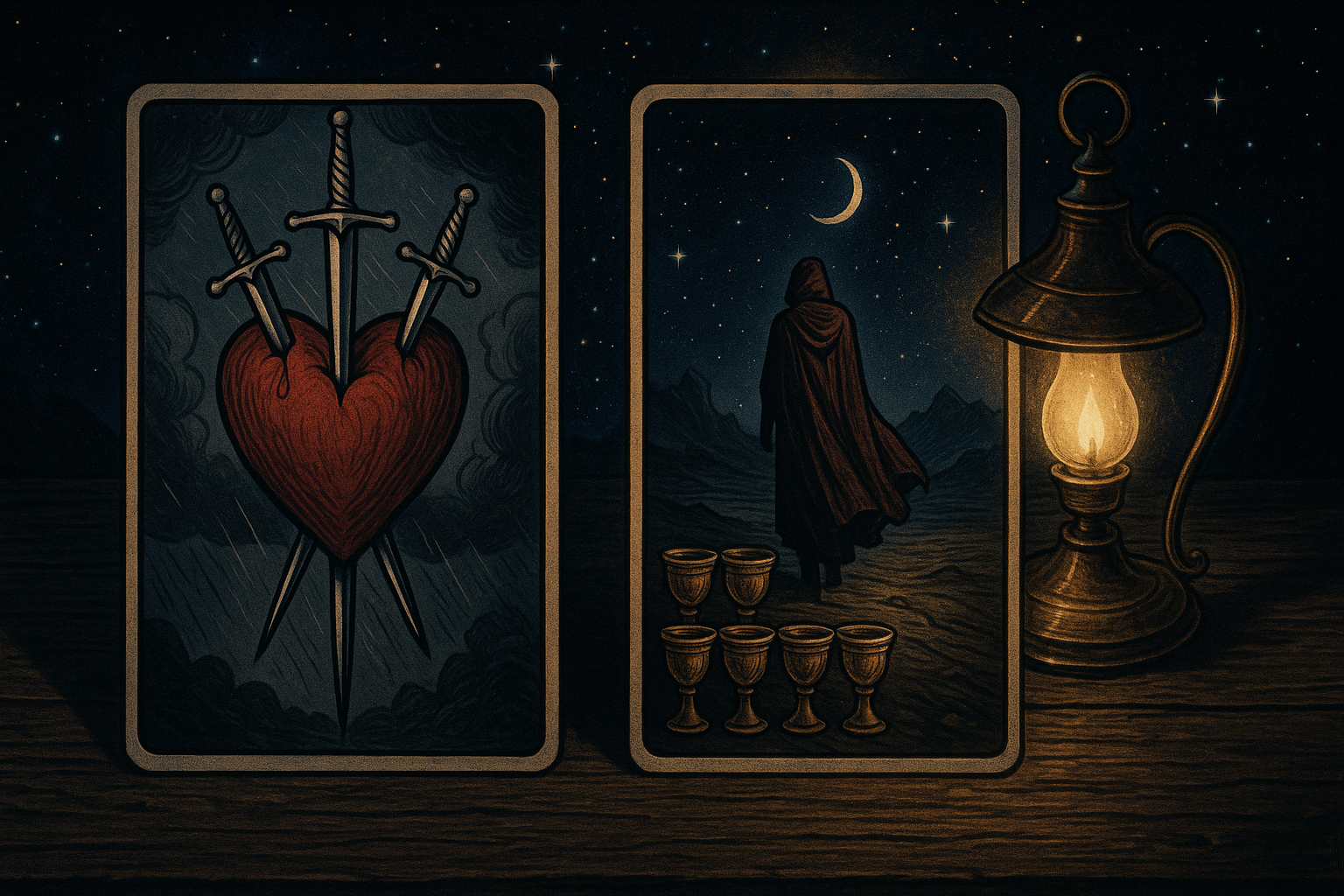
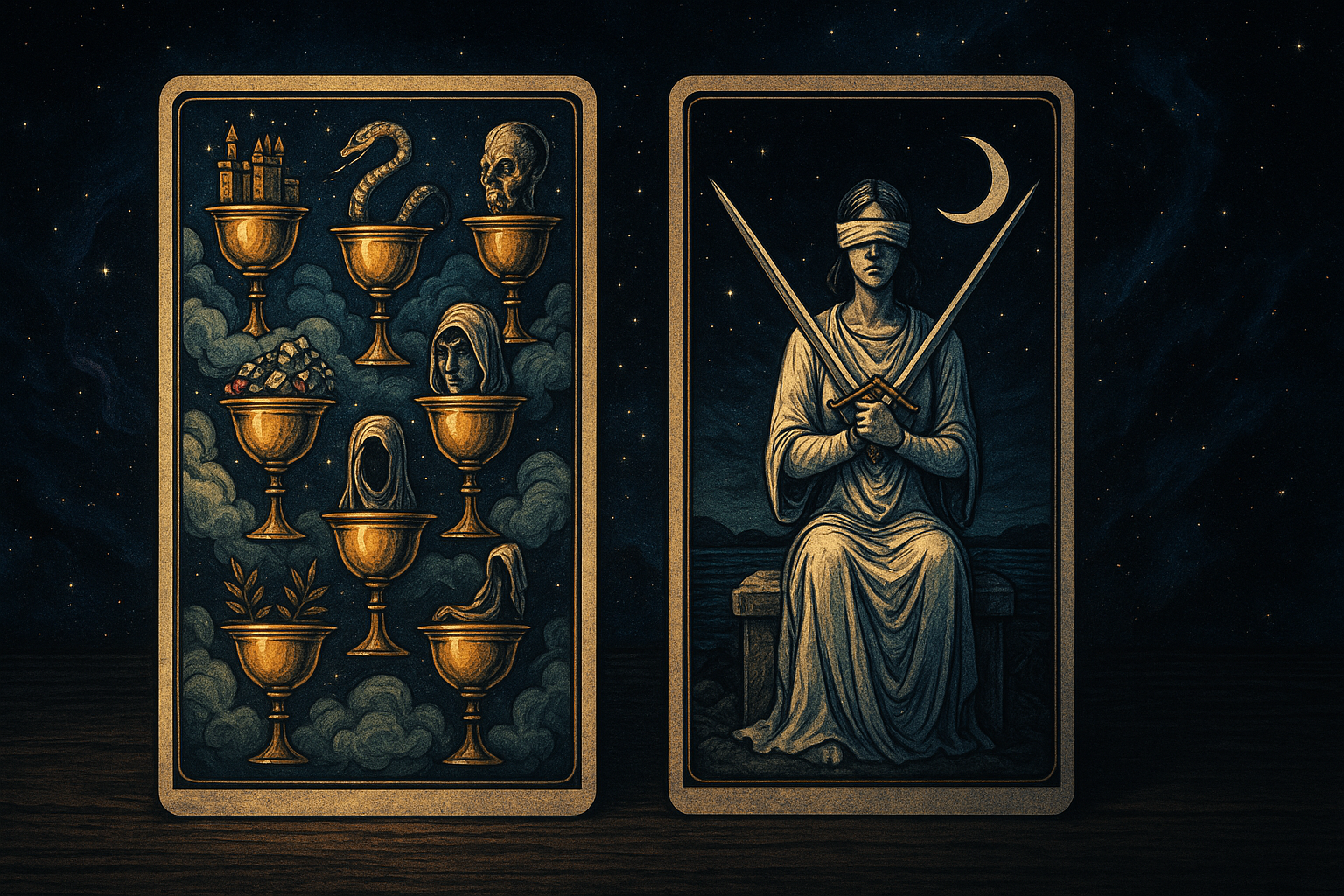
That's the seven of cups and two of swords.
The Vision Cloud and the Blindfold
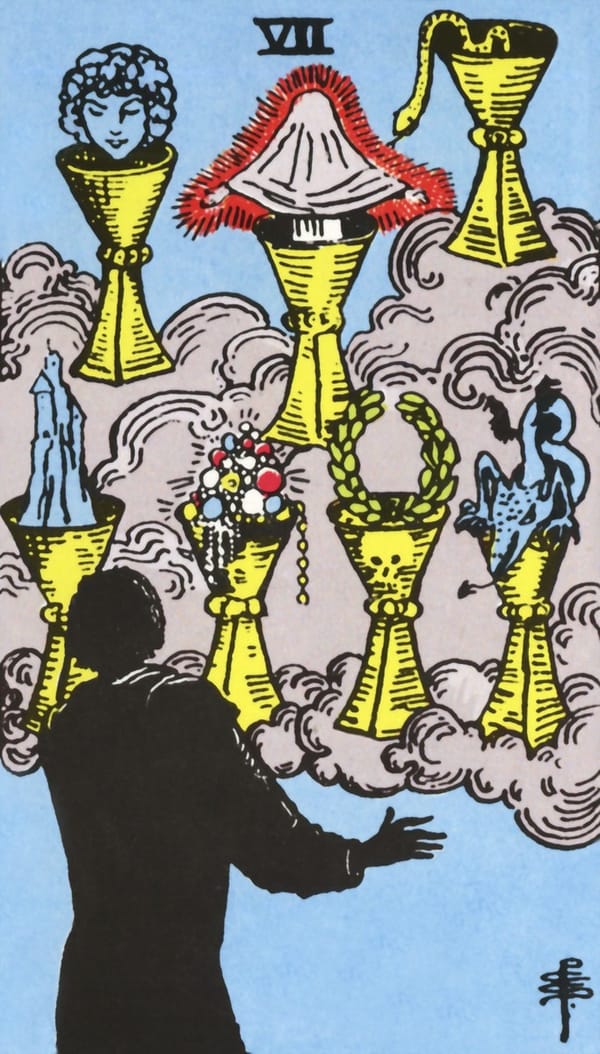
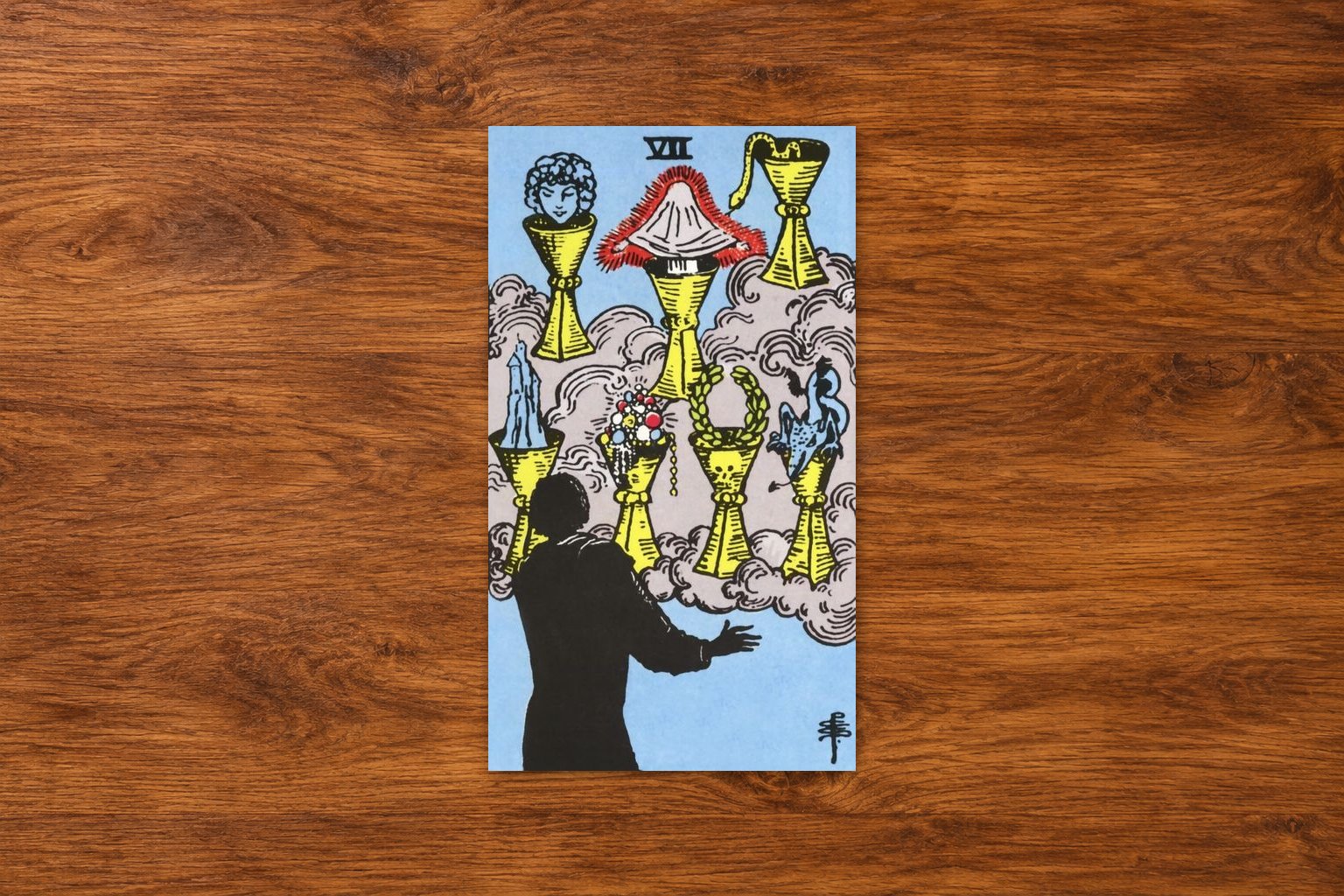
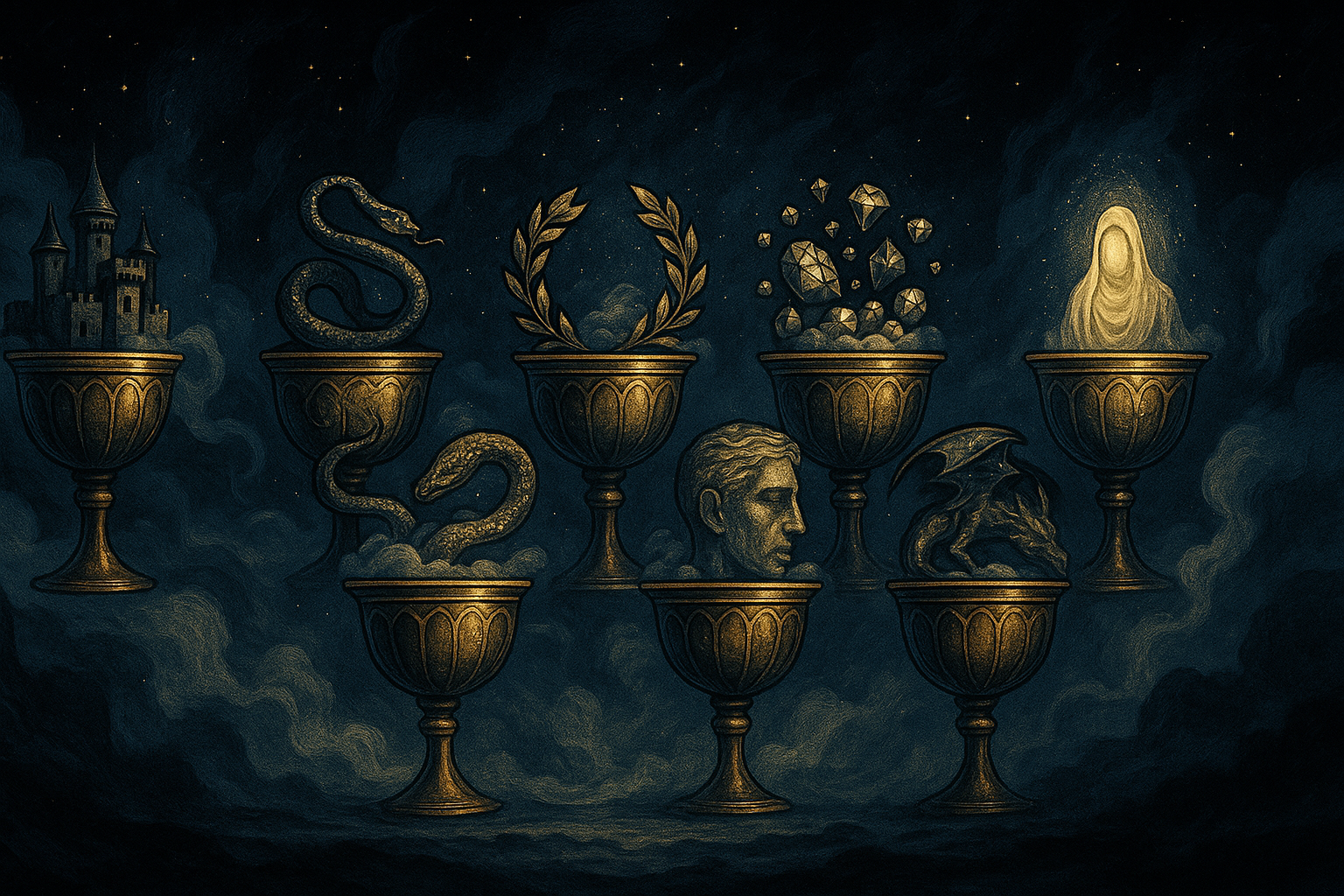
A figure in silhouette stands before seven cups floating in a towering cloud formation. Each cup contains something different — a castle, a pile of jewels, a laurel wreath, a snake, a glowing figure, a dragon, a shrouded face. Waite noted that these visions are "strange chalices of vision" — not promises, but projections. Wealth, glory, danger, beauty, power, mystery. The figure reaches toward them with one hand. They can't possibly hold all seven. But they haven't picked one yet.
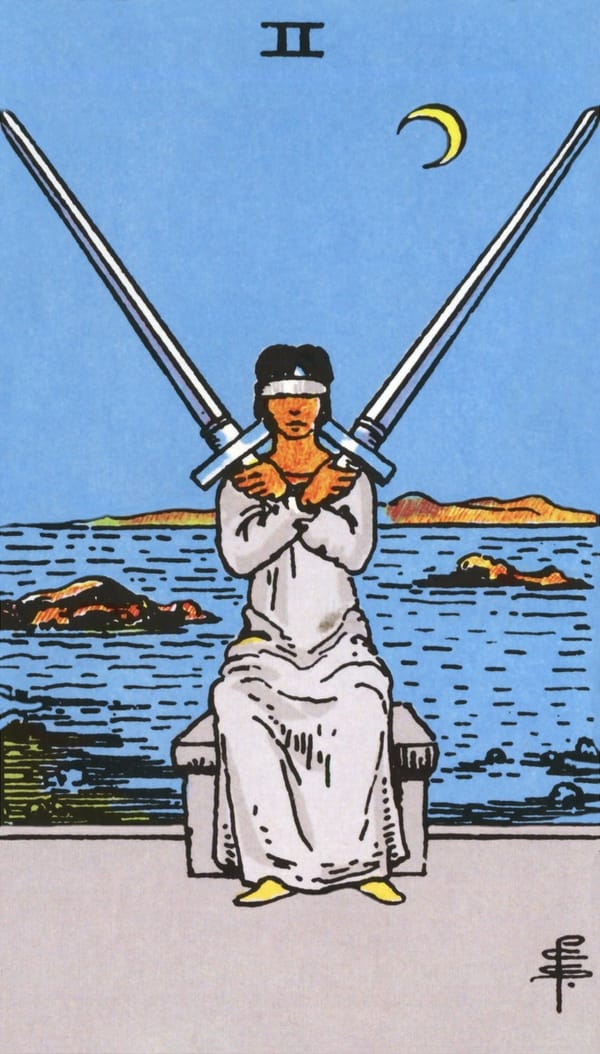
A woman sits blindfolded on a stone bench at the edge of the sea, a crescent moon above her. She holds two heavy swords crossed over her chest, arms rigid. The ocean behind her contains rocky outcrops — hazards she can't see. Her posture says: I will not look. I will not choose. I will hold these opposing options until my arms give out.
What the Visual Conversation Reveals
The Seven of Cups is all air and cloud — nothing is grounded, nothing is real, everything floats. The Two of Swords is all stillness and stone — nothing moves, nothing progresses, the decision sits frozen.
The Seven generates. The Two refuses. One card fills the room with possibilities. The other locks the door.
Now notice: the Seven of Cups figure faces the visions head-on, reaching toward them. The Two of Swords figure faces you, blindfolded, arms crossed. The fantasist engages with illusions. The decision-maker blocks out reality. When these cards appear together, you're doing both simultaneously — endlessly browsing and permanently refusing to buy.
The Crescent Moon in Both Cards
The Two of Swords has a crescent moon hanging in the sky behind the blindfolded woman. The Seven of Cups has its visions emerging from moonlit clouds. Both cards operate in moon energy — the realm of illusion, uncertainty, and emotional reasoning rather than rational clarity.
This tells you something important: you won't think your way out of this. Psychologist Barry Schwartz calls this the paradox of choice — more options produce more anxiety, not more clarity. The decision you're avoiding isn't a logic problem that more data will solve. It's an emotional threshold you need to cross — the willingness to accept that choosing means losing every option except one.
Position Changes the Story
Seven of Cups first, Two of Swords second: the fantasies came first and overwhelmed you into paralysis. You started by exploring possibilities (fun, expansive) and ended up frozen because you can't narrow them down (trapped, anxious). The solution is subtraction, not addition.
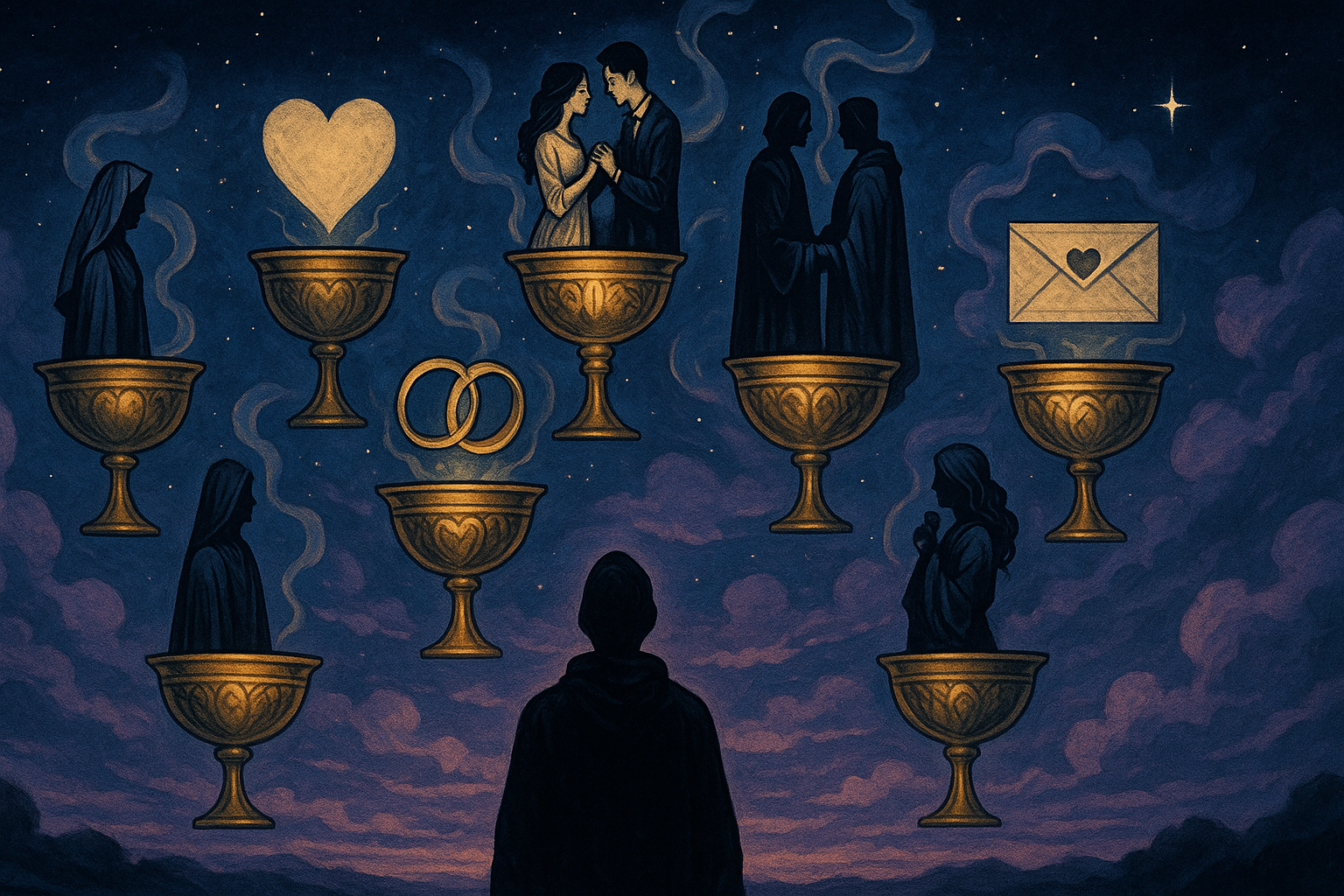
Two of Swords first, Seven of Cups second: you were already stuck on a decision, so you generated more options to avoid making it. The relationship crossroads was too scary, so you started looking at apartments in Portland and graduate programs in London and volunteer opportunities in Costa Rica. The options aren't real alternatives — they're elaborate avoidance.
The Snake in the Cup
One of the seven cups contains a snake. Amid the castles and jewels and laurel wreaths, one option is genuinely dangerous. The Seven of Cups doesn't label which visions are real and which are traps. The Two of Swords blindfold means you can't tell the difference.
This is the actual risk of staying in the fantasy-and-avoidance loop: the longer you browse without choosing, the more likely you are to eventually lunge at whatever's closest when the pressure becomes unbearable — and that might be the snake.
Deliberate, imperfect choosing is safer than panic choosing.
How to Actually Break This
Take the blindfold off by making the decision smaller. You're not choosing a life path. You're choosing what to do this week.
Write down every option you've been considering. All of them. Then cross out everything that requires something you don't currently have. Cross out everything you've been considering for more than six months without taking a single concrete step. Cross out everything that appeared after you got stuck on the original decision.
What's left? Probably two or three things. Pick the one that scares you the least. Do one concrete thing toward it before you go to sleep tonight.
The swords can go down now.