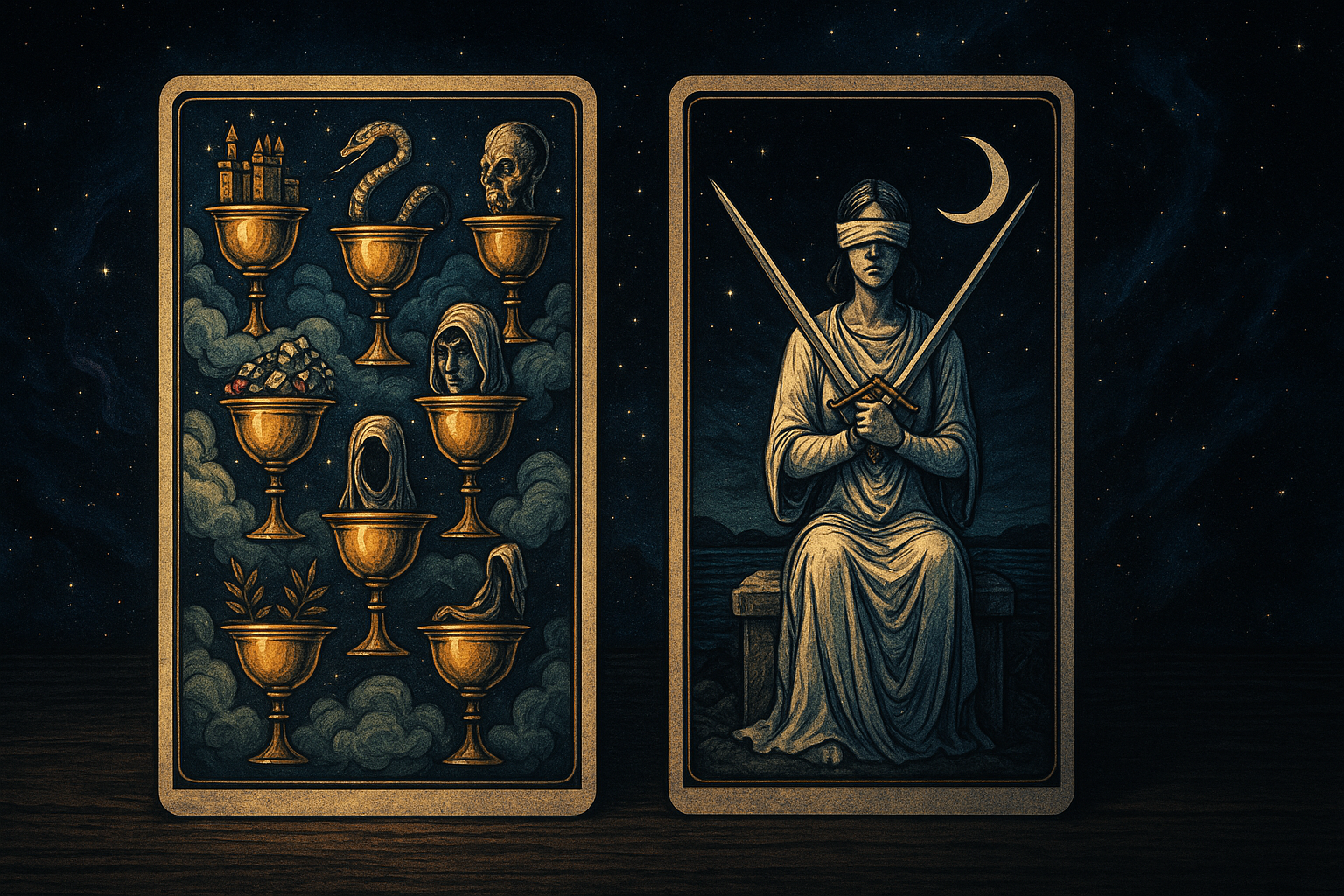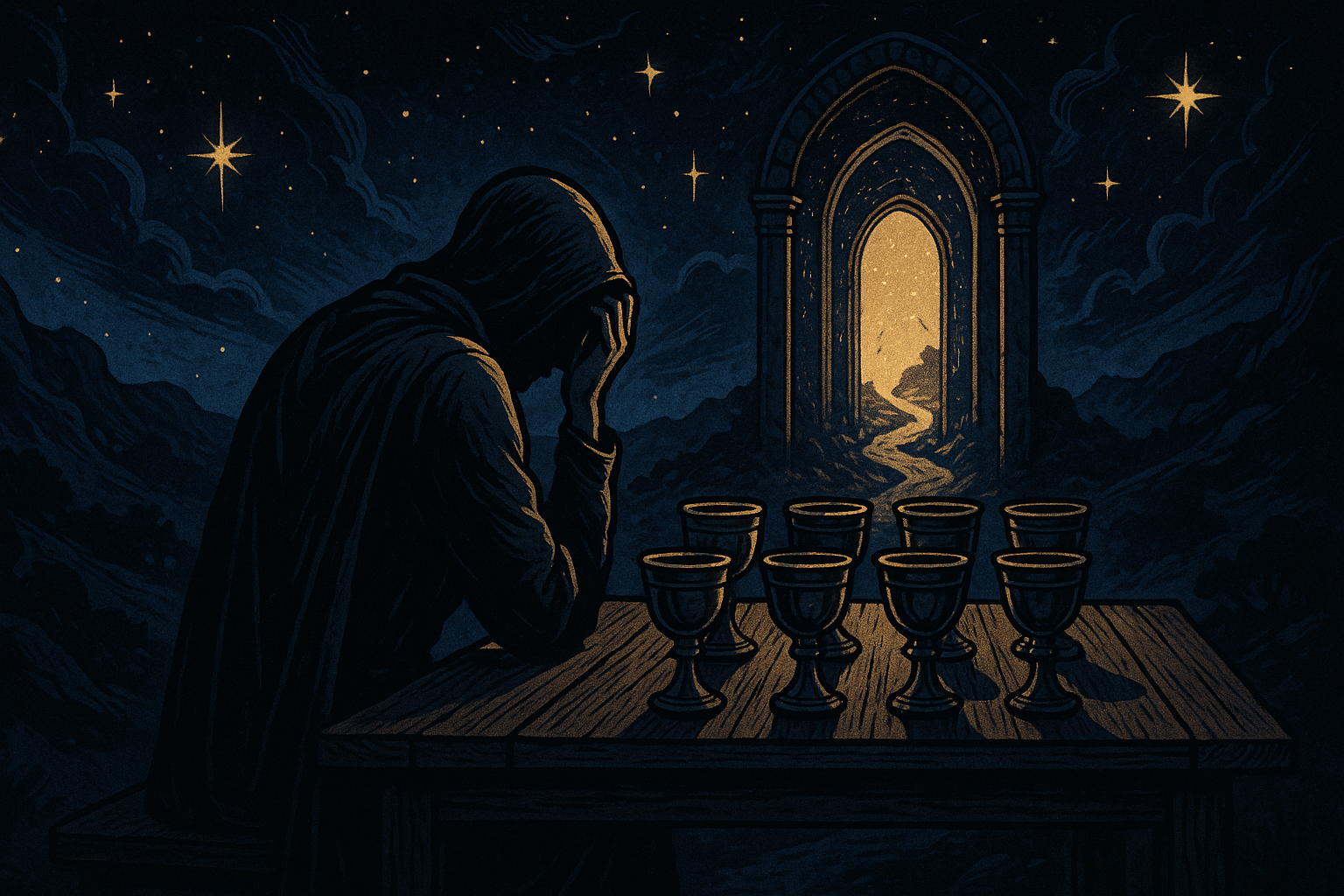
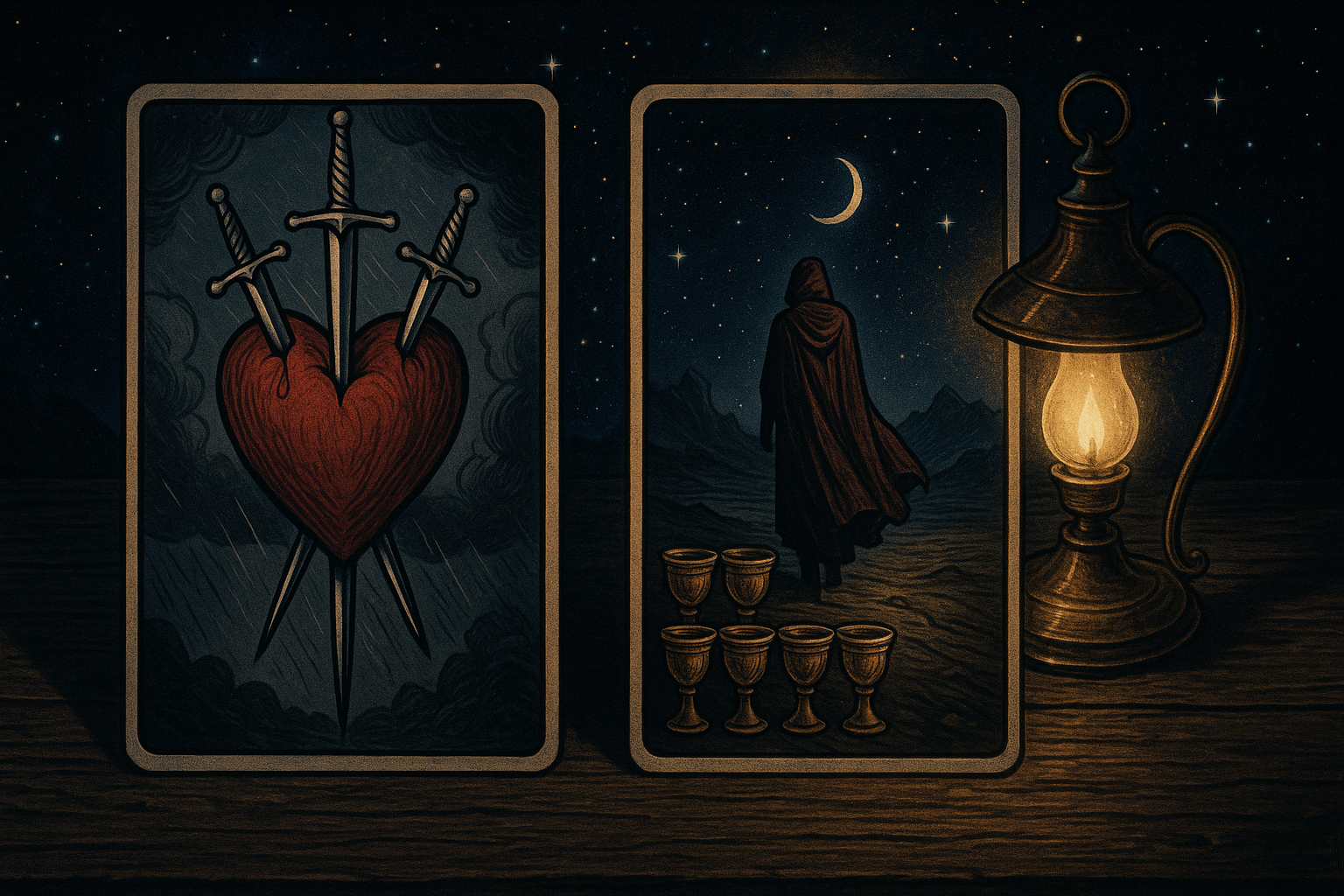
There's a rain cloud in one card and a crescent moon in the other. Both images are grey, both are lonely, and both are about what happens when love stops being worth the cost.
But they're not the same kind of sadness.
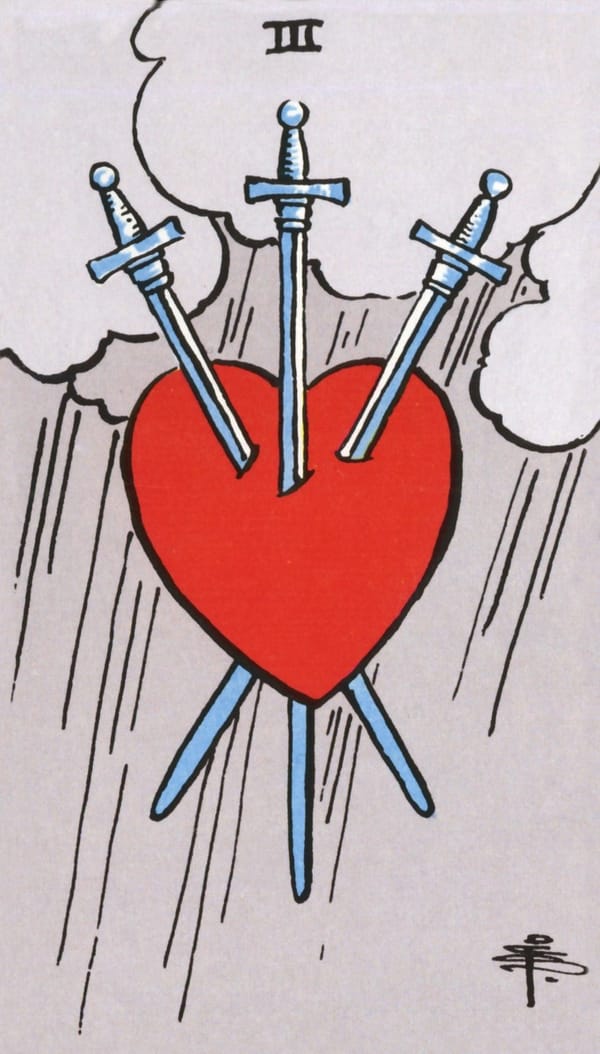
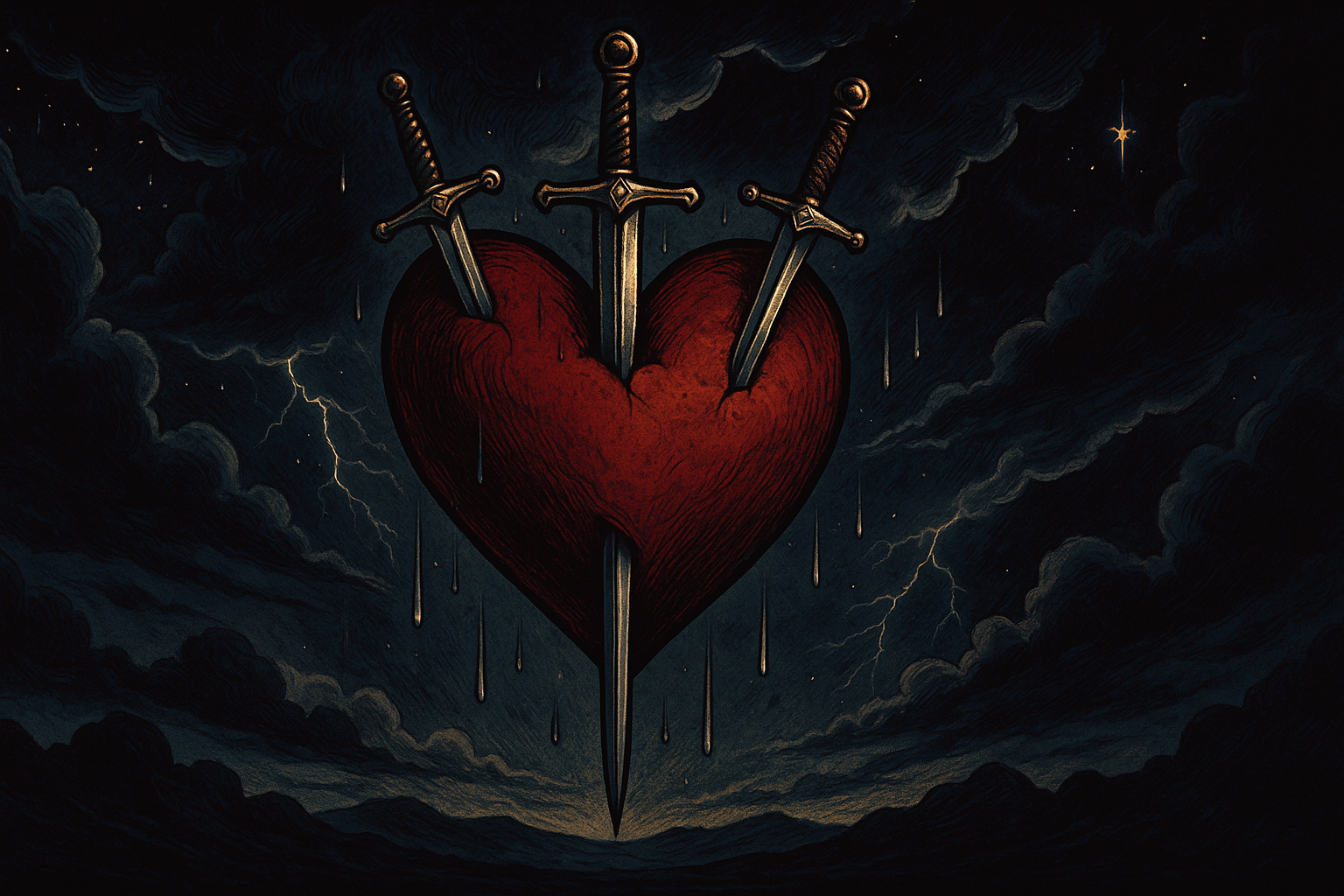
Three swords pierce a large red heart suspended in grey storm clouds. Rain falls in heavy diagonal lines. That's the entire image — no landscape, no figure, no context. Just a heart, impaled, in a storm. It's the most visceral card in the deck because there's nothing else to look at — what Waite called "all that the design signifies naturally." No distractions, no silver linings, no symbolic complexity. Just pain.
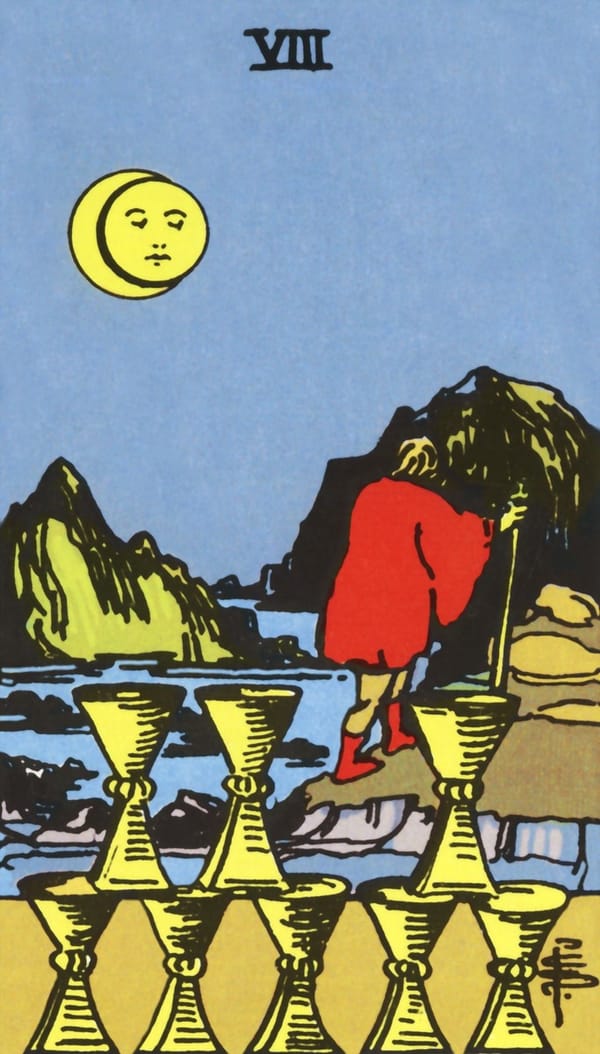
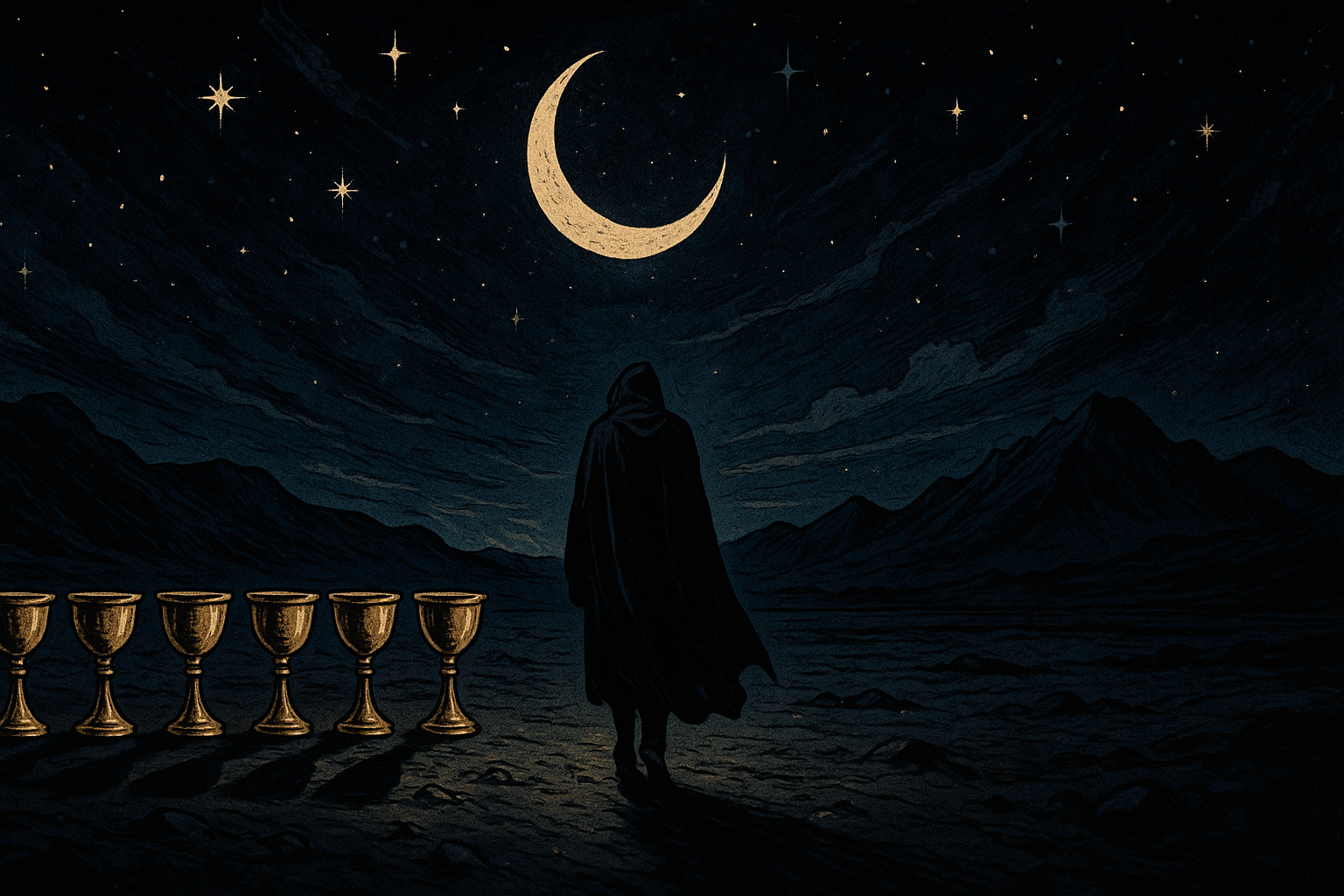
A figure in a red cloak and boots walks away from eight golden cups, carefully stacked in the foreground. A crescent moon — actually a moon eclipsing a sun — hangs in the sky above mountains and still water. The figure carries a walking staff and is heading toward rocky peaks. They've turned their back on everything they accumulated. The cups are still standing. Nothing is spilled. They just don't want them anymore.
The Difference in These Two Sadnesses
The Three of Swords is acute. It's the moment of impact — the text that ends everything, the conversation that reveals a lie, the look on someone's face when they tell you they don't feel the same way. It's the hour after. It's the kind of pain that makes you forget how to breathe normally.
The Eight of Cups is resolved. It's the sadness that comes after the decision, not before. The tears have dried into something harder and more durable. Walking away doesn't feel liberating yet — it feels like crossing a desert at night — but the walking has started. Attachment researchers call this the protest phase giving way to detachment: the crying stops and the packing begins.
When these two cards appear together, you're watching acute pain transform into quiet departure. The swords went in. The cups got left behind.
The Stacked Cups
Look at the eight cups in the foreground of the Eight. They're arranged in two careful rows — five on the bottom, three on the top — with a visible gap in the top row. One cup is missing from the arrangement. Something was already incomplete before the figure decided to leave.
This gap echoes the Three of Swords. The pierced heart, the broken pattern. Whatever the relationship or situation was, it had a fundamental flaw — a missing piece that no amount of staying could fill.
The figure walking away isn't abandoning a complete set. They're finally acknowledging that the set was never complete.
Which Card Came First Changes Everything
Three of Swords first, Eight of Cups second: the pain came, and it broke whatever was keeping you tethered. The betrayal, the loss, the disappointment was the last in a series that finally tilted the equation. You were hurt, and the hurt gave you permission to go.
This is the more common sequence. Most people don't leave things that merely disappoint them. They leave things that wound them.
Eight of Cups first, Three of Swords second: you were already leaving — emotionally, energetically — and the heartbreak is what the departure itself feels like. Choosing to walk away from love, from investment, from years of your life, even when it's the right choice, cuts deep. The swords aren't from someone else's cruelty. They're from your own decision to stop accepting something your heart was still attached to.
This version is quieter and often harder to explain to other people.
The Eclipse Moon
The moon in the Eight of Cups is unusual — it's a crescent moon with a full disc visible behind it, suggesting an eclipse. Light being blocked. Clarity temporarily obscured. This is important when the Three of Swords sits beside it, because the Three is also about blocked clarity — rain clouds obscuring everything but the pain.
Together: you can't see clearly right now. You're navigating by emotional truth rather than visible evidence. The decision to leave might not make sense on paper. The numbers might say stay. The history might say give it another chance. The moon says: you know what you know, even in the dark.
Walk anyway. The eclipse passes.
What No One Tells You About Leaving
The Eight of Cups figure has their back to the cups but their head is slightly bowed, not held high. They're not striding away triumphantly. They're leaving with the weight of everything those cups represented still on their shoulders.
Combined with the Three of Swords, the message is: leaving doesn't fix the pain. Not immediately. Maybe not for a long time. The swords don't magically extract themselves when you start walking. You carry the pierced heart up the mountain.
But you carry it away from the thing that was piercing it. And eventually, at some campsite halfway up those mountains, you notice the swords are loosening.
That's the whole promise of this combination. Not that the pain stops. That the source of the pain stops.