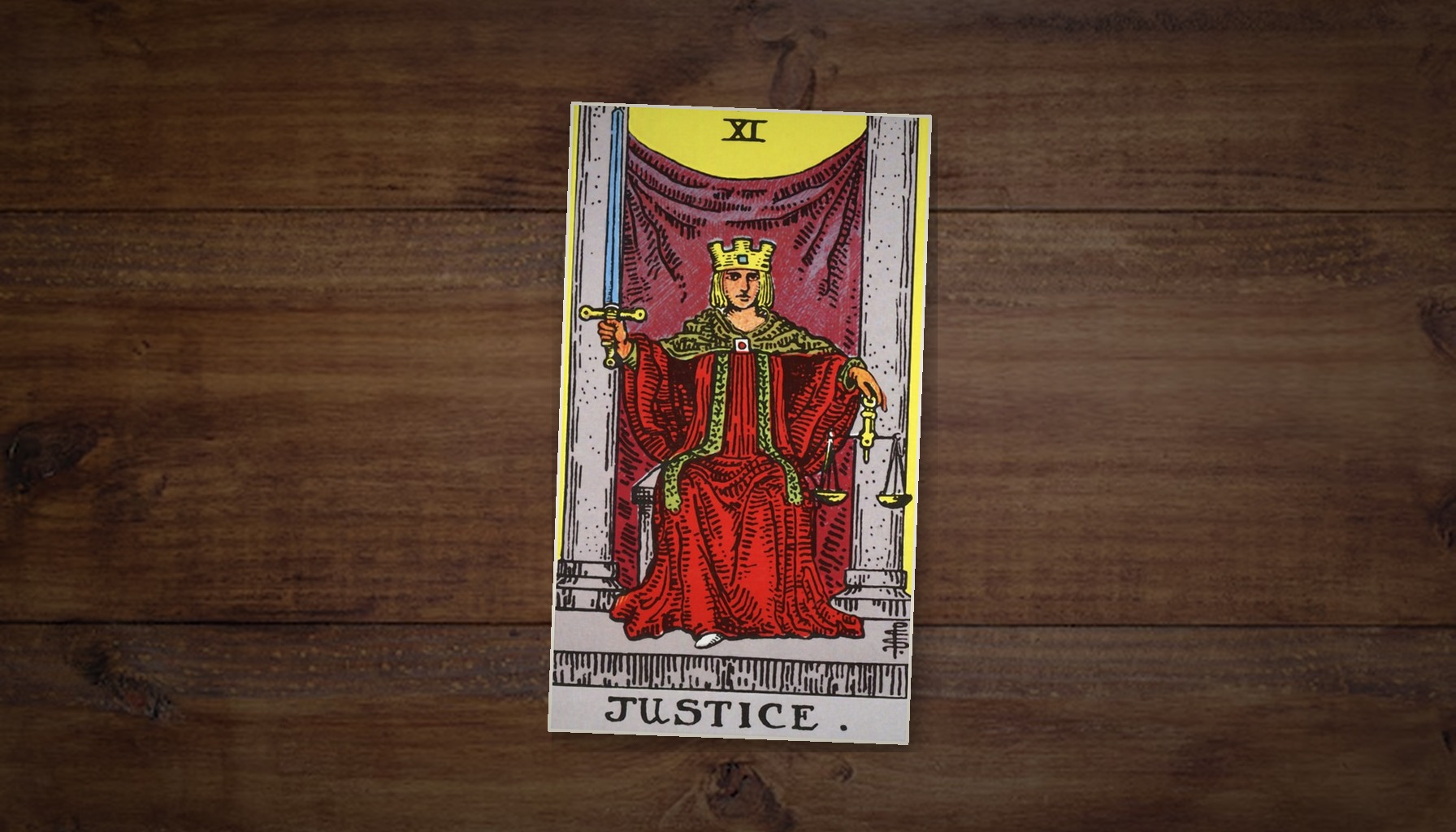
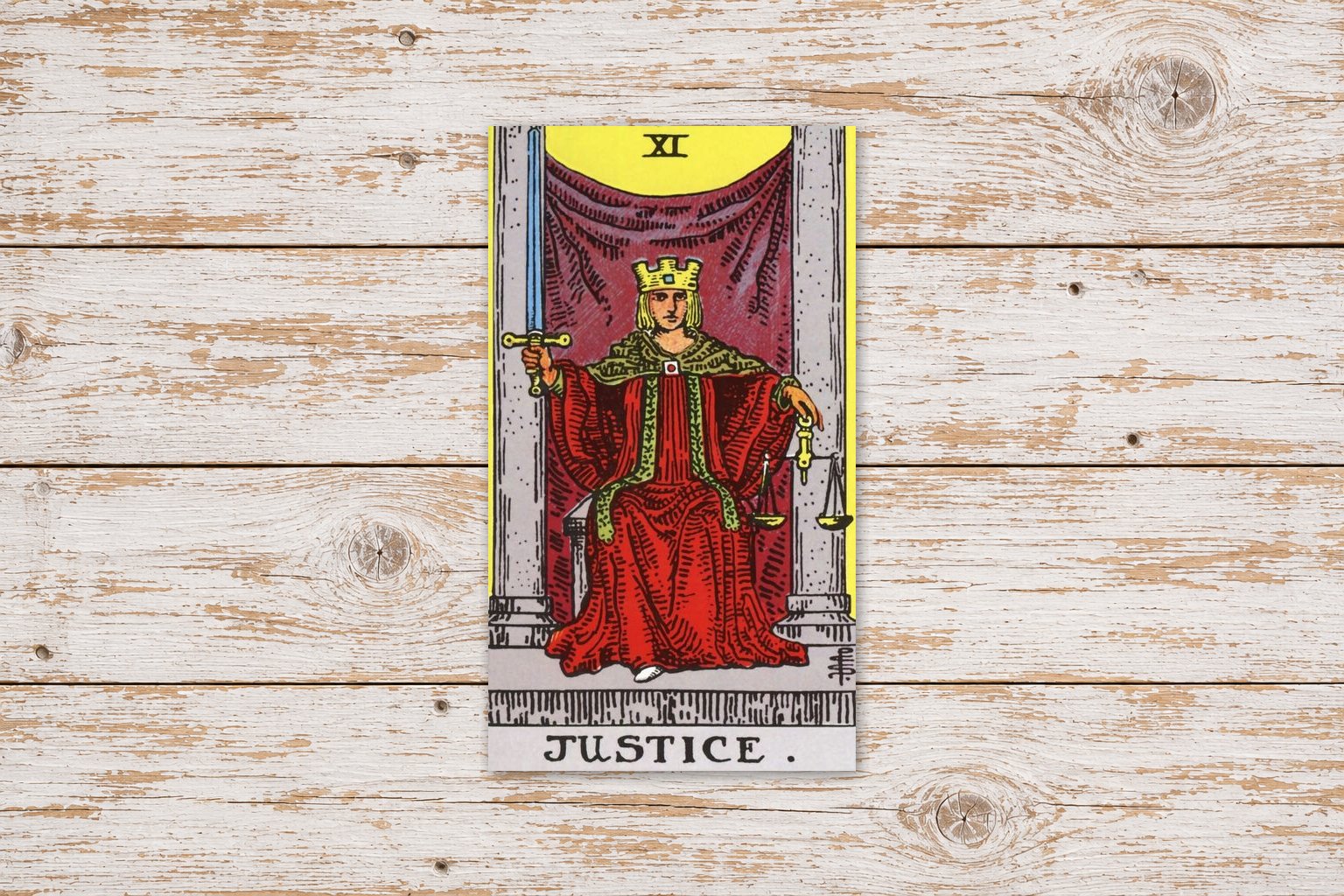
Justice doesn't care what you want the answer to be. It cares what you deserve.
The Short Answer
Upright: Yes, if you've earned it. No, if you haven't. Justice is binary in a way most tarot cards aren't. The sword cuts cleanly. The scales either balance or they don't.
Reversed: Leaning no. Something is unfair, dishonest, or being avoided. The truth that needs to come out is being suppressed.
What This Card Actually Shows You
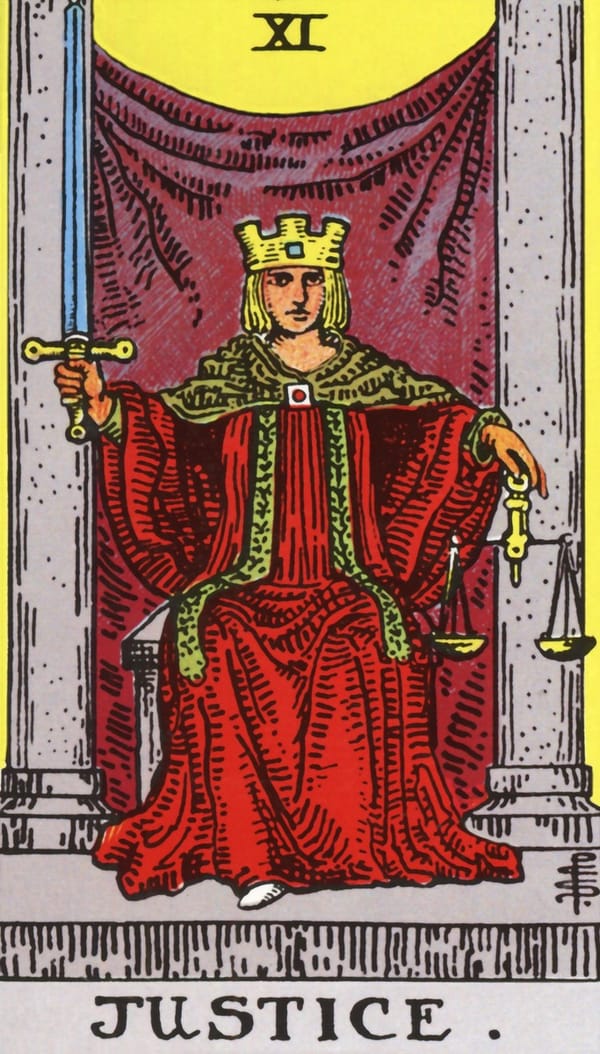
A crowned figure sits between two grey pillars, holding an upraised sword in the right hand and a set of balanced scales in the left. A purple veil hangs behind them. The expression is neutral — not kind, not cruel, just... measuring. The sword points straight up, perfectly vertical. No lean in either direction.
This is the card of cause and effect. What you put in is what you get out. The scales aren't emotional — they don't weigh your intentions or your feelings. They weigh your actions.
When you ask a yes-or-no question and pull Justice, the card is essentially asking you a question back: have you done the work, told the truth, and acted fairly? If yes, your answer is yes. If not, the sword cuts the other way.
Justice Yes or No in Love
Asking about someone's honesty: Yes — the truth is coming out. Justice is one of the clearest cards for questions about honesty and faithfulness. The scales don't allow things to stay hidden. Whatever has been concealed in this relationship is moving toward the surface. If they've been honest, this confirms it. If they haven't, you're about to find out.
Will this relationship work? That depends on the balance. Justice in love means both people need to be contributing equally — not identically, but fairly. If one person is doing all the emotional labor while the other coasts, Justice says no. If both people are genuinely trying, Justice says yes.
After a breakup: If you're asking whether you'll get closure or fairness, Justice says yes. What was owed will be settled. If you're asking whether you'll get back together, the answer depends on whether the original imbalance has been addressed. Justice doesn't allow reruns of the same pattern.
Legal matters in relationships: Divorce proceedings, custody, property disputes — Justice is favorable for the person who has been fair and honest. This card literally depicts the legal system working.
Justice Yes or No in Career
Job application or interview: Yes, if your qualifications match the role. Justice doesn't favor charm or connections — it favors competence and the person who actually earned it. If you're the best candidate, this card confirms that the process will be fair.
Raise or promotion: Yes, if your performance warrants it. Justice is the best card you can pull when asking about merit-based recognition. The scales weigh your actual output, not your seniority or your relationship with the boss.
Workplace dispute: The fair outcome will prevail. If you've been wronged, Justice supports your case. If the dispute is more complicated than you're admitting, the card is warning you that the full picture will come to light.
Contract or negotiation: Yes — the terms will be fair, or any unfairness will become visible. Read the fine print. Justice rewards attention to detail and punishes assumptions.
Justice Yes or No in Money
Financial dispute: The correct amount will be settled. If you're owed money, Justice says you'll get it. If you owe money, Justice says you'll need to pay it.
Investment decision: Yes, if the fundamentals are sound. Justice doesn't support gambles — it supports informed decisions based on real data. This card says do the math, read the terms, and make the rational choice.
What Makes Justice Unusual as a Yes or No Card
Most tarot cards give you a yes or no based on energy, timing, or emotional readiness. Justice gives you a yes or no based on what actually happened. It's not reading vibes — it's reading the record.
This means:
- If you've been honest and hardworking, Justice is one of the strongest yes cards in the deck
- If you've been avoiding something — a conversation, a responsibility, a truth — Justice is one of the strongest no cards
- The answer often isn't what you want, but it's what's fair
Reversed: When Justice Says No
Justice reversed in a yes-or-no reading means something is off-balance. Someone is being dishonest. A system that should be fair is rigged or broken. You're not getting what you deserve — either because someone is blocking it or because you're not being honest with yourself about what you've earned.
Reversed Justice can also mean that you're the one avoiding accountability. The question you're asking might have a yes answer, but you're not ready to accept the conditions that come with it.
Cards That Shift Justice's Answer
- With the Two of Cups: Strong yes for relationship questions. Fair, balanced partnership.
- With the Five of Swords: No. Someone is winning by cheating, and the imbalance will cause problems.
- With the Ten of Pentacles: Yes for financial and family matters. Long-term stability built on fair foundations.
- With The Tower: A sudden revelation of truth. The answer might be yes, but the way you get it could be disruptive.
- With Temperance: Yes, with patience. The fair outcome takes time to arrive.
The Bottom Line
Justice gives the most honest yes-or-no answer in the deck. It doesn't soften the truth, it doesn't factor in your feelings, and it doesn't play favorites. If you've done the right thing, the sword is on your side. If you haven't, the scales already know.