
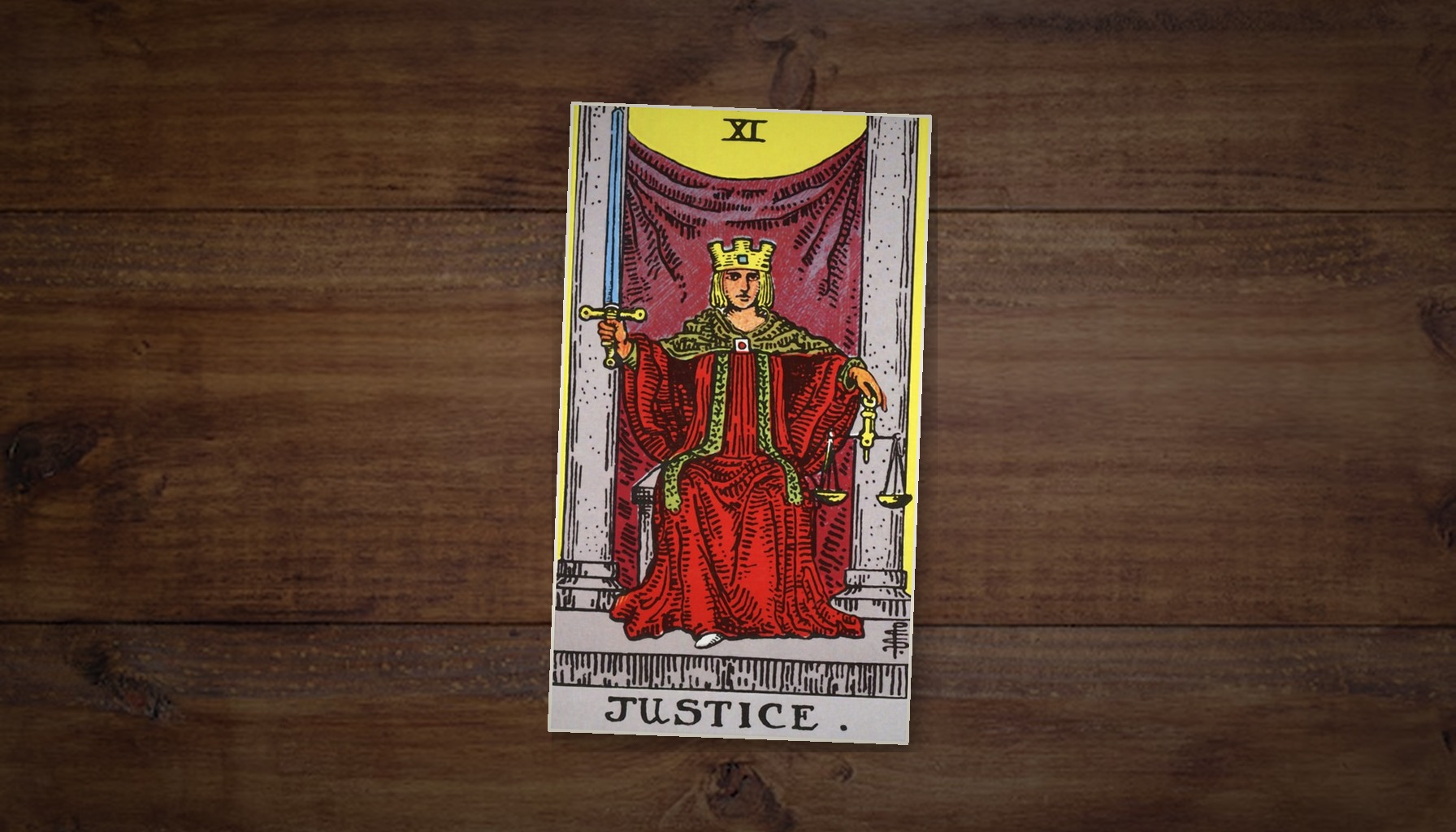
This isn't the card you hoped for. If you asked how someone feels about you and pulled Justice, your first reaction was probably disappointment. Where's the passion? Where's the longing? Where's the Knight on his horse with a cup extended?
Justice doesn't do any of that. What Justice does is something most people never get from the object of their feelings: an honest evaluation.
What She's Holding and Why It Matters
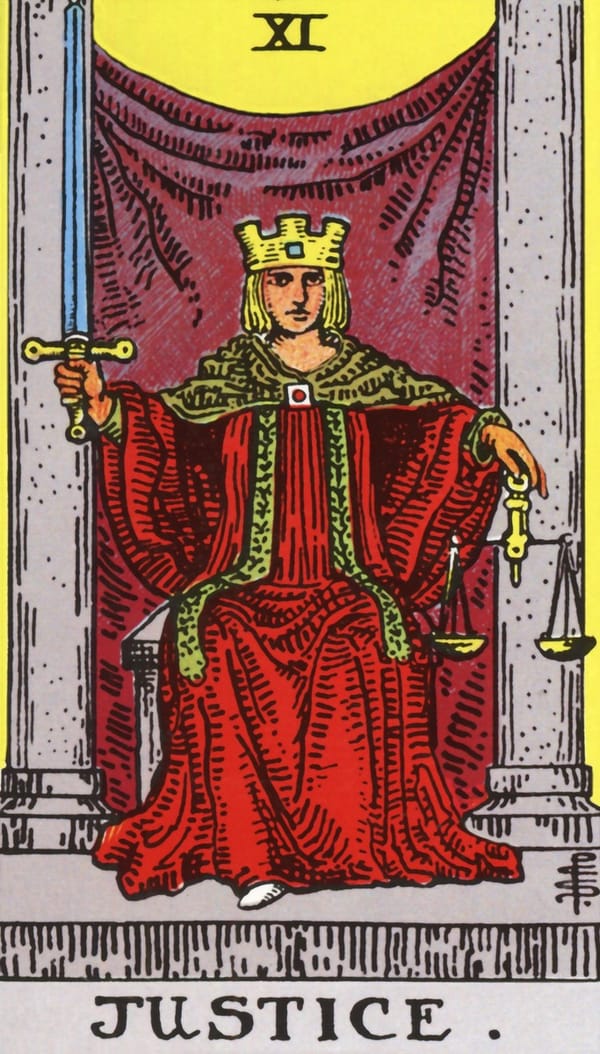
A figure in a red robe and green cloak sits on a stone throne between two grey pillars. A purple veil hangs behind her. In her right hand, she holds a sword pointing straight up. In her left, a set of golden scales, perfectly balanced. On her head sits a gold crown with a small square jewel at the center — a symbol of ordered, structured thought.
Look at her face. No warmth. No cruelty either. Just assessment. Waite described Justice with the qualities of "rightness" and "equity." She isn't deciding whether she likes you. She's deciding whether the evidence supports the feeling.
The sword points up, not forward. She isn't threatening you with it. She's holding it in readiness — ready to cut through deception, including her own. That sword will separate what she actually feels from what she wishes she felt.
The scales are balanced, which means her assessment isn't complete yet. If they'd already tipped, she'd have made her decision. Right now, she's still weighing.
What It Means When Someone Feels Justice Toward You
The person who pulled this card for how they feel about you is not swept off their feet. They're standing firmly on both of them, looking at you from behind an internal bench.
They're noticing things. Whether you do what you say you'll do. Whether your words match your behavior. Whether the way you treat the waiter matches the way you treat them. They're building a case — not against you, but about you. Collecting data points the way a good judge collects evidence before ruling.
This might sound cold, and compared to the Queen of Cups' emotional immersion, it is. But there's something here that emotional cards can't give you: if this person decides they want you, it won't be because their feelings ambushed them. It'll be because they looked at everything — your flaws, your patterns, your history — and the scales still tipped in your favor.
That's a considered verdict. It holds up under pressure in ways that infatuation doesn't.
The Sword in the Right Hand
The right hand is the active hand. The sword in it means this person is prepared to act on their assessment. Once the scales tip — once they've gathered enough evidence — the sword comes down.
In practice, this can feel like being tested. They ask questions that seem casual but aren't. They watch how you handle a disagreement. They notice whether you apologized for the thing last week or just let it fade. Research on evaluative thinking in relationships shows that this kind of assessment is actually a sign of investment — people who don't care don't bother weighing the evidence.
If you're getting Justice energy from someone, the worst thing you can do is perform. Don't try to be more charming, more agreeable, more of what you think they want. The sword cuts through performance. They'll see it, and it'll count against you. Be exactly who you are and let the scales do their work.
When Justice Shows Up Reversed
Reversed Justice is a different animal. The scales are no longer level. This person's feelings about you are distorted by bias — theirs, not yours.
Maybe they're holding something against you that you didn't do. Projecting an ex's behavior onto you. Judging you for a version of yourself that doesn't exist anymore. The sword is still in hand, but it's pointing the wrong direction. Their assessment isn't fair.
Or the reverse: they're overlooking things they shouldn't. They know you lied about something but they're rationalizing it away because they want the scales to balance. They're cooking the books of the relationship.
Reversed Justice as feelings often appears when someone has made up their mind about you before the evidence was in. The verdict came first. Now they're arranging facts to fit it.
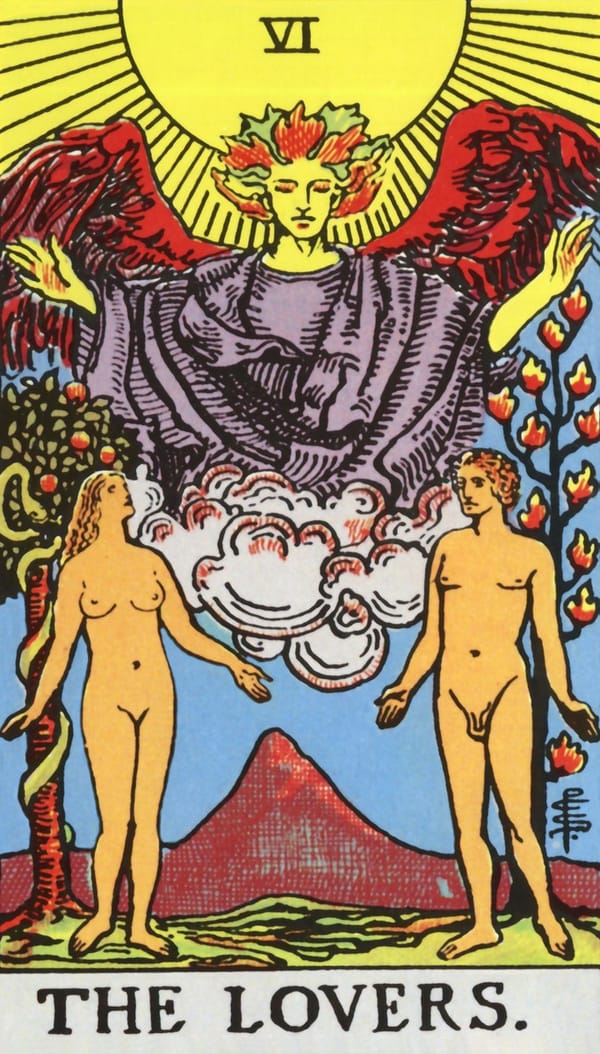
Compare this with the Lovers reversed, which is about misalignment in values. Justice reversed isn't about values — it's about perception. They're not seeing clearly.
Upright Justice in a New Relationship
If this reading is about someone you've recently started seeing, Justice as feelings is actually reassuring. It means they're taking you seriously enough to evaluate carefully instead of diving in recklessly.
The pillar on the left and the pillar on the right represent opposing perspectives — they're considering more than one way to see you. The veil behind Justice means there's something still hidden, still being revealed. They haven't made up their mind because you haven't shown them everything yet.
This is someone who falls slowly. Not because their feelings are weak — look at that red robe, the color of passion — but because their instinct is to test the feeling before trusting it. The King of Swords operates similarly, but Justice is more impartial. The King has an agenda. Justice only has the scales.
What to Do With This Reading
If someone feels Justice toward you, don't try to rush the verdict. You can't charm a judge. You can't force scales to tip with enthusiasm.
What you can do: be consistent. Show up the same way every time. Let your behavior be the evidence she weighs. If you're worth it, the scales will say so without you putting your thumb on them.
And if the scales tip against you — if Justice, having weighed everything, decides the balance isn't there — that's an honest answer you can trust more than a kindly worded rejection. At least you know the assessment was thorough.