

Look at Who Won and What It Cost
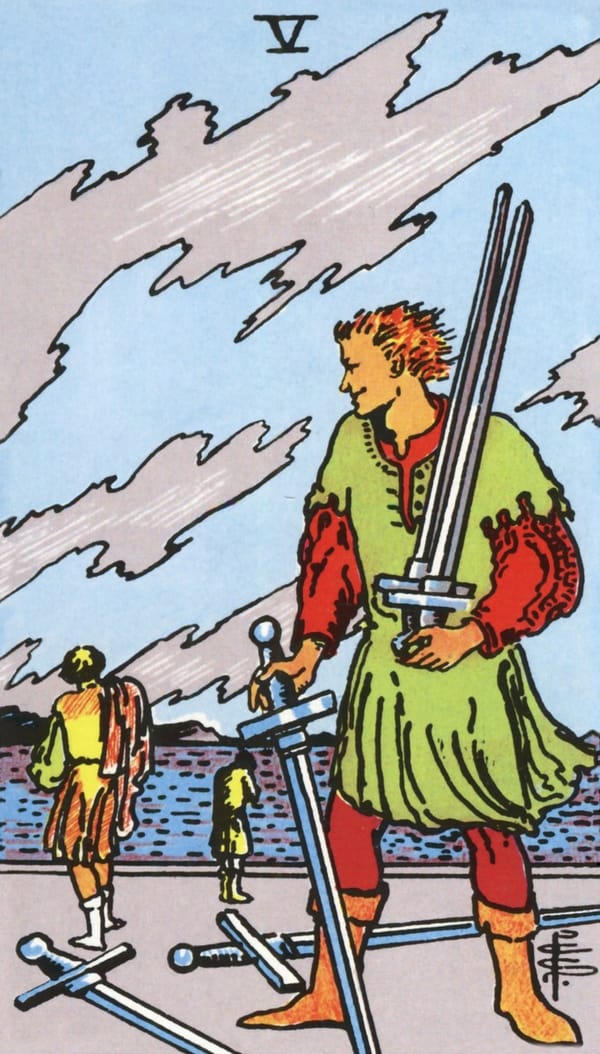
A man in a green tunic stands in the foreground, holding three swords. He's got two in one arm and a third in his opposite hand. Behind him, two swords lie abandoned on the ground. Further back, two figures walk away, one hunched over in clear defeat, the other small and distant. The sky is filled with torn, ragged clouds. Water stretches out behind the scene, and the wind seems to have shifted.
Look at the man's face. He's looking back over his shoulder at the retreating figures with an expression that could be satisfaction, smugness, or something more complicated. He won the fight. He has three of the five swords. But the two people walking away took something with them when they left, and the sky overhead is still troubled.
Now reverse it. Watch what happens to the victor.
This card often appears alongside deception — see tarot when someone is lying for the full picture.
Waite described this card in The Pictorial Key to the Tarot, published in 1910, as part of his collaboration with artist Pamela Colman Smith.
When the Winner Puts Down the Swords
Reversed, the man in green faces the two retreating figures differently. The three swords he's holding become heavy instead of triumphant. The smirk shifts. He looks at what he's collected and starts to wonder whether three swords are worth two people walking away.
The Five of Swords reversed appears when you're done with the battle. You're not surrendering because you're weak. You're choosing peace because you've realized that some fights cost more than they're worth.
The aftermath of this conflict connects to Three of Swords reversed — both cards deal with wounds that are starting to close.
The Wisdom of Dropping Weapons
Look at the two abandoned swords on the ground. In the upright card, they represent what the defeated figures dropped when they gave up. Reversed, they become an offering. Swords laid down. Weapons returned. The vocabulary of conflict shifting to the vocabulary of peace.
This card often appears when you've been stuck in cycles of argument with a romantic partner, family member, coworker, or even yourself. You've tried every angle, made every point, collected every sword you could carry. And suddenly you realize the conversation has become the problem itself.
Walking away doesn't mean admitting defeat. It means your arms are full of swords and you'd rather have your hands free.
This reversal sometimes signals the aftermath of psychological manipulation — either recognising you've been doing it or realising it's been done to you.
Healing the Wounds Left Behind
The two figures in the background are walking away injured. One is visibly hunched, carrying the weight of whatever happened. Even reversed, those figures exist. The fight happened. The wounds were inflicted.
The Five of Swords reversed acknowledges that moving forward doesn't mean pretending the fight never happened. You might still feel hurt, disappointed, or tired. The ragged clouds overhead don't clear instantly. But the wind is shifting direction.
Healing looks different for everyone. Maybe you need space. Maybe you need one honest conversation about preventing future conflicts. Maybe you need to accept that those two figures walking away might not come back, and that's the price of the swords you were holding.
The Relief of Letting Go
There's a specific kind of exhaustion that comes from carrying three swords while watching people leave. Reversed, the man in green experiences what happens when he finally sets them down. His shoulders can relax. His hands are free. He doesn't have to grip the handles anymore.
You might be surprised by how intense this relief feels. You might not have realized how much mental and emotional energy the conflict was consuming until the swords are on the ground and your arms feel suddenly light.
The ragged sky starts to settle. Not clear yet, but calmer. The water behind the scene smooths out. Even the wind cooperates.
Moving Forward Without Collecting More Swords
The Five of Swords reversed doesn't guarantee reconciliation. The two figures in the background might forgive and return, or they might not. What this card promises is that you can stop gathering weapons and start gathering something else.
This isn't about becoming passive. Look at the five swords in the scene. They don't disappear. They're still there, available if genuinely needed. The difference is you're choosing not to carry them everywhere you go. You've learned the difference between defending yourself and accumulating victories that leave everyone wounded.
If you're deciding whether to engage or walk away, tarot for a difficult conversation addresses that exact tension.
Some battles are worth it. The Five of Swords reversed helps you stop fighting the ones that aren't.


