You shuffled. You pulled. You looked down and your stomach dropped.
Every tarot reader has a list of cards they don't want to see in a love reading. But the cards that scare you most are usually the ones carrying the most useful information. Here's what each of them is actually saying.
Three of Swords — The Heart That's Already Broken
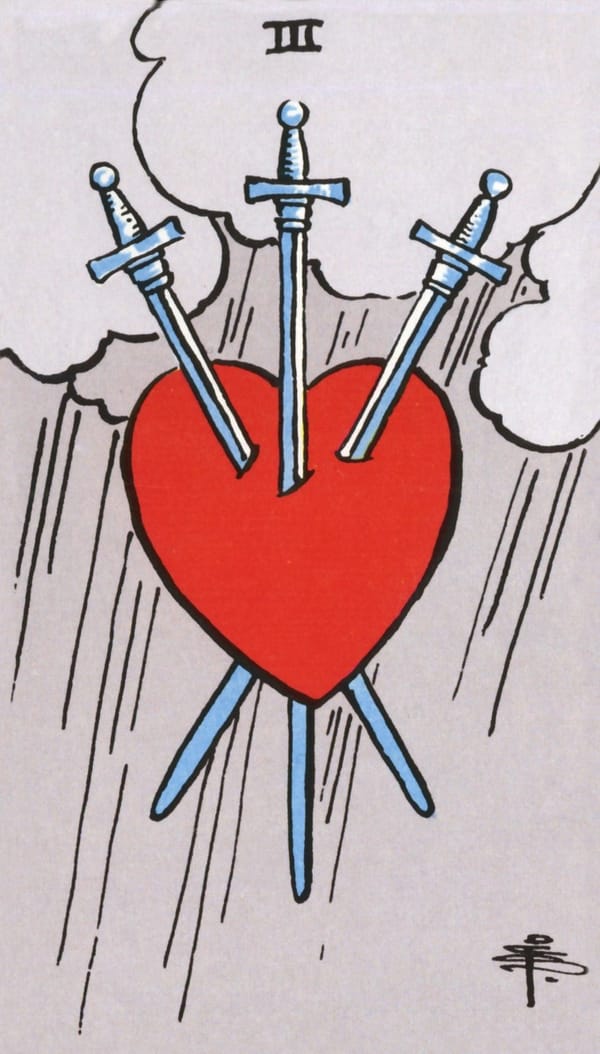
Three grey swords pierce a vivid red heart. Heavy rain falls from thick clouds. No figures, no landscape, no context. Just the image itself — a heart with blades through it, hanging in a storm.
The Three of Swords is the card everyone dreads because it doesn't hide behind symbolism. It shows you exactly what it means. But here's what most people miss: the swords are already in the heart. This isn't a warning about future pain. It's a portrait of pain that exists right now — or already happened.
If you pulled this in a love reading, it's confirming something you already know. The betrayal that you've been trying to rationalize. The words that landed wrong and never got addressed. The slow realization that something between you is wounded.
Why it's not as bad as it looks: the swords can be pulled out. The Three of Swords reversed shows exactly that — the beginning of healing. The rain in the image is grief, and grief is the process by which wounds close. This card isn't saying your love life is ruined. It's saying something hurt and you need to name it before it can heal.
The Tower — Lightning Finds the Cracks
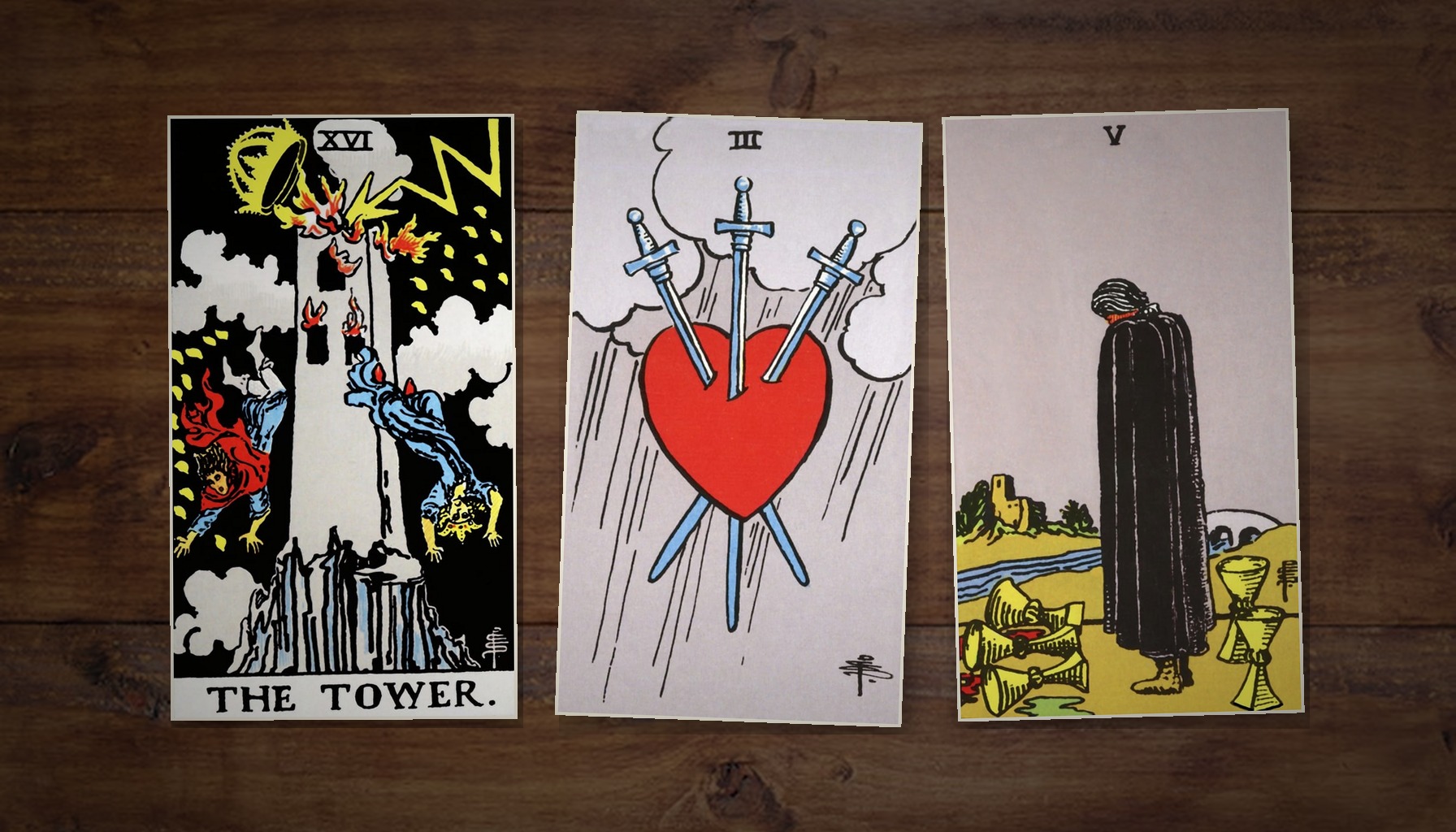
A bolt of lightning strikes the crown off a grey tower. Flames erupt from the windows. Two figures fall headfirst through the air against a black sky. Yellow drops — fire or divine sparks — scatter everywhere.
The Tower in love terrifies people because the destruction looks total. But look closer at what's being destroyed. It's the crown — the false top, the pretense, the thing sitting on top of the structure that didn't belong there. The tower itself is still standing. The crown is gone.
In a relationship, the Tower strikes when something can't be maintained anymore. The lie that's been holding things together. The role you've been playing. The version of the relationship where you both pretend a certain conversation doesn't need to happen. Lightning finds those cracks and blows them open.
Why it's not as bad as it looks: after the Tower comes the Star. That's not an accident. The destruction creates the opening for something genuine. The figures falling from the Tower are being ejected from a structure that was hurting them. The fall is terrifying. The ground they land on is honest.
Five of Cups — Staring at What Spilled
A figure in a black cloak stands with head bowed, looking down at three overturned cups. Red and green liquid spills across the ground. Behind the figure, two cups remain standing, unnoticed. A bridge crosses a river in the background, leading to a distant house.
The Five of Cups is the card of focusing on loss while ignoring what remains. The figure can only see the three fallen cups. The two standing cups — directly behind them — go completely unnoticed. The bridge to safety is right there. The house waits.
In love, this card appears when grief over what went wrong is blinding you to what's still good. Maybe the relationship had a rough patch and you can't stop replaying the worst moments. Maybe someone left and you're so fixated on their absence that you can't see the people still standing behind you.
Why it's not as bad as it looks: two cups are still full. The card itself contains the remedy — turn around. The grief is real, but it's not the whole picture. The bridge behind the figure leads somewhere. The house is warm. You just have to stop staring at the spill.
The Devil — Comfortable Captivity
The Devil sits above two chained figures. Horns, bat wings, an inverted pentagram. The chains are loose. The figures have small horns growing from their own heads, suggesting they've been here long enough to start resembling what binds them.
In love, the Devil represents attachment that has curdled into dependency. Passion that became obsession. A dynamic where the heat between you isn't warmth — it's friction. You stay because leaving feels impossible, not because staying feels good.
Why it's not as bad as it looks: the chains are loose. That single detail changes everything. You're not trapped. You're choosing to stay. And a choice can be unmade. The Devil doesn't predict doom — it describes a dynamic you have the power to end. The moment you notice the chains are loose is the moment the Tower's lightning has a crack to enter.
Ten of Swords — The Melodramatic One
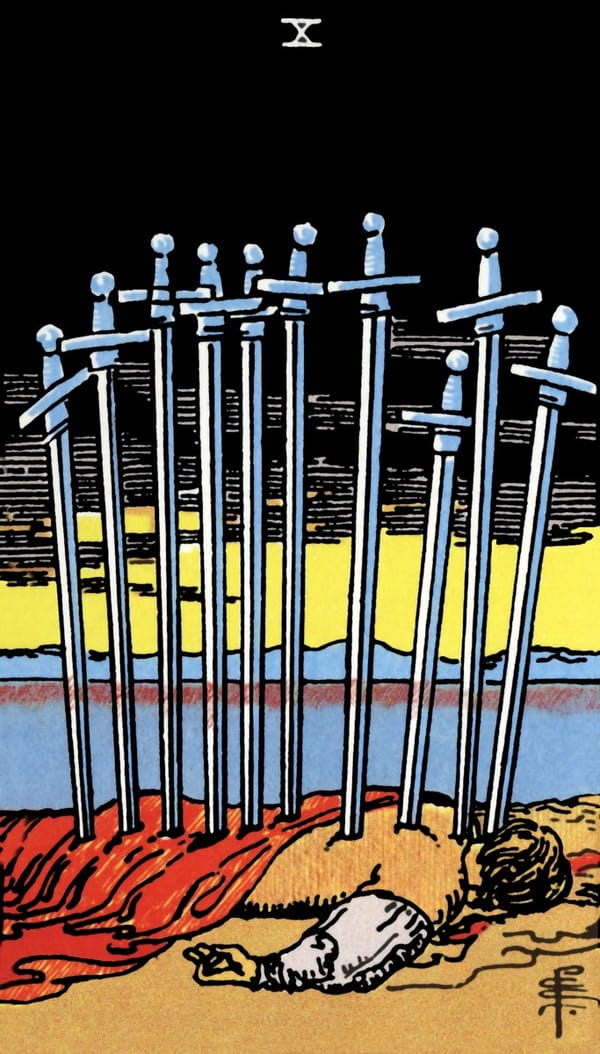
A figure lies face-down with ten swords driven into their back. A black sky fills the upper half of the card. But look at the bottom — a golden horizon. The sun is rising. Water stretches calm and still beyond the body.
The Ten of Swords is so over-the-top that it almost loops back to reassuring. Ten swords in one back is excessive by design. Waite intended the imagery to suggest that the worst has already happened. It's not getting worse from here. This is the floor.
In love, the Ten of Swords means the painful thing is done. The breakup happened. The betrayal landed. The truth came out. You're lying here with the swords in your back thinking it's the end of everything.
Why it's not as bad as it looks: that golden sunrise. Look at it. The darkest card in the deck has a dawn in it. The Ten of Swords is an ending, but it's the kind of ending that comes right before a new beginning. You can't see the sunrise while you're face-down. But it's there. It's always been there.
Seven of Swords — The One You Don't Want to Trust
A figure tiptoes away from a military camp carrying five swords, leaving two behind. They glance back over their shoulder with an expression that could be triumph or guilt.
The Seven of Swords in a love reading suggests deception — but not always someone else's. Sometimes you're the one sneaking away from honesty. Carrying secrets that get heavier with every step. Leaving parts of the truth stuck in the ground behind you because the whole truth is too many swords to carry at once.
Why it's not as bad as it looks: the deception isn't sustainable. Look at the figure — they're off-balance, carrying too much, glancing backward nervously. This situation resolves itself. Lies that require this much effort collapse under their own weight. The Seven of Swords is a snapshot of something mid-fall.
The Pattern Across All These Cards
Every "worst" love card has the same structure: something painful is happening, and something useful is embedded in the pain. The Three of Swords contains a heart that can heal. The Tower creates the opening for the Star. The Five of Cups has two full cups behind the grief. The Ten of Swords has a sunrise at its base.
The worst card in a love reading isn't any of these. The worst card is the one that tells you everything is fine when it isn't — because that card lets you stay comfortable in a situation the other cards are trying to get you out of.
If you pulled something scary, it's because the deck respects you enough to tell the truth. That's more than most people get.