
The connection was undeniable. Then one of you ran.
Maybe it was too intense. Maybe one of you wasn't ready for what this relationship demanded. Maybe the closeness triggered something old and unhealed, and the only response your nervous system could produce was distance.
Twin flame separation isn't a breakup. It's a specific phase with its own logic, and the tarot has distinct cards for each part of it.
The Card of Walking Away
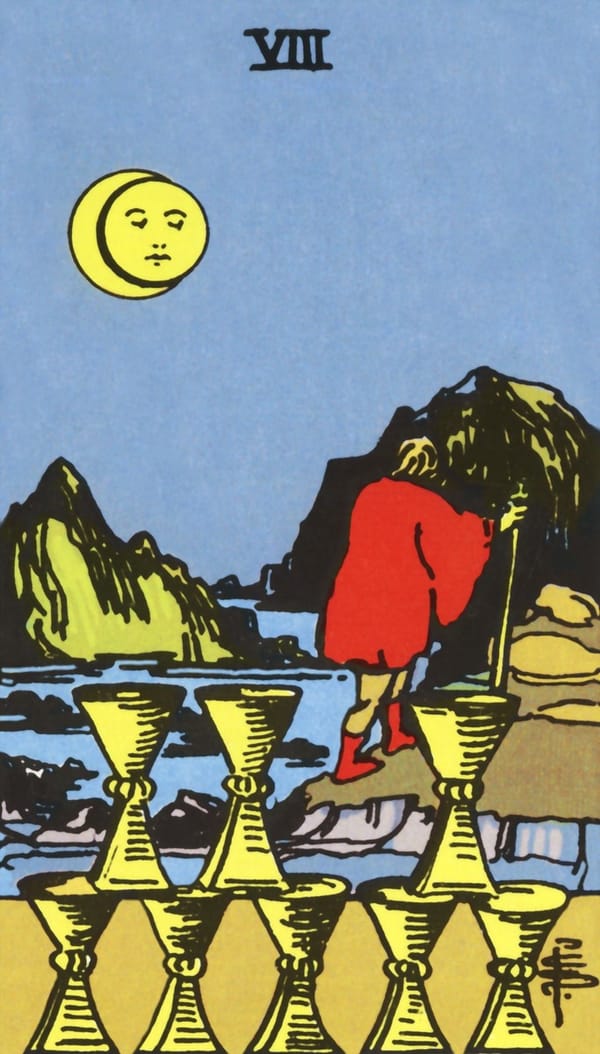
The Eight of Cups defines the moment separation begins. A cloaked figure walks away from eight cups stacked in a neat arrangement — five on the bottom, three on top, with a gap where a ninth cup would complete the pattern. A large moon with a sombre human face hangs in the sky, half-eclipsed. The landscape ahead is barren — rocky mountains, no path.
Every detail matters here. The cups are standing. Nobody knocked them over. Nothing is destroyed. The figure didn't leave because the connection was bad. They left because the connection was incomplete — look at that gap in the arrangement — and staying couldn't fill it.
The moon watching overhead gives the departure a dreamlike quality. This isn't a calculated decision. It's a gut feeling that something is missing, even though everything visible says you should stay. The figure doesn't look back. The mountains ahead are empty. They're walking toward nothing because staying with almost-everything became worse than having nothing at all.
In twin flame separation, the Eight of Cups is almost always the runner's card. The person who leaves doesn't leave because they stopped caring. They leave because caring this much broke something open that they can't close while standing next to you.
The Runner's Cards
The runner isn't always running away from you. Often they're running from themselves — from what your presence forces them to see.
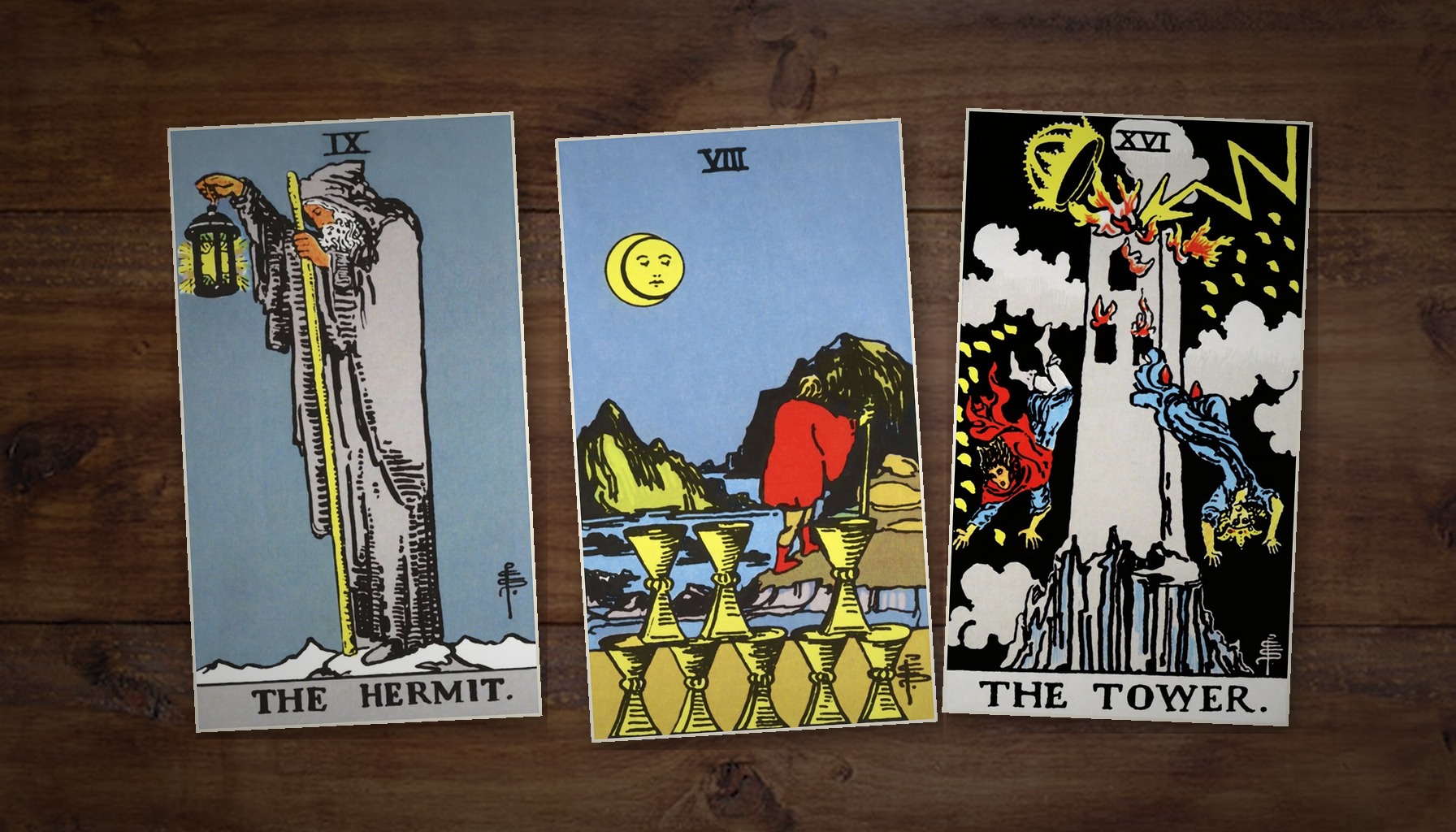
The Hermit stands alone on a mountain peak, lantern in hand, cloaked in grey. As the runner, The Hermit represents someone who needs isolation to process the intensity of the connection. They aren't rejecting you. They're overwhelmed by what you activate in them and need altitude — distance — to understand it.
The Tower as a trigger for running: sometimes separation begins with a sudden revelation. Lightning strikes, the crown flies off, two figures fall. In twin flame dynamics, The Tower is the moment one person sees the other clearly — all of them, including the parts that are terrifying — and the structure of the relationship as it existed can't hold that much truth. One of you falls out of the Tower and runs.
Reversed Knight of Cups: upright, this knight rides toward you with feelings extended. Reversed, the horse turns away. The cup tilts. The offering is retracted — not because the feelings disappeared, but because the person holding them got scared of what accepting the connection would require.
The Chaser's Cards
The chaser's experience is a different kind of suffering. You didn't leave. You're still here, holding the connection open, waiting for someone who walked into the mountains.
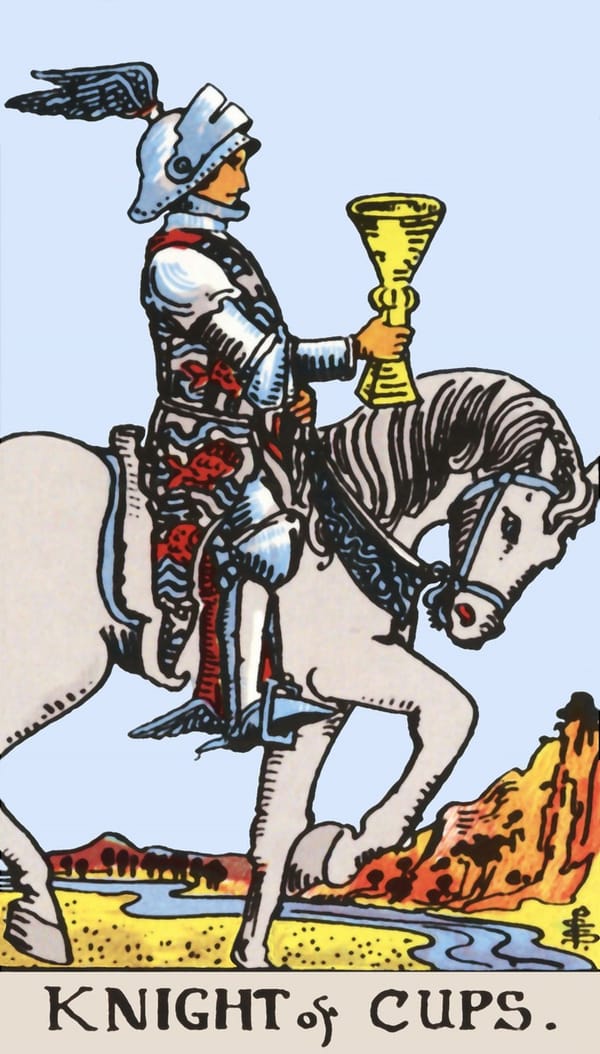
Knight of Cups upright — the knight riding forward with his cup carefully extended — is the chaser's default state. Still approaching. Still offering. The horse walks slowly, almost delicately. The chaser isn't aggressive. They're persistent in a way that's equal parts devotion and denial.
Page of Swords — a young figure standing on uneven ground, sword held up, looking over their shoulder. The chaser as Page of Swords is the one checking social media, analyzing the runner's last message for hidden meaning, watching for any sign of movement. The sword is a thought, not a weapon. They're cutting every sentence into fragments looking for hope.
Six of Cups reversed — upright, this card shows nostalgic exchange, a sweet gift of flowers between two figures of different heights. Reversed, the chaser is trapped in what was. They keep returning to old texts, old photos, old memories, trying to recreate a feeling that belongs to an earlier version of the relationship. Research on rumination in relationships describes exactly this loop — the compulsive revisiting that feels productive but prevents forward movement.
When the Separation Is Ending
Not every twin flame separation ends in reunion. But when it does, specific cards signal the shift:
Temperance — an angel stands with one foot on land and one in water, pouring liquid between two cups. This is the card of integration after division. The two cups are the two people. The angel is the process of blending what they learned apart into something that can exist together. Temperance doesn't rush. The water moves between cups at its own pace.
Judgement — figures rise from coffins as an angel blows a trumpet from the clouds. In twin flame terms, this is the spiritual wake-up call that ends the running. The runner hears the trumpet. The call is too loud to ignore. Something inside them says: the lesson of separation is complete. Go back.
The Two of Cups appearing after a period of Eight of Cups or Hermit energy means the connection is reassembling. Two people face each other again, each extending a cup. This isn't nostalgia or desperation. It's a new exchange — both people have changed, and the cups they offer now hold different contents than the ones they walked away from.
A Spread for Twin Flame Separation
Don't ask "when will they come back." Ask something the cards can actually answer:
Card 1: What is my lesson in this separation? The reason you're the one standing still, not the one walking.
Card 2: What is their lesson? What the distance is teaching them that your presence couldn't.
Card 3: What needs to happen before reunion is possible? This is the card that tells you whether the separation is a phase or a conclusion. The Star here means healing. Death means complete transformation. The Five of Cups means grief that hasn't been processed yet.
Card 4: What does the connection look like on the other side? Not what you want it to look like. What it actually becomes if both people do their work.
The hardest part of twin flame separation is that it requires exactly what feels impossible: trusting that someone who walked away did it because the connection matters, not because it doesn't. The Eight of Cups figure left the cups standing. That's not abandonment. That's preservation — keeping the structure intact until they can return and add the missing piece.