

That Smile Says Everything
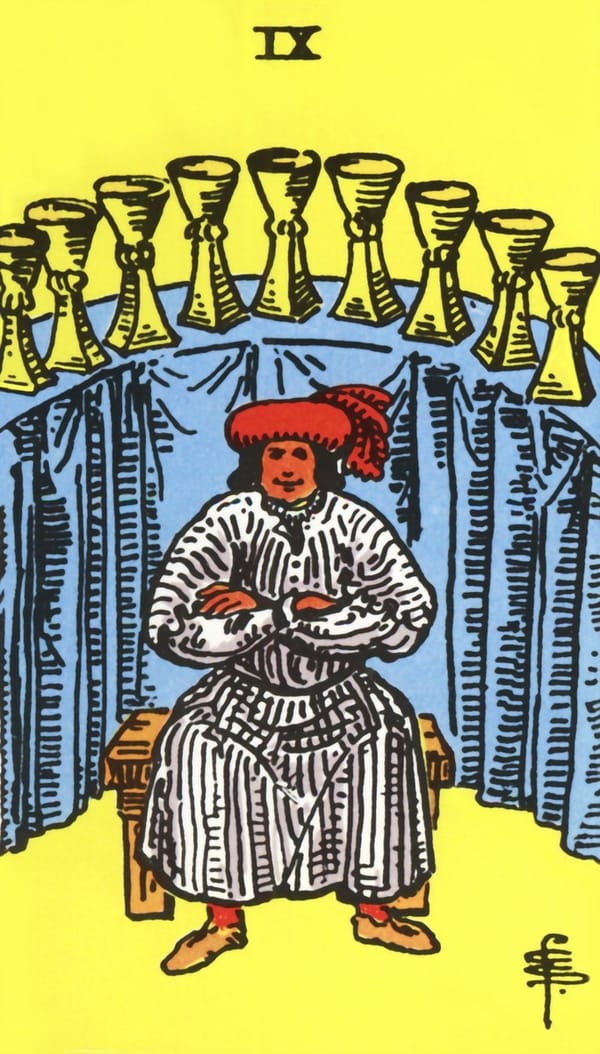
You've seen this expression before. Not on a tarot card — in real life. It's the face someone makes when everything worked out exactly like they planned. Slight smile. Arms folded across the chest. A little bit of a lean-back, like they've settled into their satisfaction the way you settle into a good chair.
The man in the Nine of Cups sits on a wooden bench, wearing flowing white robes and a red beret that tilts at a jaunty angle. Behind him, a curved shelf draped in blue cloth displays nine golden cups in a neat arc. He's facing you directly, looking right at you, and he's pleased. Not just happy — pleased. There's a self-awareness to his satisfaction, like he knows he got the good outcome and he's enjoying the knowledge.
The background is solid yellow — warm, bright, almost congratulatory. No storms, no mountains, no ocean. Just a man, his cups, and his contentment.
The Wish Fulfillment Card
Tarot readers have long called the Nine of Cups the "wish card" — Waite himself wrote of "concord, contentment, physical bien-être" — and when it shows up as someone's feelings, it means this person feels like their wish came true. You are what they wanted. The relationship, the connection, the way things are going — it matches what they were hoping for.
There's a specificity to this that matters. He didn't stumble into these cups. He set them up. He arranged them on the shelf. He draped the blue cloth. This is someone who had a clear picture of what they wanted and feels genuinely satisfied that reality matched the picture.
When someone feels Nine of Cups energy toward you, they're probably not plagued by doubt about the relationship. They don't lie awake wondering if you're right for them. They don't second-guess their attraction. They've looked at you, compared you to what they wanted, and settled back in their chair with a smile. Match found. Wish granted.
Those Folded Arms
The crossed arms in this card read completely differently than the crossed arms in the Four of Cups. The Four of Cups figure crosses their arms because they've shut down — it's defensive, closed, withdrawn. The Nine of Cups man crosses his arms because he's done. Not done in a burned-out way. Done in a "my work here is complete" way.
When someone feels this toward you, there's an ease to how they hold the relationship. They're not striving, not performing, not trying to win you over. They already feel like they have you. That's what researchers call relationship satisfaction in its purest form — not the absence of problems, but genuine contentment with what exists. It's either deeply comforting or mildly infuriating, depending on whether they've actually done the work to earn that confidence.
The risk of those folded arms: someone so satisfied that they stop investing. They got what they wanted. The cups are on the shelf. Now they're sitting in front of them admiring the display instead of asking whether the other person feels equally satisfied. Contentment slides into complacency when someone forgets that relationships aren't trophies to be won and displayed.
The Blue Curtain
Behind the cups and behind the man, a blue curtain hangs closed. Whatever is behind it — his inner life, his vulnerabilities, the things he doesn't show — stays concealed. The display of cups is for public viewing. The curtain keeps the private things private.
When someone feels Nine of Cups energy, their satisfaction can be partly performative. Not fake — the feeling is real. But they might be more comfortable showing you how pleased they are with the relationship than showing you the complicated stuff behind the curtain. They're the partner who posts about your anniversary but doesn't mention the argument you had that morning. The friend who talks about how great things are but never admits when they're struggling.
This doesn't mean the feelings are shallow. It means the person has a presentation layer between their emotions and the world, and right now that layer is set to "satisfied." What's behind the curtain might be just as content. Or it might be more complicated than the nine neatly arranged cups suggest.
Alone on the Bench
One detail that's easy to miss: he's sitting alone. Nine cups, one person. Nobody else in the scene. The cups are behind him, not shared between people. This is personal satisfaction — the kind that happens inside one person's experience.
When this card represents feelings about you, the person feels satisfied with what the relationship gives them. But there's a question embedded in the image: are they satisfied with you, or satisfied with how you make them feel? The man isn't looking at the cups. He's looking at the viewer with a pleased expression. The pleasure is about him — his achievement, his wish fulfilled, his good fortune.
This might be fine. Plenty of healthy relationships include one person feeling lucky and content. But if the satisfaction is entirely self-referential — if they're pleased about having a partner rather than pleased about who that partner is — the Nine of Cups becomes a warning dressed up as a celebration.
Reversed: When Satisfaction Cracks
Reversed, the smile falters. The cups on the shelf shift, maybe wobble. The man unfolds his arms because the settled satisfaction has been disturbed. Reversed Nine of Cups as feelings means someone whose contentment has been shaken — maybe they realized they took the relationship for granted, maybe the wish fulfilled turned out to be less than they imagined.
Reversed can also mean someone who is deeply satisfied but won't show it. The curtain falls in front of the cups instead of behind them. They feel full, pleased, privately thrilled about you — but something keeps them from displaying it. Pride, fear of vulnerability, or past experience that taught them not to look too happy about anything.
What to Do With This Reading
If someone feels Nine of Cups energy toward you, the good news is they're genuinely happy. They don't want to change you. They don't wish you were different. Their cup shelf is full and they like what they see.
The thing to watch for: whether their satisfaction includes awareness of you as a whole person, or whether you've become one of the trophies on the shelf. Do they ask how you feel, or do they assume you're as satisfied as they are? Do they notice when you're not at your best, or are they too pleased with the overall picture to see the details?
A person whose Nine of Cups feelings include real attention to your experience is someone worth keeping. A person who sits on their bench admiring their collection while you stand in front of them wondering if they see you — that's someone who needs to unfold their arms and look a little closer.
Tell them what you need. Their satisfaction doesn't have to be the whole story. But you'll have to speak up, because right now, from where they're sitting, everything looks exactly right.