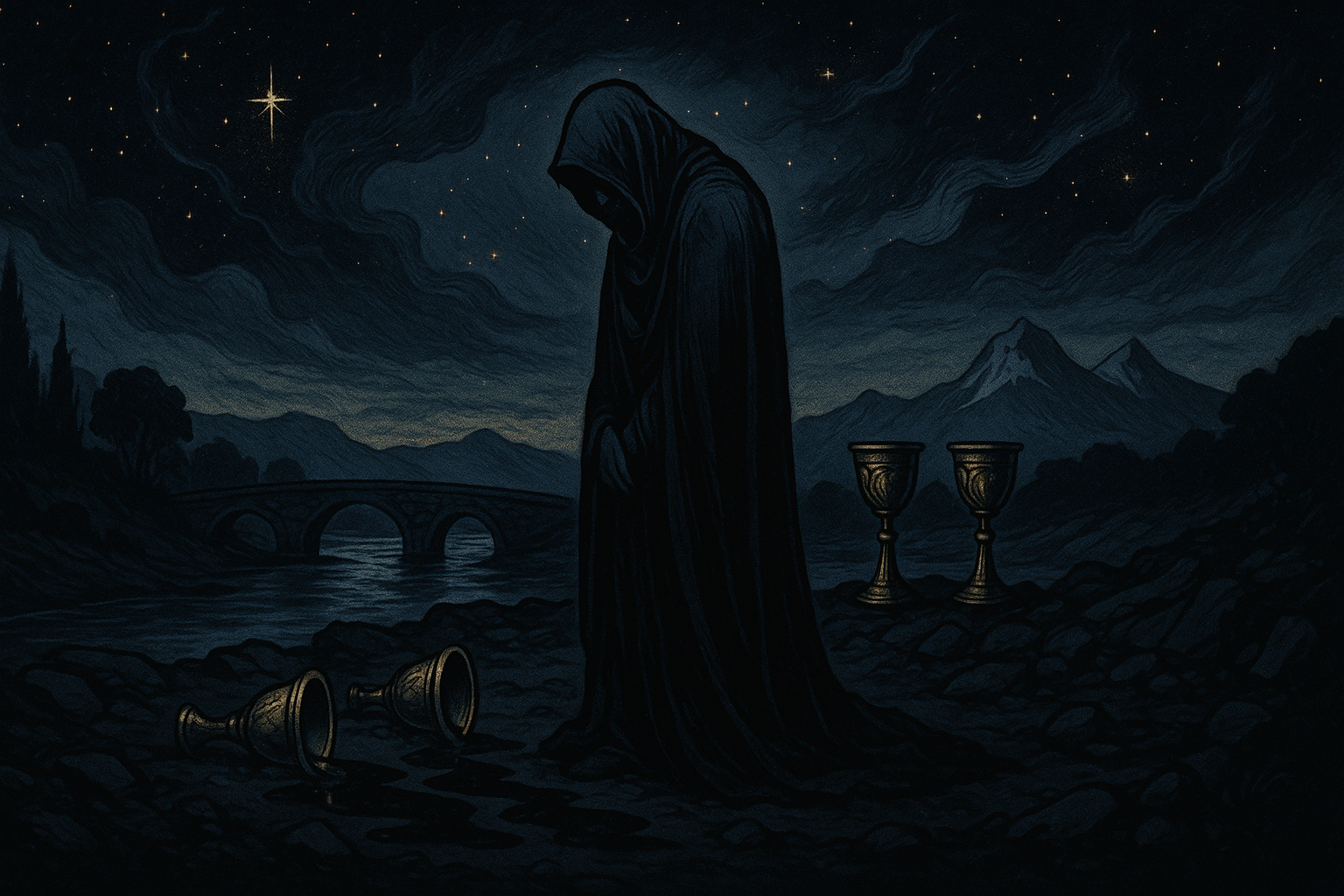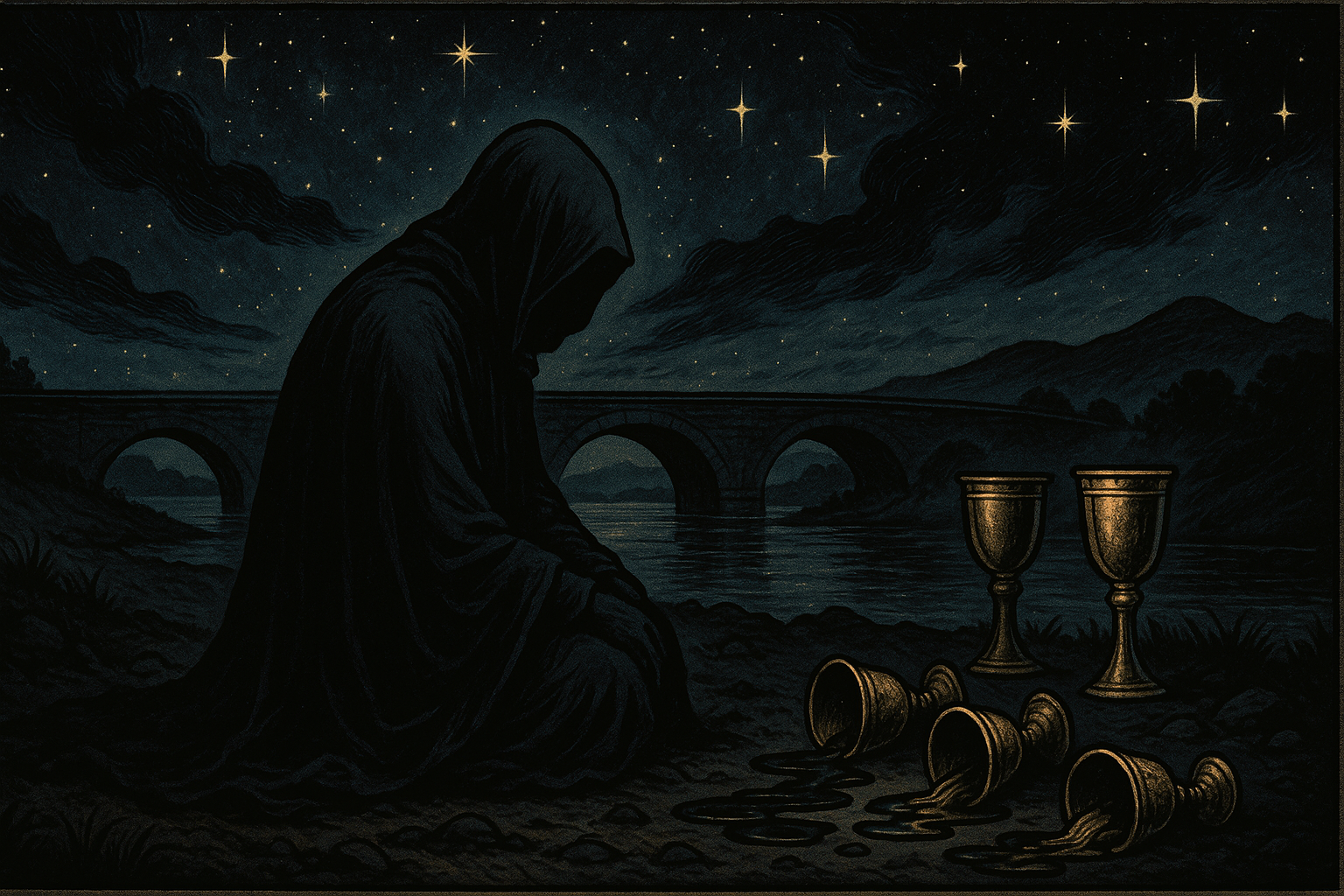
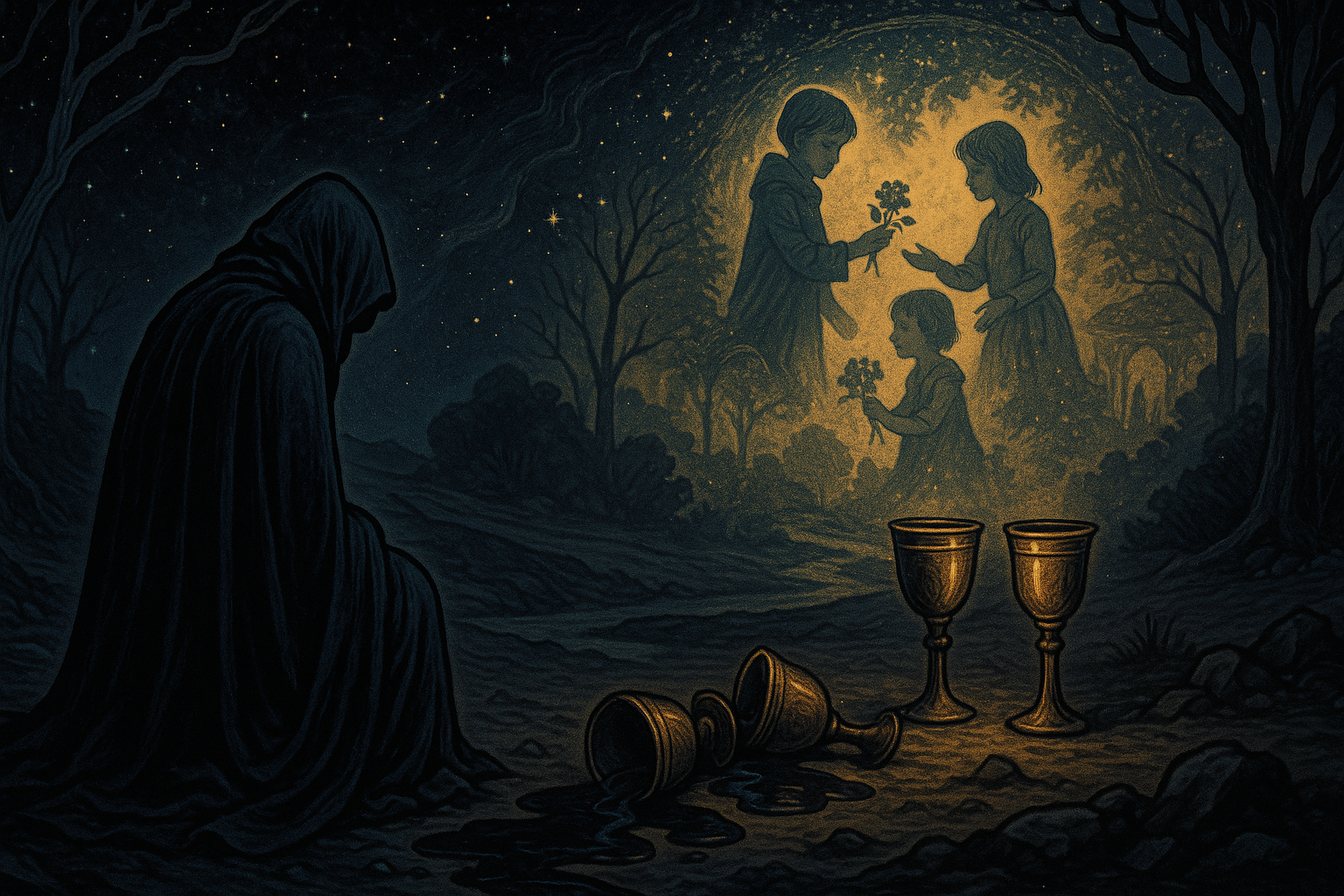
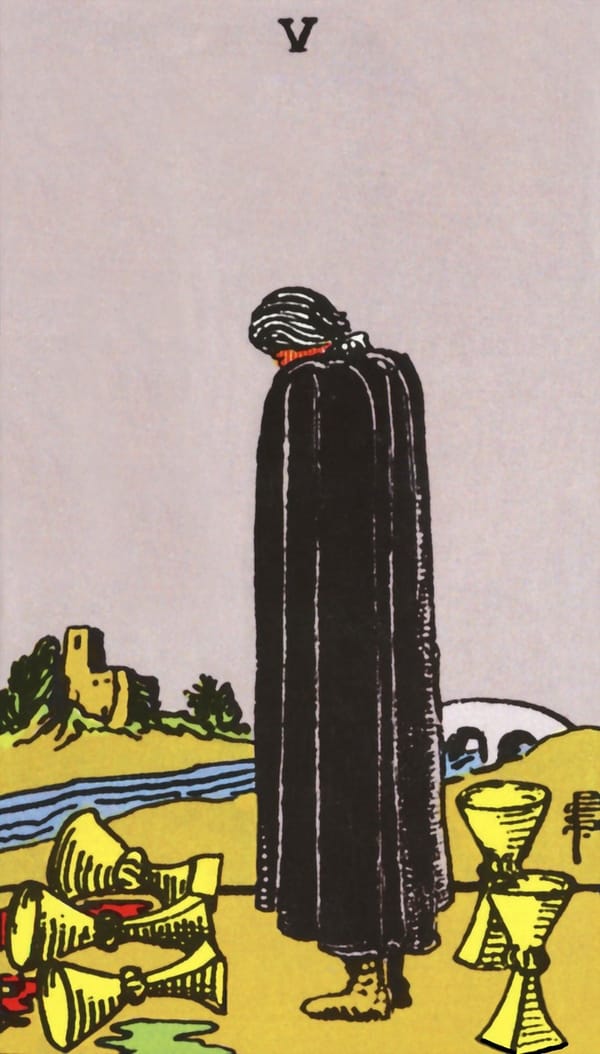
A figure stands in a long black cloak, head bowed, staring at three overturned cups. The liquid has spilled — wine or water or whatever they were carrying, gone. Behind them, two cups remain standing. Behind those, a river flows toward a bridge and a distant village. But the figure doesn't see any of that. Their entire world has collapsed to the space between their feet and those three fallen cups.
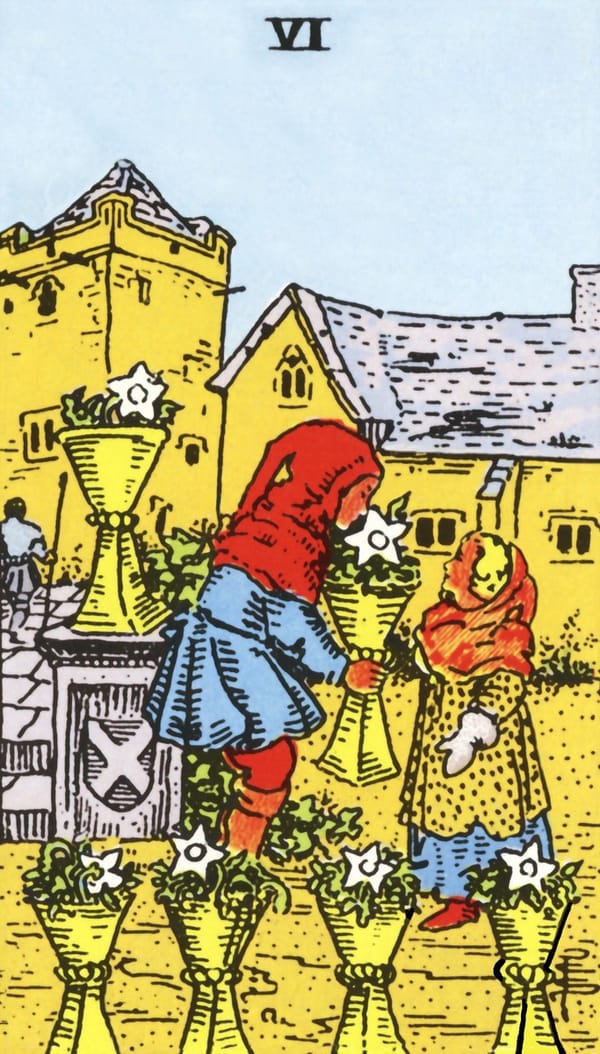
Now the Six. A village square bathed in warm yellow. An older child bends down to hand a cup full of white flowers to a smaller child. Six cups stand around them, each blooming. In the background, a figure walks away past old stone buildings. Everything here is soft, safe, contained — the world of childhood before it got complicated.
Place these two cards together and the effect is immediate. The black cloak and the bright village. The spilled cups and the flower-filled ones. Desolation on the left, sweetness on the right. It looks like a before-and-after, except the "before" is the one you want to return to.
That's exactly what this combination is about.
Grief's GPS
When you're in Five of Cups pain — real, present-tense loss — your mind doesn't stay in the present. It time-travels. It pulls up your grandmother's kitchen. Your best friend's bedroom in high school. The apartment where you lived during the happiest year of your life. It goes looking for a time when cups were full and nobody knocked them over.
This isn't weakness or regression. It's how human beings process loss — what psychologists call nostalgia as a coping mechanism, using positive memories to regulate present-tense distress. We locate ourselves in the story of our own lives. We look for chapters where things worked out, where we were held, where the cups stayed upright. We're not trying to go back. We're trying to remember that we've been whole before, which means we can be whole again.
The Five of Cups and Six of Cups together show you doing exactly this work.
The Village Behind You
In the Five of Cups, the figure has their back to a bridge leading to a village. In the Six, we're inside a village. It's as if the place the grieving figure won't turn around to face is the very place the Six of Cups invites you into.
This visual connection tells you something specific: what you need is behind you, not ahead of you. Not an ex or a childhood home, literally — but the emotional resources you developed in earlier times. The resilience your mother modeled. The way your college friends showed up for each other. The simple knowledge that you've gotten through hard things before, even when you couldn't imagine it.
Turn around. The bridge is right there.
When the Past Becomes a Hiding Place
Here's the shadow side. The Six of Cups can become an escape hatch from Five of Cups grief. Instead of feeling the loss and moving through it, you retreat into a golden-tinted memory of how things used to be. You romanticize your childhood. You idealize your ex. You convince yourself that life peaked at twenty-three and everything since has been decline.
If the Six of Cups energy feels like relief, that's healthy nostalgia doing its job. If it feels like denial — if you're using memory to avoid the present — you're hiding in the village instead of crossing the bridge.
The combination asks you to visit the past, not move there.
A Different Kind of Crying
Five of Cups grief is sharp — the moment of loss, the acute phase where everything hurts. Six of Cups grief is bittersweet — the kind where you cry while looking at old photos, not because you're sad exactly, but because you're feeling the full weight of how much things mattered.
When these cards appear together, you might find yourself doing both kinds of crying in the same afternoon. Sobbing about the breakup, then tearing up over a memory of your first date. The pain and the sweetness blur together because they're both about the same thing: something real that existed and doesn't anymore.
That blurring is actually the healing happening. You're integrating the loss into your larger story instead of keeping it separate — what grief researchers at What's Your Grief call "continuing bonds," the way we carry people and experiences forward rather than cutting them off cleanly. The spilled cups and the flower cups belong to the same person — you.
What Comes Next
These cards don't show you the future. They show you the present moment of grieving and remembering. But the direction they point toward is integration — carrying the best of what you've lost forward, while accepting that the form it took is finished.
The two standing cups behind the Five of Cups figure have been there the whole time. Some things survived the loss. Some things always survive the loss. Finding out what they are is the next step, and you don't have to take it yet.