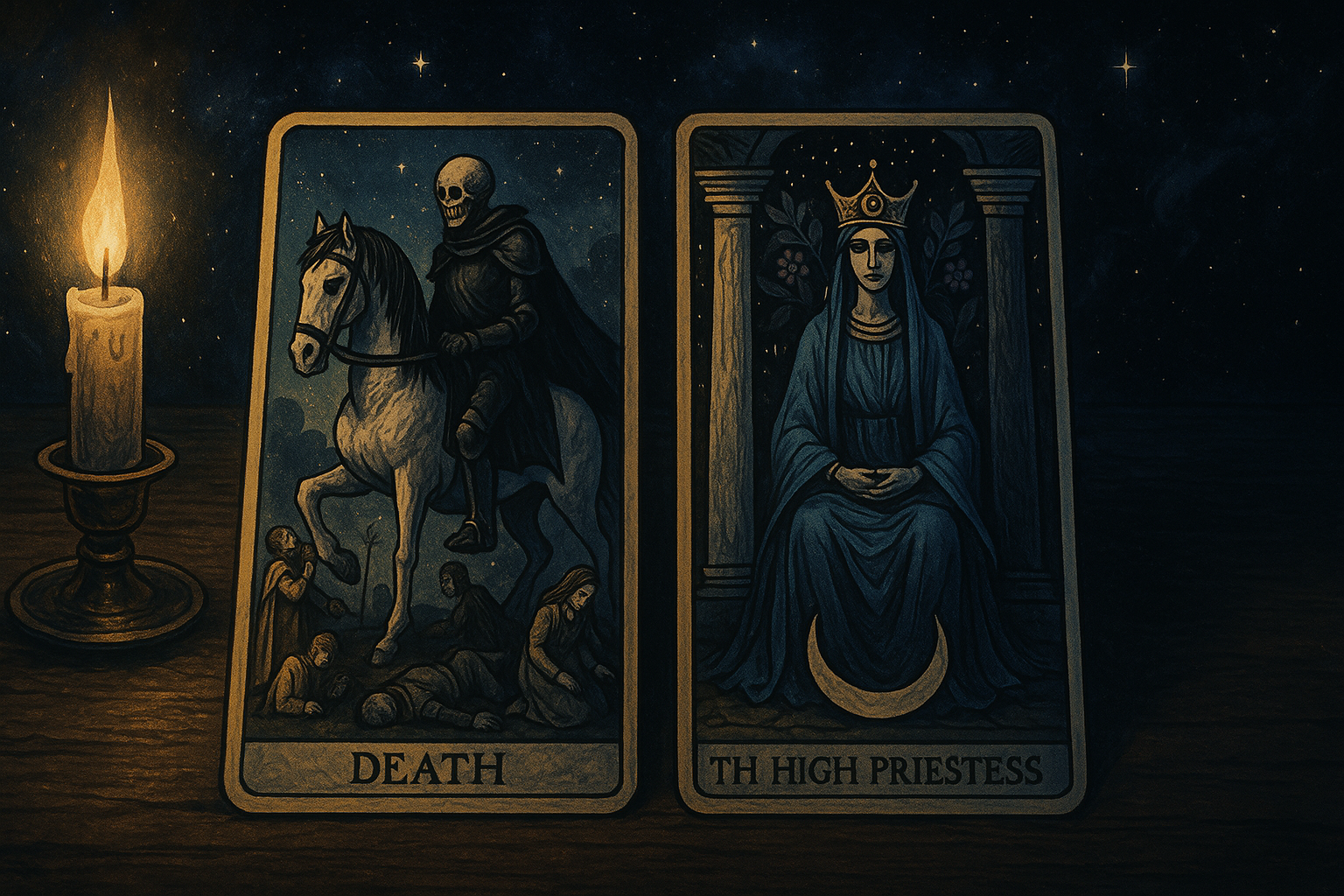
Something inside you has been whispering about this for months. Maybe years. You kept pushing it down because you didn't have proof, or because the timing wasn't right, or because acknowledging it would mean changing everything.
Then Death rides in, and suddenly what you've been sensing becomes undeniable.
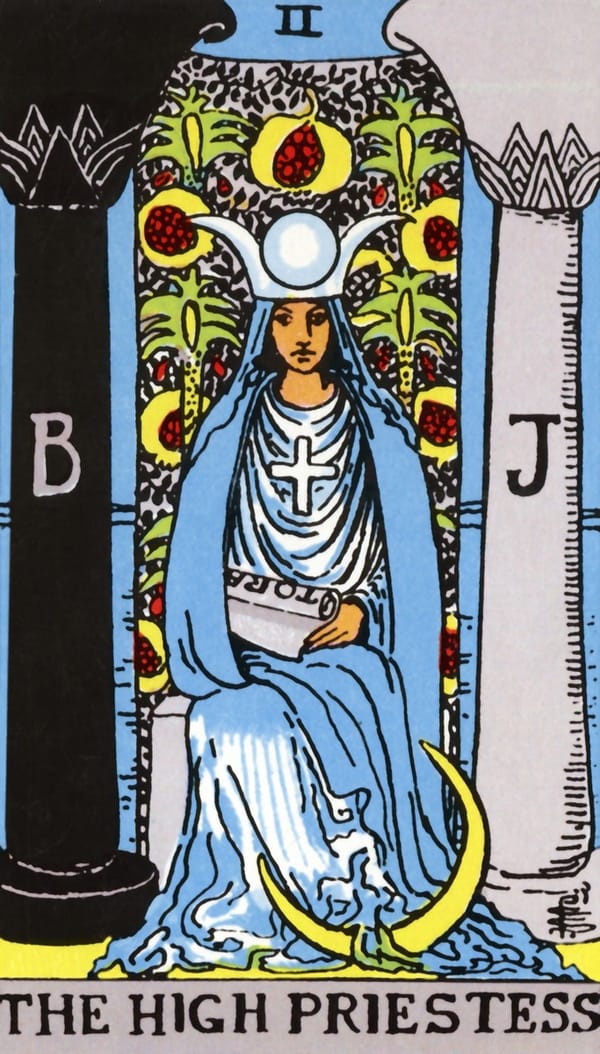
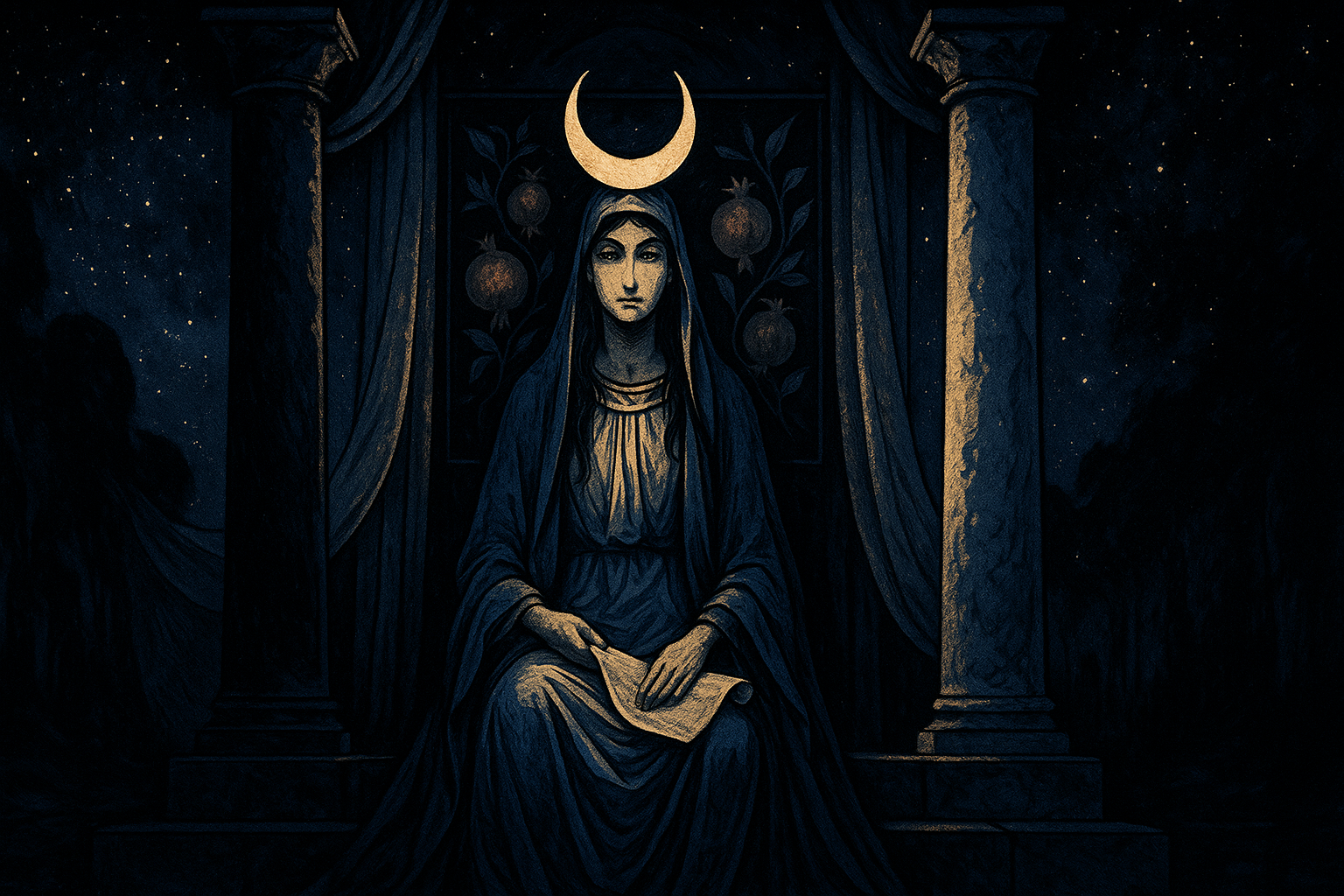
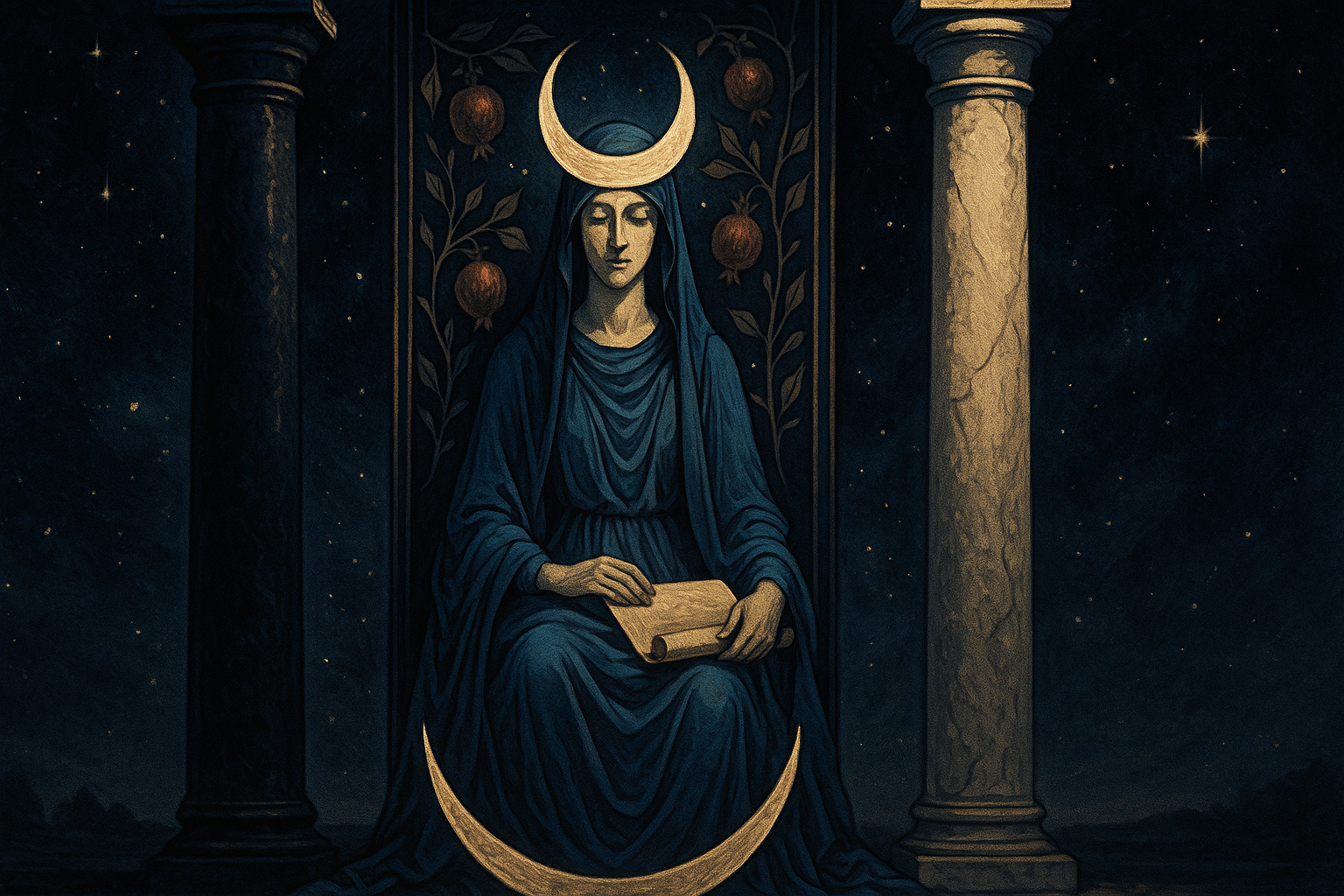
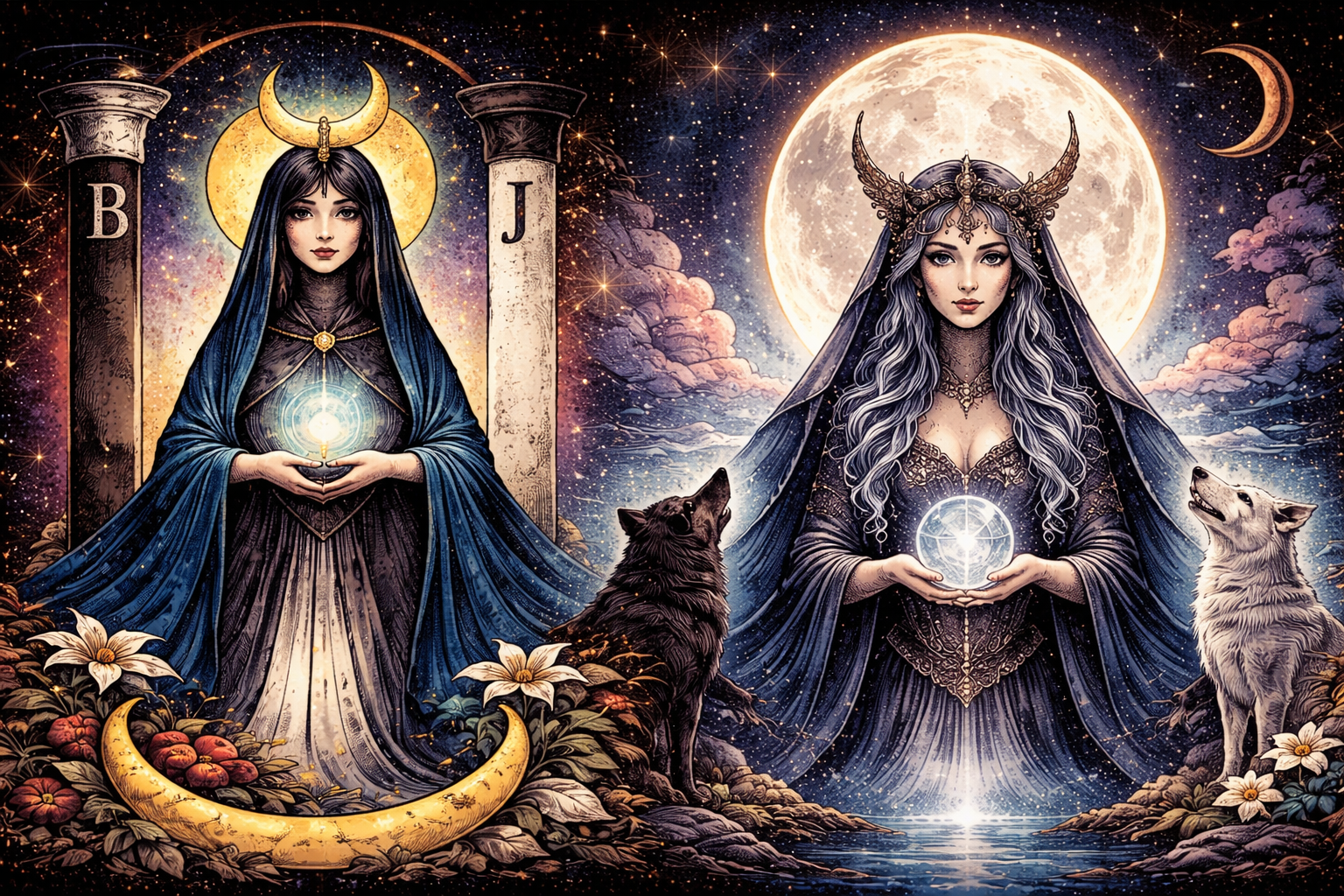
Look at her. She sits between two pillars — one black, marked B, one white, marked J. A veil of pomegranates hangs behind her, partially hiding a body of water. On her lap, a scroll labeled TORA, only partly visible. A crescent moon rests at her feet. Everything about her says: I know things I haven't told you yet.
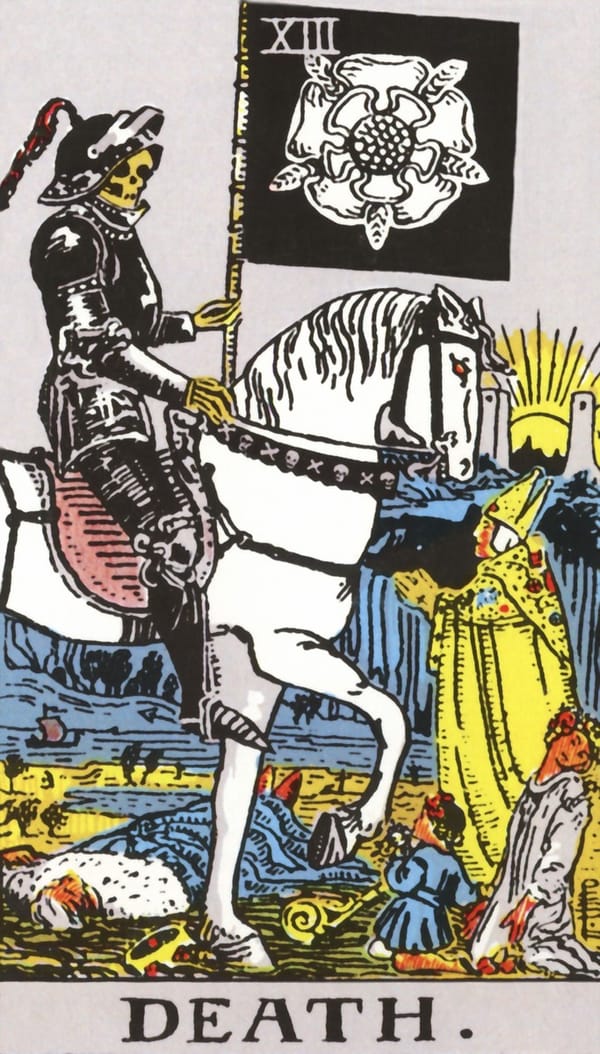
Now Death. A skeleton in black armor rides a white horse. He carries a black banner with a white rose — transformation disguised as an ending. Before him, a bishop in gold pleads. A child stares. A king already lies fallen. In the background, the sun rises between two towers. Everyone responds to Death differently, but Death doesn't slow down for any of them.
The Conversation Between These Cards
The High Priestess is the stillest card in the deck. Death is one of the most kinetic. She sits. He rides. She holds a partially revealed scroll. He carries a banner of inevitable change.
But look closer at what they share. Both operate beyond the reach of bargaining. You can't argue with your deepest knowing any more than you can negotiate with Death. Jung called this kind of inner recognition a confrontation with the unconscious — the psyche presenting what the ego has been refusing to see. Both are impersonal in a specific way — they don't care about your preferences, only about what's true.
When these cards appear together, your intuition and your reality are finally syncing up. What you sensed in your bones is now happening in your life.
How the Position Changes Everything
High Priestess in position one, Death in position two: your inner knowing leads and the transformation follows. You sensed it, sat with it, maybe meditated on it or cried about it in your car — and then the external change happened. You left the relationship. You submitted the resignation letter. You stopped pretending.
Death in position one, High Priestess in position two: the change hit first, and now you're going inward to understand it. Something ended — maybe not by your choice — and now the High Priestess pulls you into deep reflection. Why did this happen? What did I know that I wasn't letting myself know? The ending sends you into the temple of your own psyche.
The Scroll She Won't Fully Unroll
That partially visible TORA scroll is key to this pairing. The High Priestess never gives you the whole picture at once. She reveals in layers. When Death appears beside her, the transformation is also layered — not one dramatic ending but a series of realizations, each one peeling back another layer of what you thought was true.
You might spend months understanding what this change was really about. The first interpretation won't be the last. Six months after the ending, you'll see something about it that you couldn't see on day one.
What's Actually Dying
With the High Priestess involved, what's dying is almost always an illusion about yourself. Not a job, not a relationship — though those might be the visible casualties — but a story you've been telling yourself.
The story that you're the kind of person who stays. The story that you need someone else's permission. The story that your intuition is just anxiety. The story that you can't handle the truth about your own life.
Death and the High Priestess strip these stories down to the studs. What remains afterward is something truer and less comfortable and more yours.
The Crescent Moon at Her Feet
She sits on a crescent moon. Death's scene has the sun rising between towers. One card is lunar — receptive, cyclical, dark. The other introduces solar energy — visible, inevitable, forward. Together they say: what gestated in your inner darkness is now entering the light.
Things you processed in dreams, in therapy, in 3 AM journal entries — they're ready to become real-world decisions. The inner work is done. Now comes the outer change.
Sitting With What You Can't Unsee
The hardest part of this combination isn't the ending. It's the knowing. Once the High Priestess shows you something, you can't un-know it. Once Death clears the ground, you can't rebuild what was there.
Don't try to rush past this by immediately filling the space with something new. The High Priestess operates in silence and patience. The pomegranates on her veil — which Waite linked to the veil of the Temple of Solomon — are symbols of the underworld — some knowledge can only be gained by going down into the dark and staying there for a while.
Let the ending be an ending. Let the silence be a silence. What wants to grow in this cleared ground will tell you when it's ready. Not before.