
Temperance
What the image shows
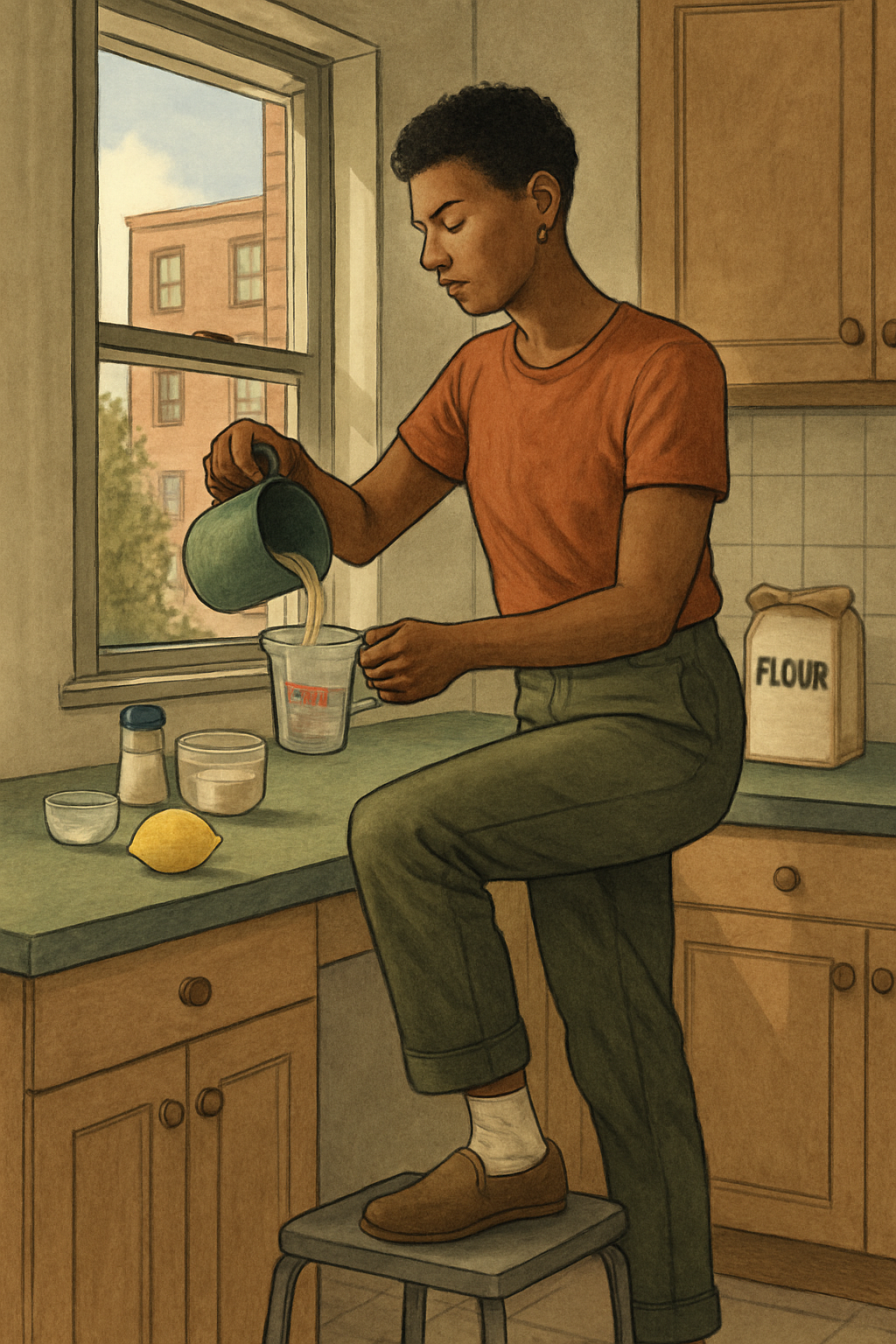
A young person sits perched on a metal stool in a city kitchen, completely focused on the task of pouring liquid from a dark green pitcher into a clear measuring cup. They're wearing a burnt orange t-shirt and olive green pants with brown slip-on shoes, casual and comfortable for a day spent cooking. Their posture is relaxed but attentive—one hand steadying the measuring cup while the other controls the pour with obvious care.
The kitchen itself tells a story of someone in the middle of making something from scratch. A bag of flour sits on the counter, along with a lemon, a small bowl, and what looks like a jar of yeast or another baking ingredient. Sunlight streams through a large window that looks out onto brick apartment buildings and a few trees—this is clearly an urban apartment, not a sprawling suburban kitchen. The green countertops and wooden cabinets give the space a warm, lived-in feel.
What stands out most is the precision of the pour. This isn't someone dumping ingredients carelessly—they're measuring, watching the liquid hit the exact mark they need. There's patience in this image, the kind of quiet concentration that comes from knowing that getting the proportions right actually matters.
The modern read
This illustration turns Temperance into something you can taste: the difference between a recipe that works and one that doesn't. Baking is chemistry. Too much liquid and your dough won't hold. Too little and it's dry, crumbly, unusable. The person in this image understands that good results come from getting the balance right, not from rushing or eyeballing it.
Placing Temperance in a kitchen strips away any sense that balance is some lofty spiritual achievement. It's mundane. It's Tuesday afternoon, measuring flour and water in your apartment because you want bread that actually rises. The message becomes practical: moderation isn't about denying yourself anything, it's about knowing how much of each ingredient makes the whole thing work.
How it connects to the Rider-Waite-Smith
The traditional RWS Temperance shows an angel standing with one foot on land and one in water, pouring liquid between two cups. The angel wears a triangle inside a square on their chest, representing spirit grounded in matter. A path leads to mountains in the background, with a golden crown or sun glowing at the horizon. The whole image emphasizes divine balance, the blending of opposites, and patience on a long journey.
This modern version keeps the essential action—liquid being carefully poured from one vessel to another—but grounds it completely in the physical world. The angel becomes an ordinary person. The mystical cups become kitchen tools. The path to enlightenment becomes the path to a finished recipe. What carries over is the core message: careful combination, measured action, the understanding that how you blend things matters as much as what you're blending.
Upright meaning
Temperance upright is about finding the right mix and having the patience to get there. It's moderation that actually works, not deprivation. It's knowing when to push and when to wait.
In love: You're building something sustainable with someone. This isn't the fireworks phase—it's figuring out how much time together versus apart keeps you both happy. It's compromising on where to eat dinner without keeping score.
At work: You're managing multiple projects or demands without burning out. You know which tasks need full attention and which can wait. You're the person who somehow stays calm when deadlines pile up because you've paced yourself all along.
With money: You're spending on what matters and saving where it counts. Not extreme frugality, not reckless shopping—just a budget that lets you enjoy life now while still having something set aside.
In daily life: You're eating the cookie and also eating the salad. You're staying up late with friends sometimes and getting eight hours other nights. You've figured out your own version of "everything in moderation."
Reversed meaning
Temperance reversed shows up when the proportions are off and you can feel it. Something's out of whack—too much of one thing, not enough of another, or a refusal to blend things that need to work together.
In love: You're giving way more than you're getting, or you're so focused on keeping your independence that you won't actually merge your life with your partner's. The relationship feels lopsided, and neither of you is adjusting.
At work: You're all-in on one project while everything else falls apart, or you're spread so thin nothing gets done well. You might be working yourself sick or checked out completely—either extreme signals the reversal.
With money: Binge-and-restrict cycles. You save obsessively for months, then blow it all in a weekend. Or you keep saying you'll budget "next month" while your credit card balance climbs.
In daily life: Hangovers. Exhaustion from overcommitting. That feeling of being completely out of sync with your own needs. Something that should be enjoyable in moderation has become compulsive or you've cut it out so completely you're miserable.