
The Devil
What the image shows
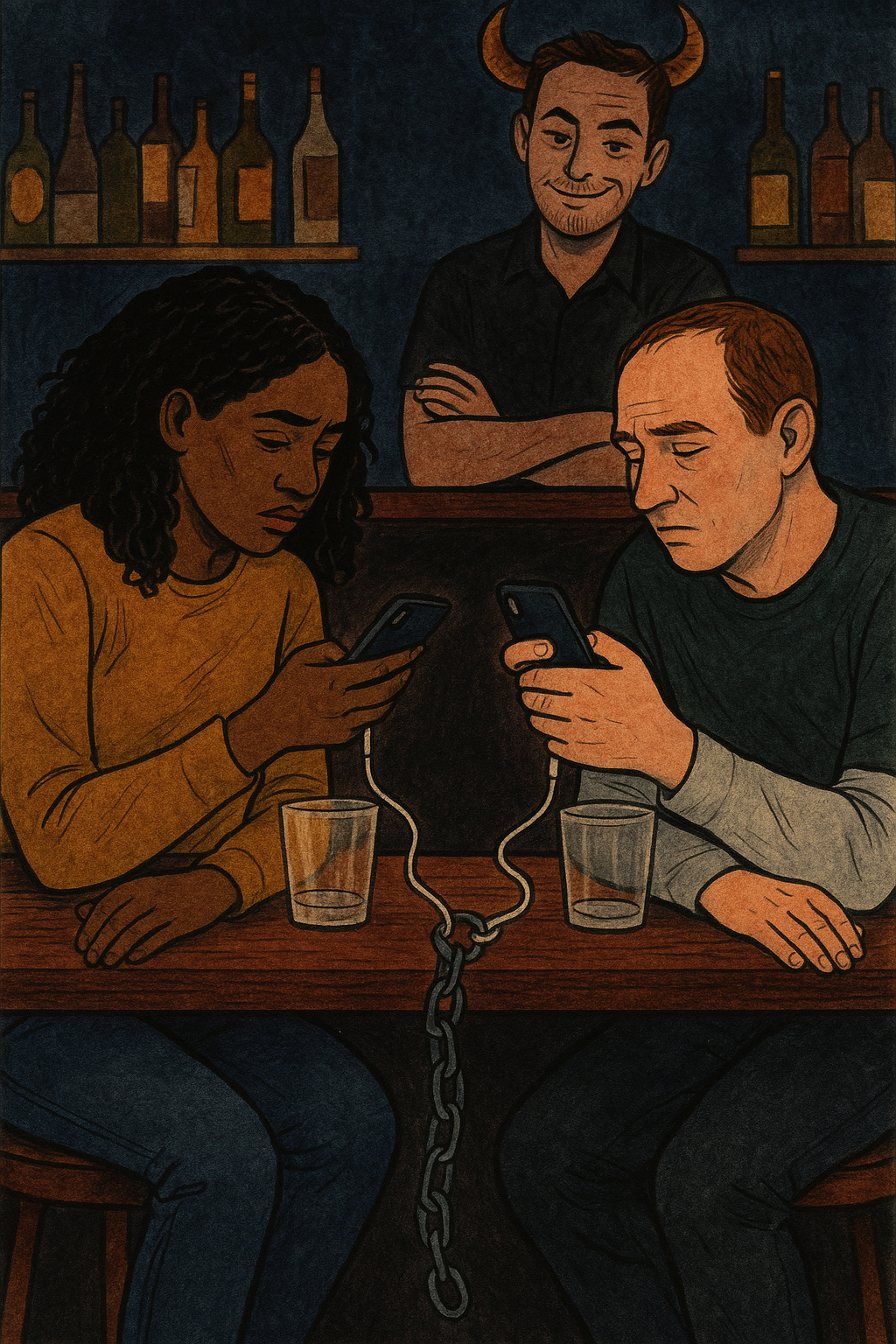
Two people sit at a bar, both completely absorbed in their smartphones. A woman in a mustard-yellow sweater stares down at her screen with a furrowed brow, while a man in a dark t-shirt hunches over his device with the same fixed attention. Neither acknowledges the other. Between them on the bar, their phone charging cables twist together and transform into a heavy chain that drops below the counter's edge—they're literally tethered to their devices and, through them, to each other in this disconnected way.
Behind the bar stands a smirking bartender with small horns emerging from his hair. He leans on the counter with a satisfied, knowing expression, arms crossed casually as he watches the two patrons ignore each other. Bottles line the shelves behind him. The whole scene is bathed in warm, dim bar lighting—the kind of place you'd go to connect with someone, now turned into a space where connection goes to die.
The drinks in front of both people look untouched, sitting there while their attention goes elsewhere. The devil figure doesn't need to do anything dramatic—he just tends bar and watches his work unfold.
The modern read
This illustration makes The Devil immediate and uncomfortable because it's so recognizable. No one thinks of themselves as "chained" to their phone, but here it is—the compulsive scroll, the inability to be present, the way we choose the dopamine hit over the person sitting right next to us. The devil isn't forcing anything. He's just created the conditions and waits.
The image points to addiction that doesn't look like addiction. These aren't people in crisis—they're just at a bar, doing what everyone does. That's the real horror of it. The chains aren't heavy iron shackles, they're charging cables. The prison is comfortable. The bartender's smirk says he knows exactly what he's providing and that his customers will keep coming back.
How it connects to the Rider-Waite-Smith
The traditional RWS Devil shows a horned, winged figure perched on a pedestal with two naked humans chained loosely at his feet. The chains around their necks are wide enough to slip off—they could leave if they chose to. The figures have small horns and tails themselves, suggesting they're becoming like the thing that holds them. A reversed pentacle sits above, and the torch the Devil holds points downward.
The core meaning carries over completely: bondage that is chosen, not forced. The loose chains become charging cables. The naked vulnerability becomes emotional unavailability. The Devil figure shifts from monstrous to mundane—just a guy doing his job, profiting from compulsion. What's lost is the overtly dark imagery; what's gained is the creeping recognition that this is Tuesday night at any bar in any city.
Upright meaning
The Devil upright points to something that has a hold on you—something you keep choosing even though it's not serving you. This isn't about external forces or bad luck. It's about the patterns you maintain, the cages you stay in when the door is open.
In love: You're in a relationship that runs on jealousy, control, or unhealthy attachment. Maybe you keep going back to an ex who treats you badly. Maybe you're staying because leaving feels harder than being miserable.
At work: You hate your job but you've convinced yourself you can't leave—the money, the benefits, the fear of starting over. You've made golden handcuffs feel like the only option.
With money: Spending you can't afford, credit card debt you keep adding to, retail therapy that never actually makes you feel better. The quick fix that creates the long problem.
In daily life: The habit you tell yourself you'll quit tomorrow. The scroll that eats your evening. The drink that became drinks that became every night. The thing you do on autopilot that you'd be embarrassed to track honestly.
Reversed meaning
The Devil reversed can go two ways: either you're breaking free from something that had its hooks in you, or you're in even deeper denial about how bad things have gotten.
Breaking free looks like: Finally blocking that person's number. Putting in your two weeks notice. Going to your first meeting. Acknowledging out loud that this thing has become a problem.
Deeper denial looks like: Insisting you can stop whenever you want while proving you can't. Hiding the extent of the problem from people who care. Telling yourself this time is different when nothing has actually changed.
Getting stuck looks like: Knowing something is wrong but feeling so trapped you can't see any exit. The paralysis that comes before either surrender or breakthrough.
Shadow work looks like: Starting to examine why you keep choosing what hurts you. Not the surface behavior, but what's underneath it—what need isn't being met, what fear keeps you reaching for the false comfort.