Death
What the image shows
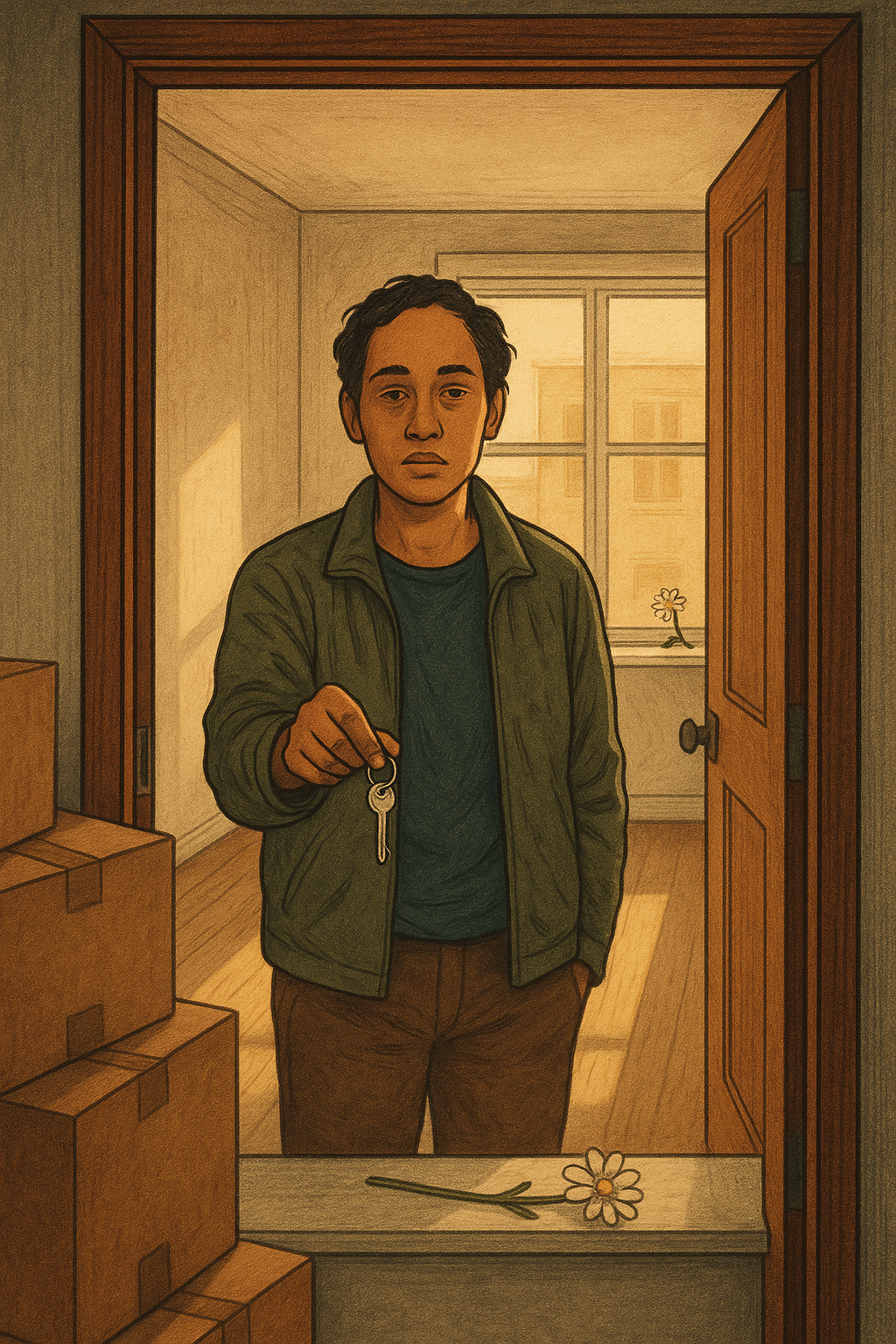
A young person stands in a doorway, holding out a single key. They're wearing a green jacket over a dark teal shirt with brown pants — dressed for leaving, not arriving. Their expression is somber but resolute, the kind of face you make when you're doing something hard but necessary. Behind them is an empty apartment flooded with afternoon light, a single flower in a vase on the windowsill the only remaining sign that someone lived here.
In the foreground, moving boxes are stacked and ready. A single daisy lies on the threshold — dropped or placed there deliberately, it's unclear. The wooden door frame creates a clear boundary between the space being left behind and whatever comes next. The whole scene has that particular quality of moving day: the strange echo of bare rooms, the finality of handing over keys.
The composition frames this person at a literal threshold. They're not quite inside, not quite outside. The key extended toward the viewer suggests they're handing it to someone — a landlord, an ex, a property manager. This is the last moment before a chapter closes completely.
The modern read
This illustration shows Death as what it actually is most of the time: an ending you participate in. Not a dramatic tragedy, but the quiet finality of closing a door on a life that used to be yours. Moving out of an apartment means leaving behind the version of yourself who lived there — the routines, the relationships, the identity that space held.
The key is the crucial detail. This person isn't being pushed out or running away. They're deliberately handing over access, completing the transformation themselves. Death in this context isn't something that happens to you. It's something you do, even when it hurts. The empty room behind them isn't sad — it's ready for whoever comes next.
How it connects to the Rider-Waite-Smith
The traditional RWS Death shows a skeleton in black armor riding a white horse, carrying a black flag with a white rose. Before him, a king lies dead, a bishop prays, and a child offers flowers innocently. In the background, the sun rises between two towers. The message is clear: death comes for everyone regardless of status, but transformation and new beginnings follow.
This modern version keeps the threshold symbolism and the flower motif but makes the transformation voluntary and personal rather than imposed. Instead of an external force arriving on horseback, we see someone enacting their own ending. The key replaces the scythe as the instrument of finality. The white rose becomes a daisy — simpler, more everyday. Both versions show that something must be completely released before what's next can begin.
Upright meaning
Death upright means something is ending, completely and permanently. Not pausing, not taking a break — actually over. This is the card of necessary endings that clear space for genuine new beginnings. The key word is "complete." You can't keep one foot in the old life.
In love: A relationship ending, or a major phase of one dying so something new can grow. Breaking up, yes, but also the death of the honeymoon phase, or finally letting go of an ex you've been holding onto mentally. The version of your relationship that existed last year is gone.
At work: Leaving a job, a career pivot, getting laid off, or a project being cancelled. Also the end of how you've always done things — your old work identity or professional reputation undergoing permanent change.
With money: Closing accounts, ending financial partnerships, bankruptcy completing, or finishing paying off a major debt. The end of one financial chapter and the necessity of building something different.
In daily life: Moving house, ending a friendship, a habit you finally quit for good, a phase of life completing. Your kids leaving home. Graduating. Retiring. Any transition where you cannot go back to how things were.
Reversed meaning
Death reversed is an ending that isn't happening when it should. Something needs to die but you're keeping it on life support. You're clinging to what's already over, resisting transformation, or stuck in a prolonged goodbye that serves no one.
In love: Staying in a relationship that ended emotionally months ago. Keeping an ex's stuff around. Still checking their social media years later. Refusing to accept that someone has changed or that you have.
At work: Staying in a job you hate because change feels too scary. A company refusing to adapt to new realities. Holding onto a business model, project, or role that clearly isn't working anymore.
With money: Refusing to close a failing business. Holding investments you should have sold long ago out of denial. Not adjusting your lifestyle after a financial change that's already happened.
In daily life: Keeping your adult child's room exactly as they left it for years. Refusing to update your identity after a major life change. Living in the past. Dragging out goodbyes. Making "temporary" situations permanent because you can't face the finality of moving on.