Nine of Pentacles
What the image shows
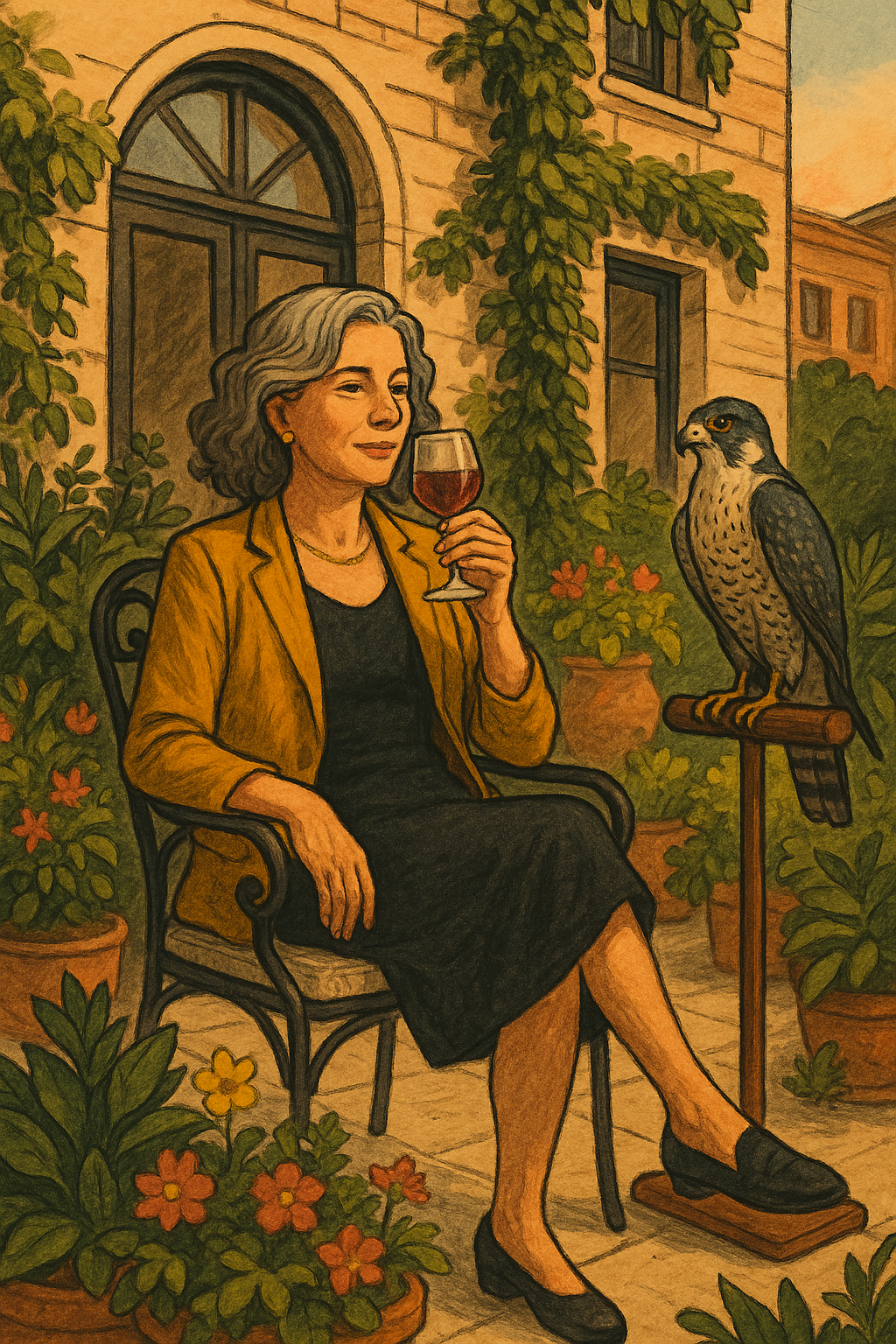
A middle-aged woman sits in a wrought-iron garden chair in what appears to be a Mediterranean courtyard. She's wearing a mustard-yellow blazer over a black dress, legs crossed at the ankle, holding a glass of red wine. Her silver-streaked hair is shoulder-length, and she has the relaxed posture of someone completely at ease in her surroundings. The courtyard is lush with greenery—potted plants, climbing vines along the stone building's facade, and flowers in terracotta pots scattered across the patio.
A falcon perches on a wooden stand beside her, watching her with calm attention. The bird is beautifully detailed, its spotted feathers rendered with care. Behind them, an arched window and warm-toned stone walls suggest an Italian or Spanish villa. The light is golden, like late afternoon sun, casting everything in that particular glow of a day winding down comfortably.
The whole scene reads as private wealth enjoyed privately—no audience, no performance. This is someone savoring what she's built, alone except for her trained bird, in a space that clearly belongs to her.
The modern read
This illustration strips away any ambiguity about what Nine of Pentacles actually means: this woman owns her life. The courtyard, the wine, the falcon, the clothes—none of it is borrowed or aspirational. She's not waiting for permission or approval. The yellow blazer is a nice touch; she's dressed well but not for anyone else. This is Tuesday afternoon for her.
What this contemporary setting makes clear is that Nine of Pentacles isn't about flashy wealth or status symbols others can see. It's about private satisfaction. She's not at a party or a restaurant where she might be photographed. She's home, in her garden, with her bird. The card becomes about what you do when no one's watching—and whether you've built a life you actually want to live in.
How it connects to the Rider-Waite-Smith
The traditional RWS Nine of Pentacles shows a well-dressed woman standing alone in a vineyard, surrounded by grapevines heavy with fruit. Nine pentacles are arranged in the vines around her. A hooded falcon rests on her gloved hand. She wears a long, flowing robe and appears serene, self-contained. The imagery emphasizes abundance earned through effort—grapes don't grow overnight—and the falcon represents discipline, mastery, something wild that she's trained.
This modern version keeps the core elements: the solitary woman, the cultivated outdoor space, and the falcon. What shifts is the setting from agricultural wealth to something more recognizable today—real estate, taste, the ability to simply sit and enjoy an afternoon without economic anxiety. The wine glass replacing the grape vines is clever; it's the end product, the enjoyment of what's been harvested. The message remains: you worked for this, and now you get to have it.
Upright meaning
Nine of Pentacles upright is about enjoying what you've built through your own effort. You're financially stable, not because someone else provided it, but because you made it happen. This card is independence made real—comfort that belongs to you.
In work: You've hit a milestone—maybe you got the promotion, finished the certification, or your side business finally turned profitable. You don't need to hustle right now. You can take the afternoon off.
In money: Your savings account looks good. You can pay for dinner without checking your balance first. You might treat yourself to something nice—not to impress anyone, just because you want it and you can.
In love: If you're single, you're fine with it. Not lonely, not desperate—genuinely enjoying your own company. If you're partnered, this card says you're with them because you choose to be, not because you need them to pay rent.
In daily life: Sleeping in on Saturday because nothing's on fire. Buying the good olive oil. Having a clean, comfortable home that feels like yours. Small luxuries that add up to a life you actually like.
Reversed meaning
Reversed, Nine of Pentacles points to the gap between having things and feeling satisfied. Something's off—either the abundance isn't there, or it is and you can't enjoy it.
In work: You're successful on paper but burned out in practice. You built the career but now you're wondering what it cost you. Or you're still grinding with no end in sight, and the reward keeps getting pushed further away.
In money: Living beyond your means to look successful. Credit card debt funding a lifestyle that isn't sustainable. Alternatively, being financially comfortable but too anxious to spend anything, too paranoid to enjoy it.
In love: Staying in a relationship because you're afraid to be alone, not because it's good. Or being so fiercely independent that you won't let anyone in, mistaking isolation for self-sufficiency.
In daily life: Comparing your behind-the-scenes to everyone else's highlight reel. Feeling like you should be further along by now. Having the nice things but not the time or headspace to appreciate them.