
Ten of Pentacles
What the image shows
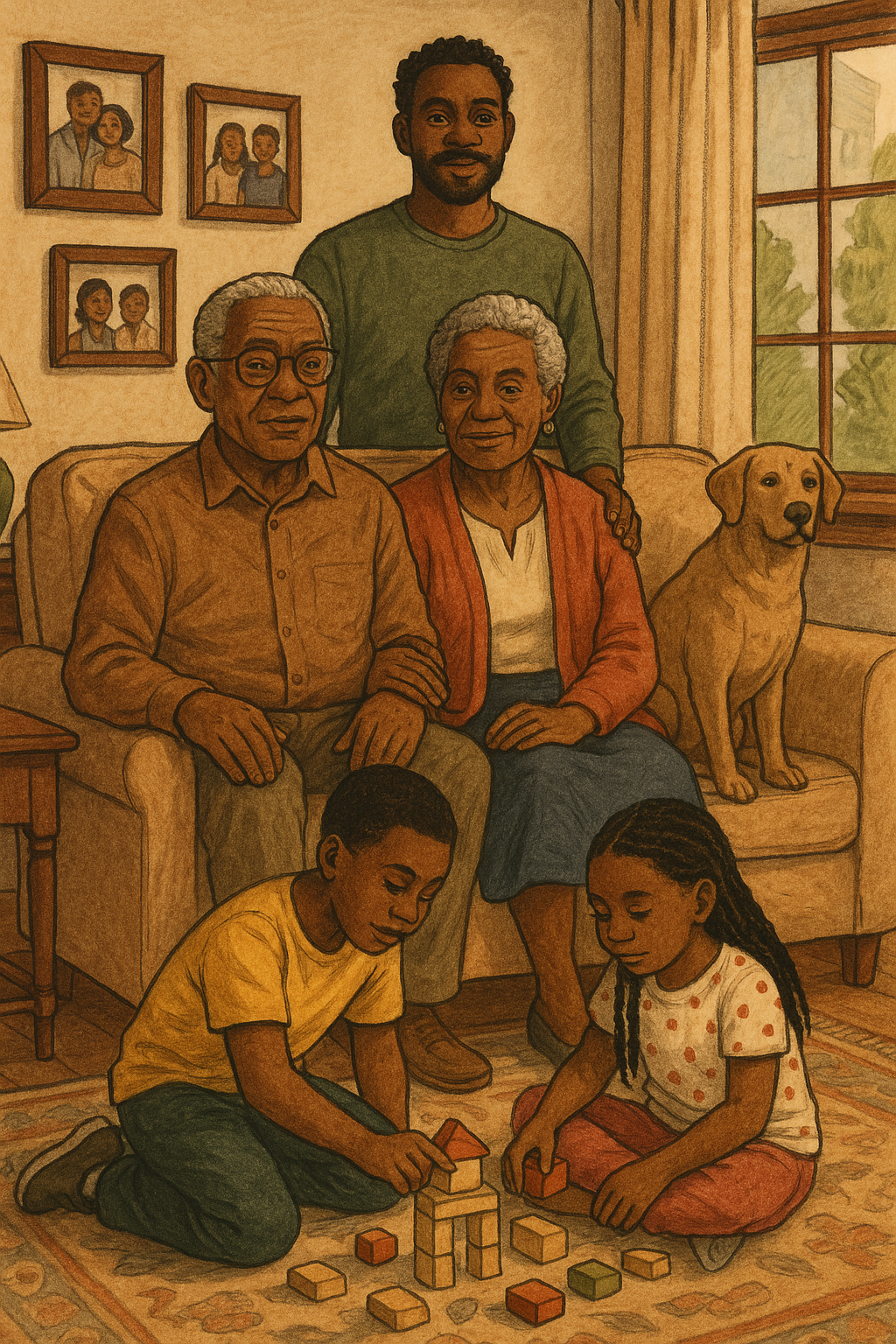
An elderly couple sits together on a comfortable sofa in what's clearly been their living room for decades. He wears glasses and a button-down shirt in warm brown; she's in a red cardigan over a white top, her gray hair cropped short. Behind them stands a younger man in a green sweater, one hand resting on the sofa back—their son or son-in-law, by the easy familiarity of his posture. A golden Labrador sits at attention on the couch beside the grandmother, completing the picture of domestic comfort.
On the floor in front of them, two children—a boy in a yellow t-shirt and a girl with long braids in a polka-dot top—are absorbed in building a tower from wooden blocks. The kids aren't performing for anyone; they're just playing, the way children do when they feel completely safe and at home.
The walls tell the real story. Framed family photos hang in a cluster, generations documented and displayed. Warm light comes through a window with a view of green trees outside. The furniture is solid, lived-in, chosen for comfort rather than style. This is a home where Thanksgiving happens every year at the same table, where the kids know which drawer has the good scissors.
The modern read
This illustration makes the Ten of Pentacles about something you can actually touch: a family that stayed together, built something, and is now watching the next generation play on a floor they own. The wealth here isn't about stock portfolios or luxury—it's about the house that's paid off, the dog that's part of the family, the Sunday dinners that happen without anyone having to organize them.
What this contemporary setting drives home is that the Ten of Pentacles isn't flashy prosperity. It's the slow accumulation of stability over time. It's grandparents who can help with a down payment because they lived below their means for forty years. It's children who will inherit not just money but recipes, stories, and a sense of belonging somewhere specific.
How it connects to the Rider-Waite-Smith
The traditional RWS Ten of Pentacles shows an old man in an elaborate robe sitting at the entrance to a family estate, with a younger couple and a child nearby, two dogs at his feet. Ten pentacles are arranged in the Tree of Life pattern across the scene. Stone archways and coat of arms symbols emphasize old money, established lineage, dynasty.
This modern version keeps the core elements—three generations, the family home, a loyal dog, the sense of accumulated security. What shifts is the feeling: the RWS card can seem formal, almost medieval in its emphasis on inheritance and bloodlines. Here, the wealth is more democratic. It's not a castle; it's a living room. The patriarch isn't enthroned—he's sitting with his wife watching his grandkids play. Same message, different tax bracket.
Upright meaning
The Ten of Pentacles is about long-term security that came from doing things right over time. It's the payoff for years of showing up, making responsible choices, and thinking about the future even when the present was hard.
In money: You're finally at a point where you're not just getting by—you're building something that lasts. This might look like paying off your mortgage, funding a retirement account that actually feels real, or being able to help a family member without going into debt yourself.
In work: This is the career that became something bigger than a job. You've got institutional knowledge, seniority, maybe equity or a pension. People come to you because you've been there and you know how things work.
In love: A relationship that's moved past the exciting early stages into something more like infrastructure. You're not just dating—you're building a life. Shared accounts, property together, conversations about wills and beneficiaries.
In daily life: Sunday dinners, holiday traditions that actually happen, knowing your neighbors. The opposite of starting over. You belong somewhere, and that belonging is documented and real.
Reversed meaning
Reversed, this card points to family wealth or stability that's become a problem instead of a foundation. Something that should feel secure feels like a trap, an obligation, or a source of conflict.
Family money with strings: An inheritance that comes with expectations, a family business you're expected to join whether you want to or not, parents who use financial help as leverage.
Legacy of dysfunction: You inherited more than money—you got the family patterns too. The alcoholism, the silence about certain topics, the way everyone pretends things are fine when they're not.
Financial instability disguised as tradition: A family that looks prosperous but is actually in debt, keeping up appearances while the foundation crumbles. Or refusing to have hard conversations about money because "we don't talk about that."
Feeling like an outsider: You're technically part of the family but you've never felt included in the real inheritance—the belonging, the inside jokes, the assumption that you matter.