Justice
What the image shows
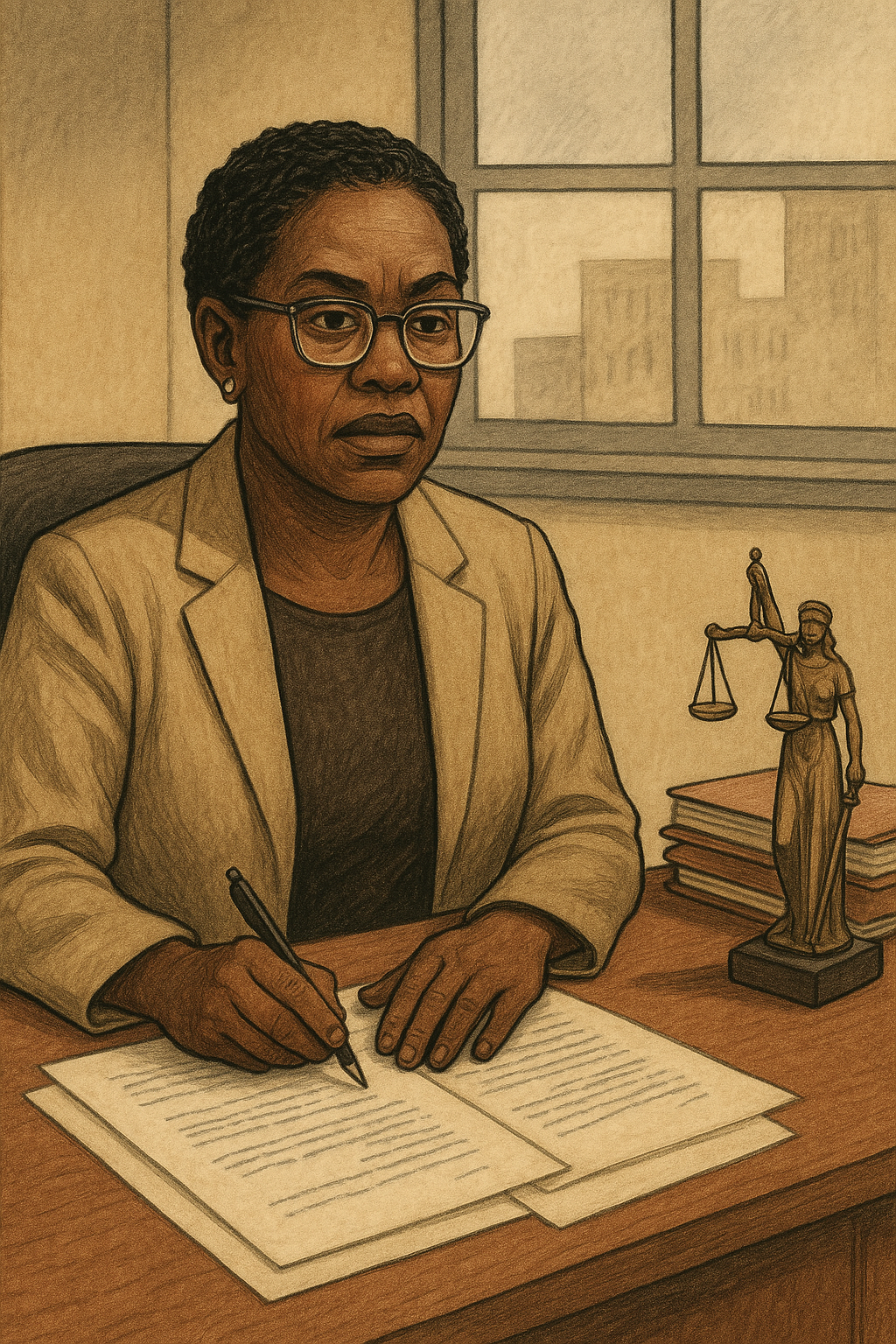
A middle-aged woman sits at a wooden desk in what appears to be a law office or study. She wears a cream-colored blazer over a dark shirt, with rectangular glasses framing a serious, focused expression. Her short, curly hair is practical, no-nonsense. She holds a pen poised over documents spread across her desk, caught mid-review or mid-signature. Her gaze meets ours directly—this is someone who weighs things carefully before acting.
Behind her, a window shows the muted outlines of city buildings, placing us firmly in an urban, professional setting. On the desk sits a small statue of Lady Justice holding her traditional scales, a deliberate nod to the card's classical symbolism. Stacked books sit beneath the statue, suggesting case law, precedent, or simply years of accumulated knowledge. The warm, muted color palette—tans, browns, and soft grays—gives the scene a grounded, documentary quality rather than anything theatrical.
The illustration style has a textured, almost lithographic quality, with visible hatching and varied line weights. This isn't a glamorous portrait; it's a working moment. The woman could be a judge, a lawyer, an advocate, or anyone whose job requires making fair decisions based on evidence and principle.
The modern read
This illustration grounds Justice in the unglamorous reality of how fairness actually functions: through paperwork, precedent, careful review, and the unglamorous labor of people who take their responsibility seriously. The woman isn't wearing robes or holding a sword. She's holding a pen—because in the real world, decisions that change lives get made with signatures, contracts, and documented reasoning.
By placing Justice in a contemporary office rather than on a throne, this image reminds us that fairness isn't automatic or mystical. It requires work. Someone has to read the documents, weigh the arguments, and make a call. The card asks: are you doing that work honestly? Are you being the kind of person who makes decisions based on what's actually true, rather than what's convenient?
How it connects to the Rider-Waite-Smith
The traditional RWS Justice shows a robed figure seated between two pillars, holding a double-edged sword in one hand and balanced scales in the other. A crown or headdress suggests authority, and the figure stares forward with a neutral expression. The sword represents decisive action and the consequences of decisions; the scales represent weighing evidence and finding balance. The figure is elevated, formal, almost distant—a symbol of objective law.
This modern version keeps the scales as a small statue on the desk, maintaining the symbolic through-line. But the sword is gone, replaced by a pen—the tool that actually enacts decisions in contemporary life. The distant, elevated judge becomes an accessible professional doing her job. The shift emphasizes that Justice isn't something handed down from on high; it's something people create through careful, honest work. The core meaning remains—truth, fairness, consequences—but the setting makes clear that these principles live or die based on who's doing the work and how seriously they take it.
Upright meaning
Justice upright means things are being weighed fairly. Consequences follow actions. Truth matters, and it's coming out. This card shows up when decisions need to be made based on facts, not feelings—and when those decisions will stick.
In love: A relationship reaches a turning point where both people need to be honest about what's working and what isn't. If you've been putting in the effort, this card says it's being recognized. If you've been checked out or unfair, that's becoming clear too. Could also indicate legal matters related to relationships—divorce proceedings, custody arrangements, prenups.
At work: A performance review, a contract negotiation, or a decision about whether to stay or go. If you've done solid work, this card suggests you'll get credit. If there's been unfairness in how you've been treated, it may be addressed. Also shows up around workplace disputes, HR matters, or anything involving documentation and official process.
With money: Legal contracts, settlements, signing leases or closing deals. Read the fine print. This card often appears when someone's making a commitment that has real consequences—loans, investments, agreements that bind you to something.
In daily life: Owning your choices. You did a thing; now you deal with the results. Not punishment, just cause and effect. This card says stop dodging and face what's actually happening.
Reversed meaning
Justice reversed means something's off with the scales. Accountability is being dodged, facts are being ignored, or a decision is being made unfairly—either by you or someone else. The system is failing, or you're failing to be honest with yourself.
In love: Someone's not being straight with you, or you're not being straight with them. Avoiding hard conversations because they're uncomfortable. Could also mean an unfair dynamic—one person doing all the emotional work while the other skates by. In legal matters, a divorce or custody situation that's dragging out or being handled badly.
At work: Getting blamed for something that wasn't your fault. Credit going to the wrong person. A decision made based on politics rather than merit. Could also mean you're avoiding responsibility for a mistake and hoping no one notices.
With money: Getting a raw deal on a contract. Signing something without understanding it. Legal matters going sideways—delays, unfavorable rulings, fine print coming back to bite you.
In daily life: Blaming others for your own choices. Refusing to accept that your actions had consequences. Or conversely, beating yourself up for something that genuinely wasn't your fault. The scales are tipped either way.