
Five of Swords
What the image shows
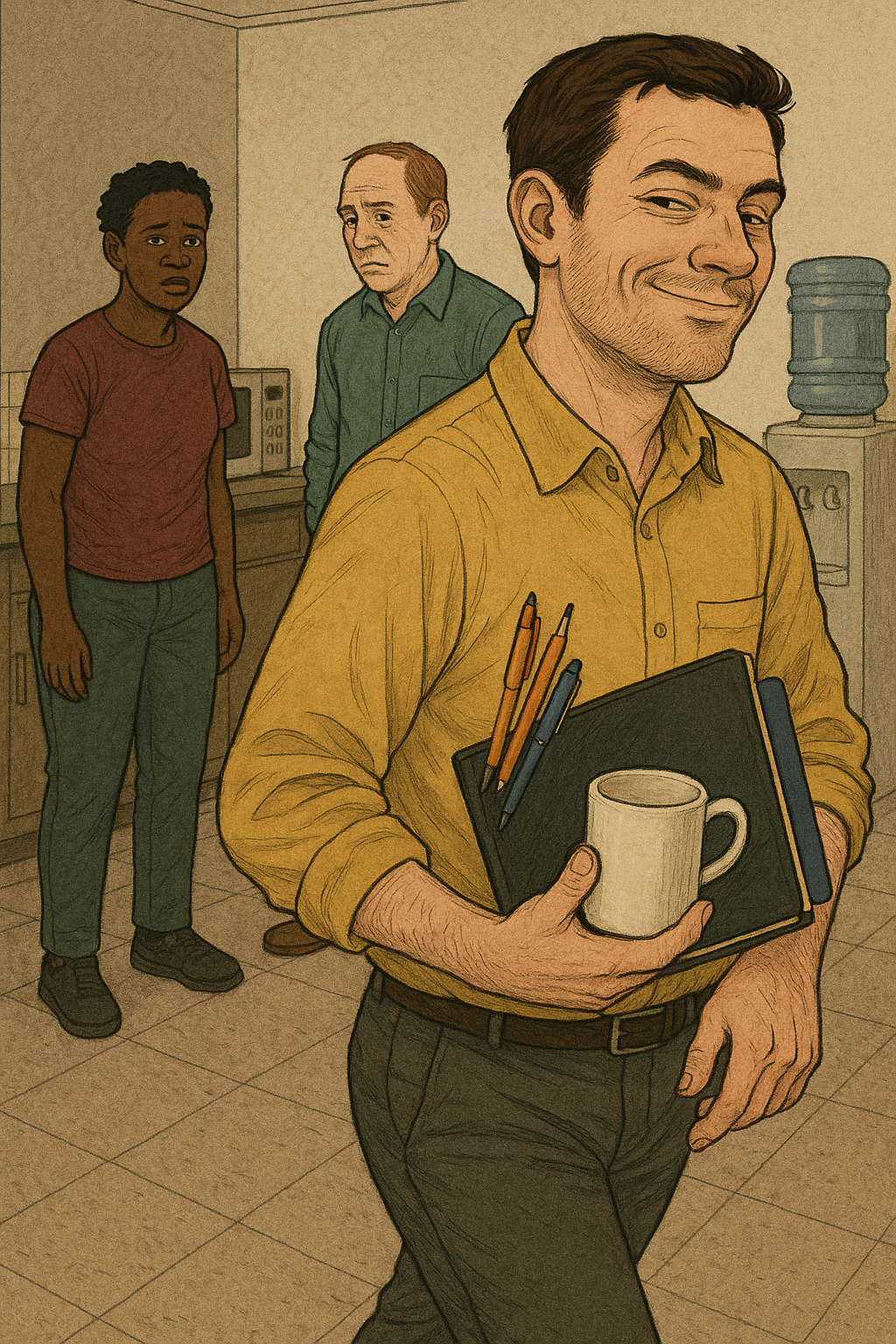
A man in a mustard yellow button-down shirt strides confidently through what appears to be an office break room. He's got a smug, self-satisfied smile on his face as he carries an armload of items — a notebook or folder, several pens, and a coffee mug. He's clearly pleased with himself, walking with purpose toward the viewer.
Behind him, two other people stand near a microwave and water cooler. An older man in a teal shirt looks deflated and concerned, his expression heavy with resignation. Next to him, a younger person in a red t-shirt appears stunned, their posture rigid and their face registering something between disbelief and dismay. Neither of them is moving — they're just watching the man in yellow walk away.
The setting is mundane: beige tile floor, plain walls, standard office fixtures. The contrast between the winner's swagger and the losers' frozen defeat is stark. Those pens and that notebook aren't valuable objects, but the way he's clutching them suggests he's won something significant — at their expense.
The modern read
This illustration nails the uncomfortable truth of the Five of Swords: sometimes people win by making others lose, and they enjoy it. The break room setting makes it painfully relatable. This isn't a battlefield with actual swords — it's the petty victories that happen in workplaces every day. Someone took credit for the project, hoarded the resources, or threw colleagues under the bus in a meeting.
What hits hard is how small the prizes are. Pens. A notebook. A coffee mug. The Five of Swords often shows up when someone's fighting dirty over things that aren't worth the damage done. The man in yellow got his win, but look at what's left behind — two people who will remember this, who now know exactly who he is. The victory is hollow, even if he can't see that yet.
How it connects to the Rider-Waite-Smith
The traditional RWS Five of Swords shows a figure in the foreground holding three swords with a satisfied, slightly sneering expression. Two other swords lie on the ground. In the background, two defeated figures walk away toward a turbulent sky and choppy water. The message is clear: someone has won the conflict, but the victory came at a cost, and those who lost aren't just disappointed — they're walking away entirely.
This modern version keeps the core dynamic intact: one winner, two losers, the spoils of a petty victory. The swords become office supplies — tools of the modern workplace. The stormy sky becomes the fluorescent-lit break room, equally bleak in its own way. What's preserved is the isolation of the victor. He's walking toward us, away from them, and that separation tells the whole story. What's shifted is the scale — this isn't a duel or a war, it's Tuesday at the office. That makes it somehow worse.
Upright meaning
The Five of Swords upright points to conflict where someone wins, but the cost is too high. It's the hollow victory, the bridge burned, the relationship sacrificed for being right. This card shows up when winning matters more than it should.
In love: You won the argument, but your partner has gone quiet. You proved your point, but now there's a wall between you. The fight is over, but something broke that won't easily mend.
At work: You got the promotion over your colleague, or took credit for a team project. You came out on top in the office politics, but now your coworkers don't trust you. Expect a colder reception in meetings.
With money: You haggled someone down so hard they resent the deal. You won the lawsuit but spent more on lawyers than you recovered. The numbers say you're ahead, but something doesn't feel like winning.
In daily life: You had to be right at dinner, and now your friend is texting less. You refused to compromise with your roommate, and now you're living with tension. Small victories, lasting damage.
Reversed meaning
Reversed, the Five of Swords points to the aftermath of conflict — either the slow work of repair or the continued fallout of refusing to let go. It can indicate someone finally ready to apologize, or someone still replaying old fights in their head instead of moving forward.
In love: You keep bringing up that argument from three months ago. You won't let go of what they said, even though they've apologized twice. Or: you're finally ready to admit you were wrong, but you're scared to say it.
At work: The team is still recovering from last quarter's blowup. People are polite but guarded. Or: you're the one who caused the damage and now you're wondering how to rebuild trust without losing face.
With money: You're still bitter about that deal that went sideways. You keep checking their social media to see if they're doing better than you. Or: you've finally realized the "win" cost you more than you gained.
In daily life: You apologized, but it was one of those non-apologies that made things worse. Or you're avoiding someone because you don't know how to come back from what happened. The fight is over, but you're still carrying it.