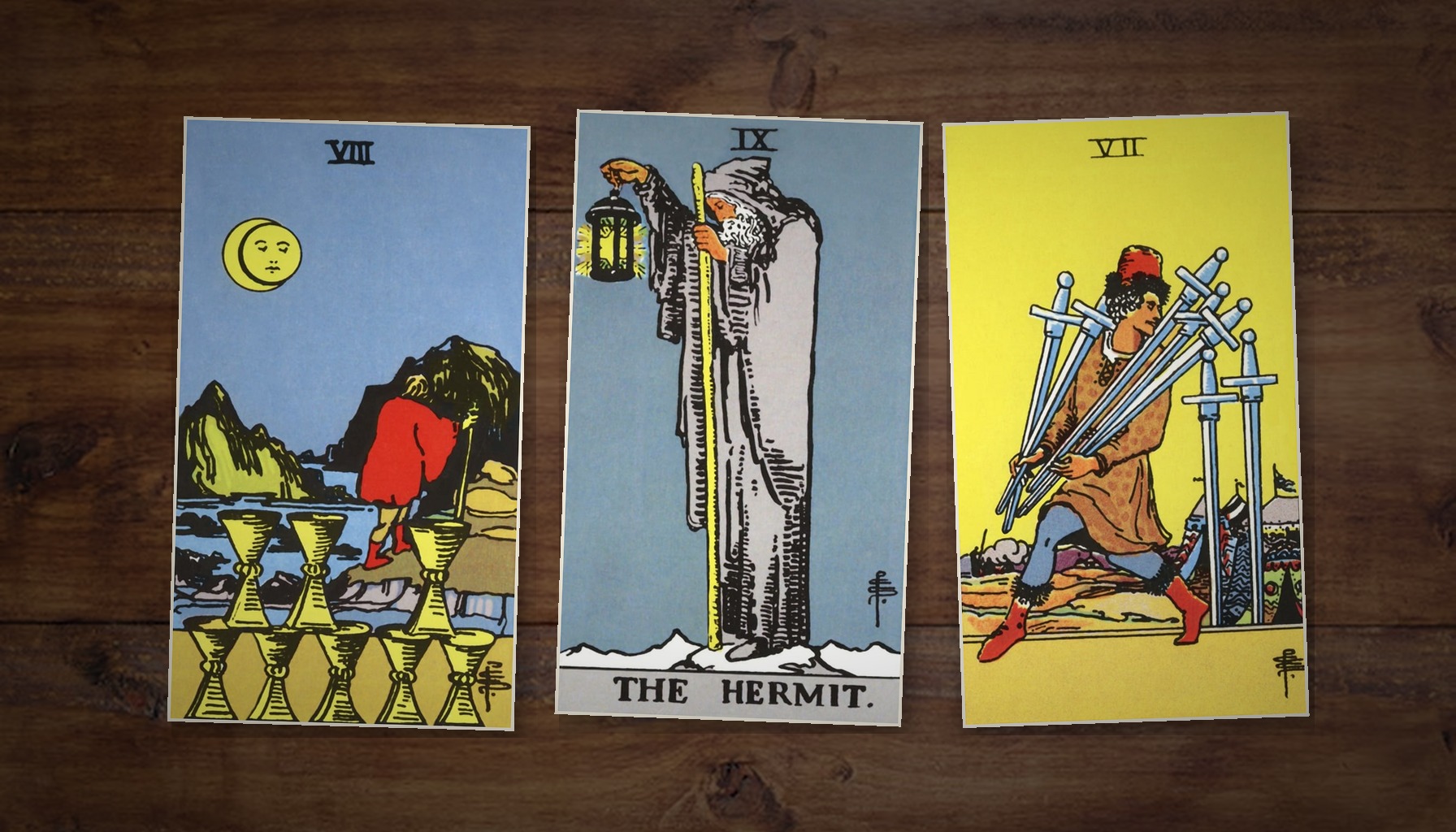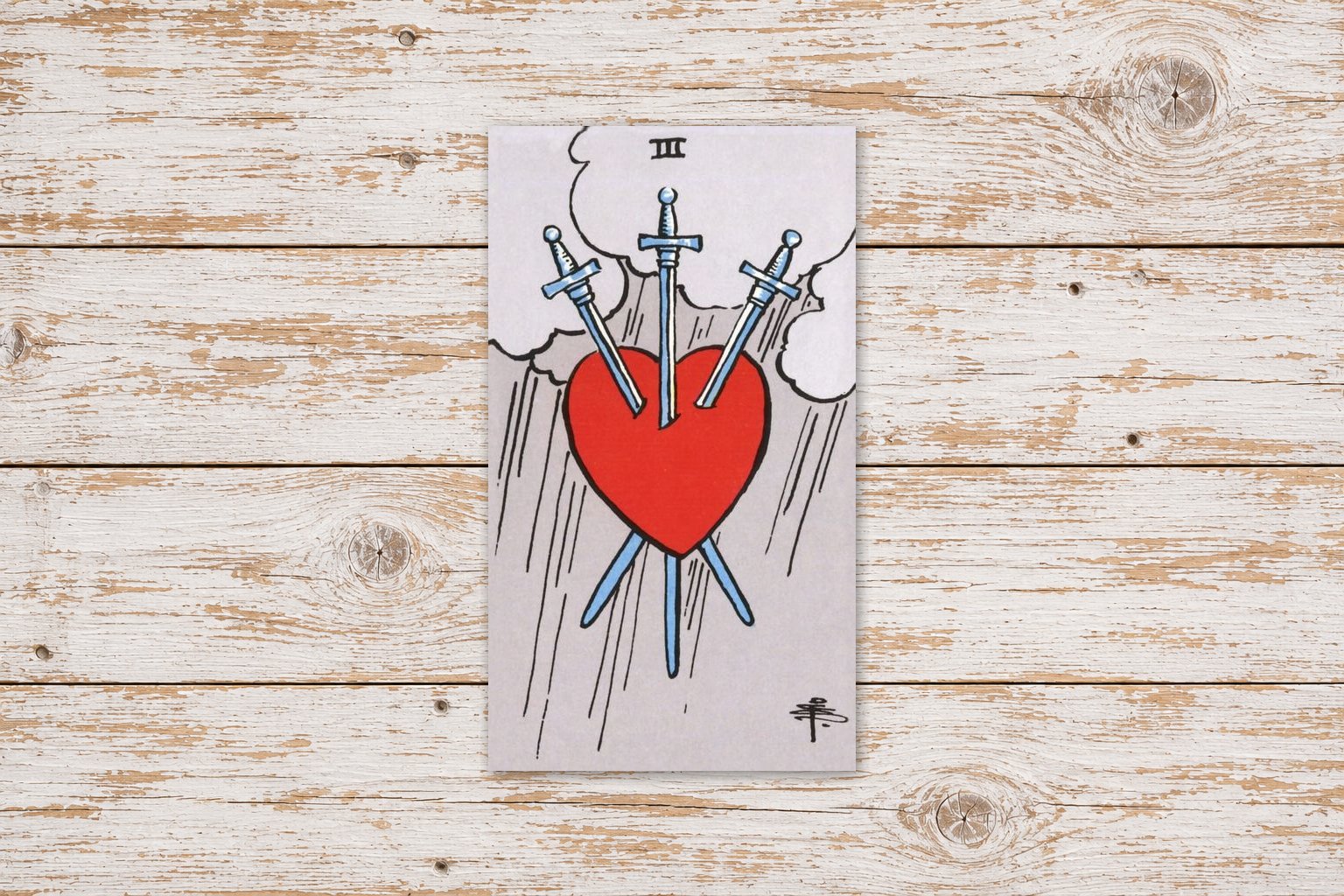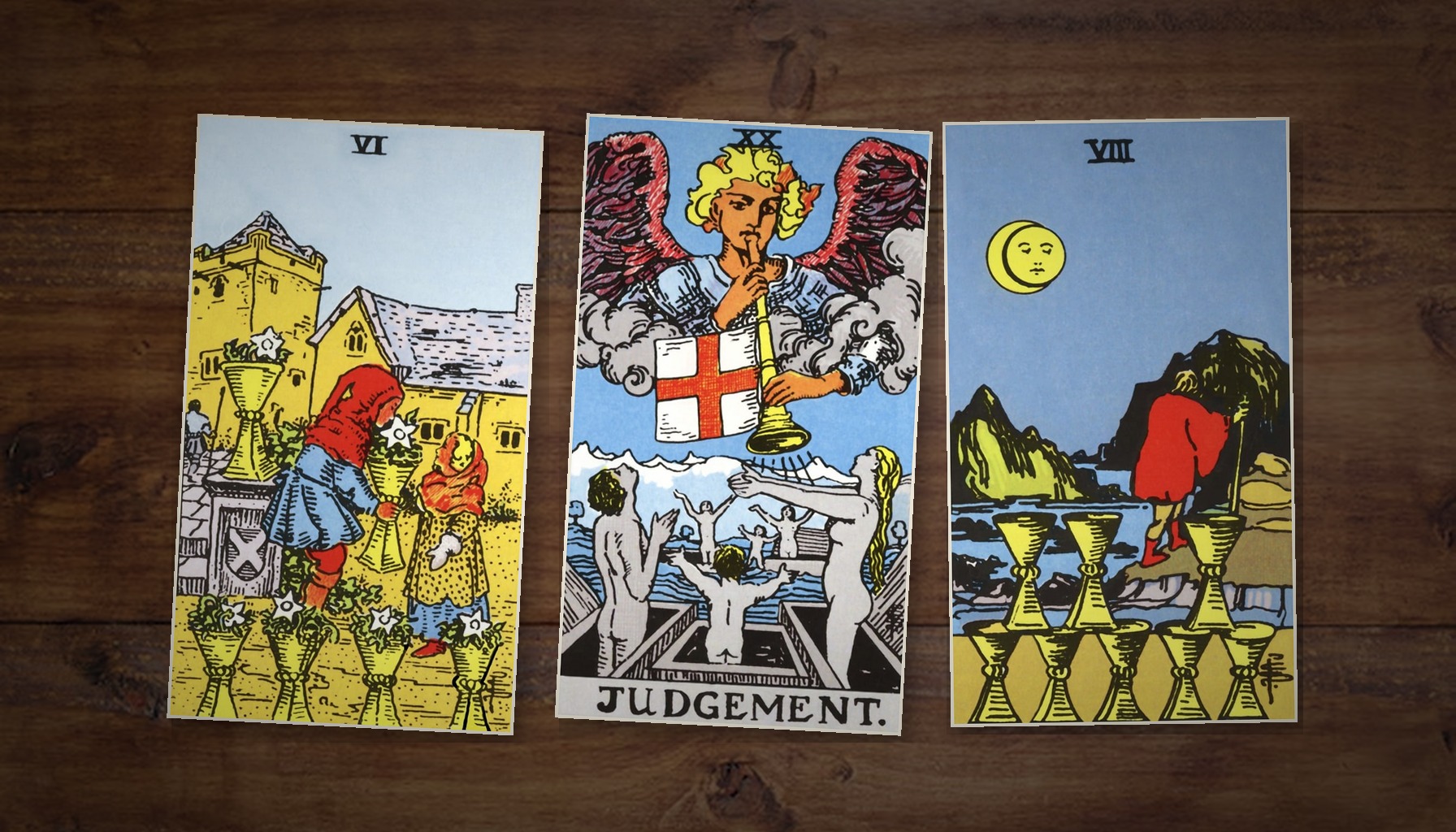
You just left your therapist's office — or closed the laptop, or hung up the call — and something got dislodged. You're not upset exactly. You're not fine either. There's just this feeling sitting in your chest that you can't quite name.
This is one of the best times to pull cards.
Not to analyze yourself. Not to get a second opinion on what your therapist said. Just to sit with whatever came up and give it some shape.
Why tarot and therapy work well together
Therapy gives you the language. Tarot gives you the imagery.
Sometimes your therapist will name something and you'll understand it intellectually but not feel it. The card can bridge that gap. You see the figure on the Five of Cups staring at the three spilled cups, ignoring the two that are still standing, and suddenly you understand what your therapist meant about focusing on loss in a way that no explanation could do.
Other times, therapy stirs something up that you can't articulate yet. It's too fresh. Pulling a card and just looking at it — not reading meanings, just looking at the picture — can give you a way to hold the feeling without having to explain it.
The post-session spread
Keep this simple. You just did hard work. This isn't the time for a ten-card spread.
Two cards:
- What came up today — the thing your session touched, even if you can't name it in words yet
- What to do with it between now and next session — not solve, not fix. What to do with it.
That's it. Look at the cards. Write down whatever comes to mind, even if it doesn't make sense. Bring it to your next session if you want.
A few things this is NOT
This is not a replacement for therapy. Tarot is a reflection tool. It's a mirror, not a doctor. If your therapist suggested something that feels uncomfortable, the discomfort might be the point. Don't use tarot to talk yourself out of doing the work.
This is not about getting a "better" answer. If you pull cards hoping they'll contradict what your therapist said, that's avoidance, not insight. Notice that impulse. That's actually useful information.
This is not self-diagnosis. If you pull the Ten of Swords and decide you're traumatized, or the Devil and decide you're addicted to something — slow down. Cards show patterns and feelings. They don't diagnose conditions. That's what the professional is for.
Cards that often show up after therapy
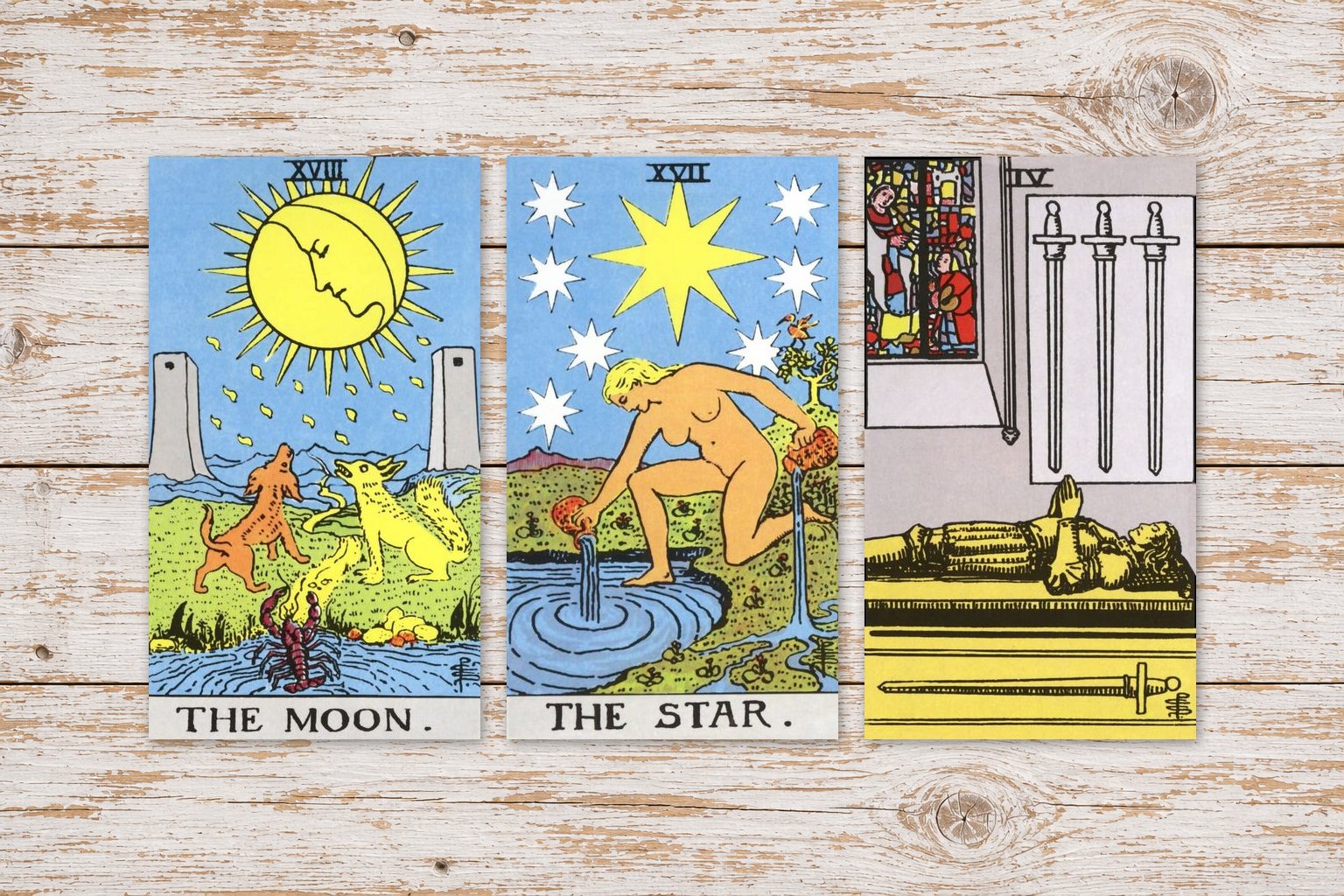
The Moon — Something in your unconscious got disturbed. You can't see it clearly yet. That's okay. The Moon says sit with the not-knowing for a while.
The High Priestess — You know more than you think you do. Something your therapist said landed deeper than you realized. Give it time to surface.
The Four of Swords — Rest. Seriously. A heavy session takes energy. This card is permission to do nothing productive for the rest of the day.
The Six of Swords — You're moving away from something. It doesn't feel triumphant. It feels sad and quiet and necessary. That's exactly what transition looks like.
Temperance — The healing is happening, even though it's slow. Even though you can't measure it. This card shows up when the process is working and you just need to stay with it.
Between sessions
If you journal, try this: after each therapy session, pull one card and write a few lines about how it connects to what you discussed. Over time you'll start to see your own patterns — recurring cards, shifting themes, the slow movement from crisis cards to growth cards.
That's not tarot predicting your future. That's tarot documenting your healing.
If you want to explore what came up today, try a free reading. Pick "personal growth" as your topic. The AI reading won't know what your session was about, but sometimes an outside reflection catches something you missed.