
The Hermit
What the image shows
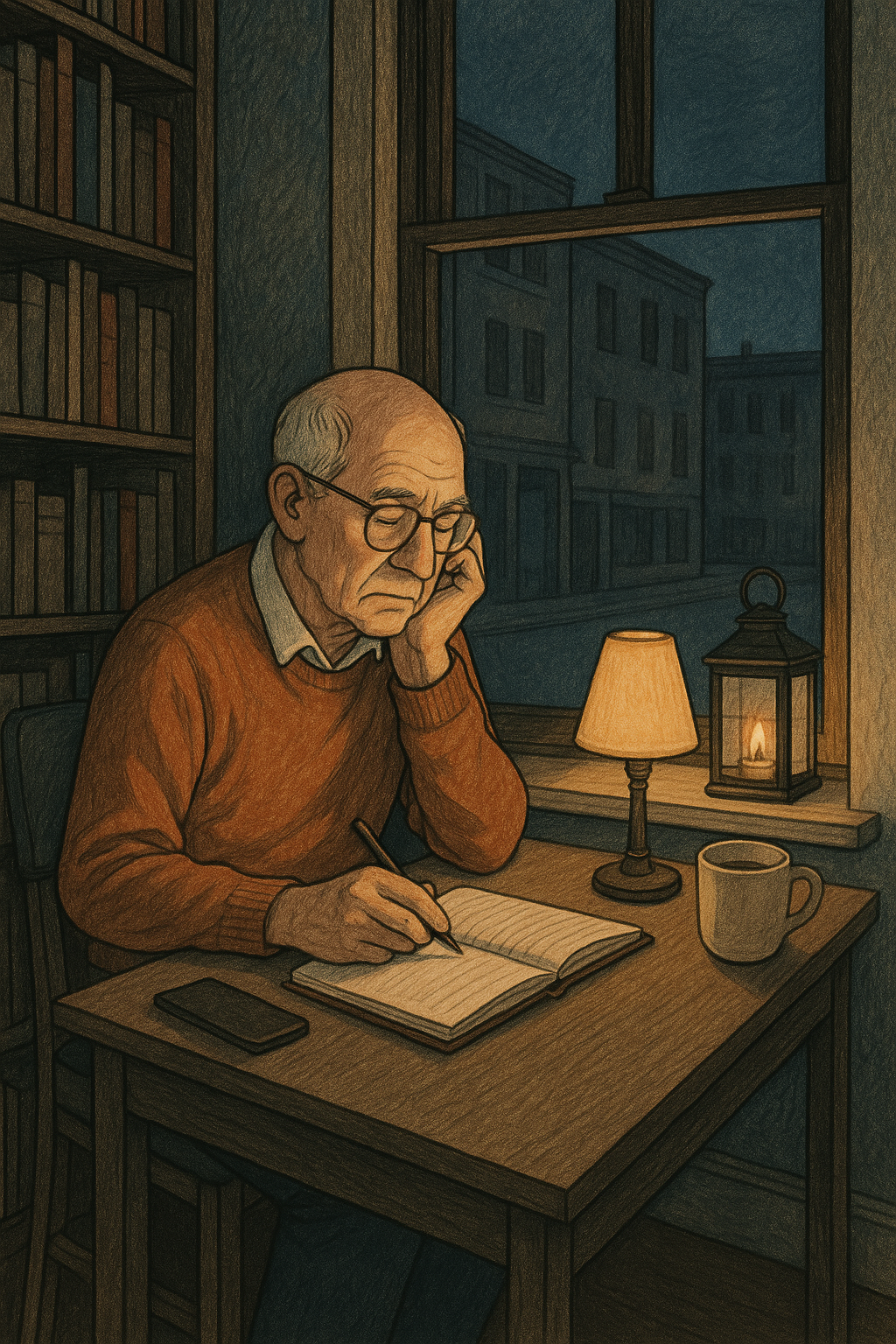
An older man sits alone at a wooden desk by a window, deeply absorbed in writing in a notebook. He's wearing a rust-orange sweater over a collared shirt, glasses perched on his nose, his free hand propped against his temple in classic thinking posture. His head is mostly bald with just a fringe of grey hair remaining. The scene is intimate and quiet — this is someone in the middle of serious, solitary work.
The room is clearly a personal study or home library. Floor-to-ceiling bookshelves filled with volumes line the wall beside him. On his desk sits a coffee mug, a small lamp casting warm light, and what appears to be a phone face-down — deliberately ignored. A lantern with a lit candle adds to the soft glow. Outside the window, dusk has fallen over what looks like an urban setting with apartment buildings visible. The blue-grey evening light contrasts with the warm amber tones inside.
The overall feeling is one of chosen solitude. This isn't loneliness — it's intentional retreat. The man has everything he needs within arm's reach: books, light, something warm to drink, and space to think without interruption.
The modern read
This illustration shows The Hermit as something completely ordinary and accessible: a person who has stepped back from the noise to figure something out on their own. No mountaintop, no robes, no dramatic isolation. Just a guy in his study, writing by lamplight while the city goes on without him outside his window. The message is clear — wisdom doesn't require a pilgrimage. Sometimes it just requires closing the door and sitting with your own thoughts.
The phone turned face-down is a particularly sharp detail. In contemporary life, that's one of the most deliberate acts of withdrawal you can make. This man hasn't abandoned society or become a recluse. He's simply chosen, for now, to stop taking input and start processing what he already knows. That's The Hermit in a modern context: not permanent isolation, but intentional periods of going inward when you need to sort yourself out.
How it connects to the Rider-Waite-Smith
The traditional Rider-Waite-Smith Hermit shows a grey-bearded figure standing alone on a snowy mountain peak, wrapped in a grey cloak, holding a staff in one hand and a glowing lantern containing a six-pointed star in the other. He's at the top — he's already made the climb — and the lantern represents the inner light of wisdom that guides the way. The mountain symbolizes achievement through effort, the staff represents authority and experience, and the solitary setting emphasizes that some answers can only be found alone.
The modern version keeps the lantern (now literally a candle lantern on his desk) and the sense of hard-won wisdom that comes with age. The books replace the mountain — this man has done his climbing through years of reading and thinking. The staff becomes the pen, the tool he uses to work through his thoughts. What's shifted is the accessibility. The RWS Hermit has completed his journey and stands apart from the world. This Hermit is still in the middle of his, still actively working something out, still connected enough to the world that you can see it through his window. The isolation is temporary and chosen, not permanent and complete.
Upright meaning
The Hermit upright is about stepping back to find your own answers. It points to a time when you need to stop asking everyone else what they think and sit with what you actually know. This isn't about hiding from problems — it's about creating enough quiet to hear yourself think.
In love: You might need time alone to figure out what you actually want from a relationship, rather than what you've been told you should want. If you're in a partnership, this could mean taking space to process something independently before discussing it with your partner. If you're single, it often points to a healthy period of not dating while you get clear on your patterns.
At work: This looks like closing your office door to finish a project without interruptions, or taking a personal day specifically to think through a career decision. It might mean doing your own research before a big meeting instead of relying on the team's consensus.
With money: The Hermit suggests doing your own financial review — actually sitting down with your accounts, your spending, your goals — rather than just trusting that things are fine. It can also point to seeking out one trusted advisor rather than crowdsourcing financial decisions.
In daily life: Taking a weekend without social plans, going for long walks alone, journaling, or simply turning off your phone for a few hours. Any deliberate choice to reduce input so you can produce your own insight.
Reversed meaning
The Hermit reversed usually points to isolation that's gone wrong — either you're avoiding necessary solitude or you've stayed withdrawn too long. The reversal asks whether your alone time is serving you or whether it's become a way to hide.
Avoidance of reflection: You keep yourself constantly busy or surrounded by people specifically so you don't have to think about something uncomfortable. The noise is intentional distraction, not genuine engagement.
Isolation as self-punishment: What started as healthy solitude has become withdrawal. You're not taking space to think — you're shutting people out because you've convinced yourself they don't want you around, or you don't deserve connection.
Ignoring your own wisdom: You already know what you think about a situation, but you keep polling friends, reading articles, asking for advice — anything to avoid acting on your own judgment. The answers are there; you just don't want to be responsible for them.
Loneliness disguised as independence: Insisting you prefer being alone when actually you're struggling to connect. Using "I'm just introverted" or "I need my space" as cover for social anxiety, fear of rejection, or difficulty trusting others.