The Empress
What the image shows
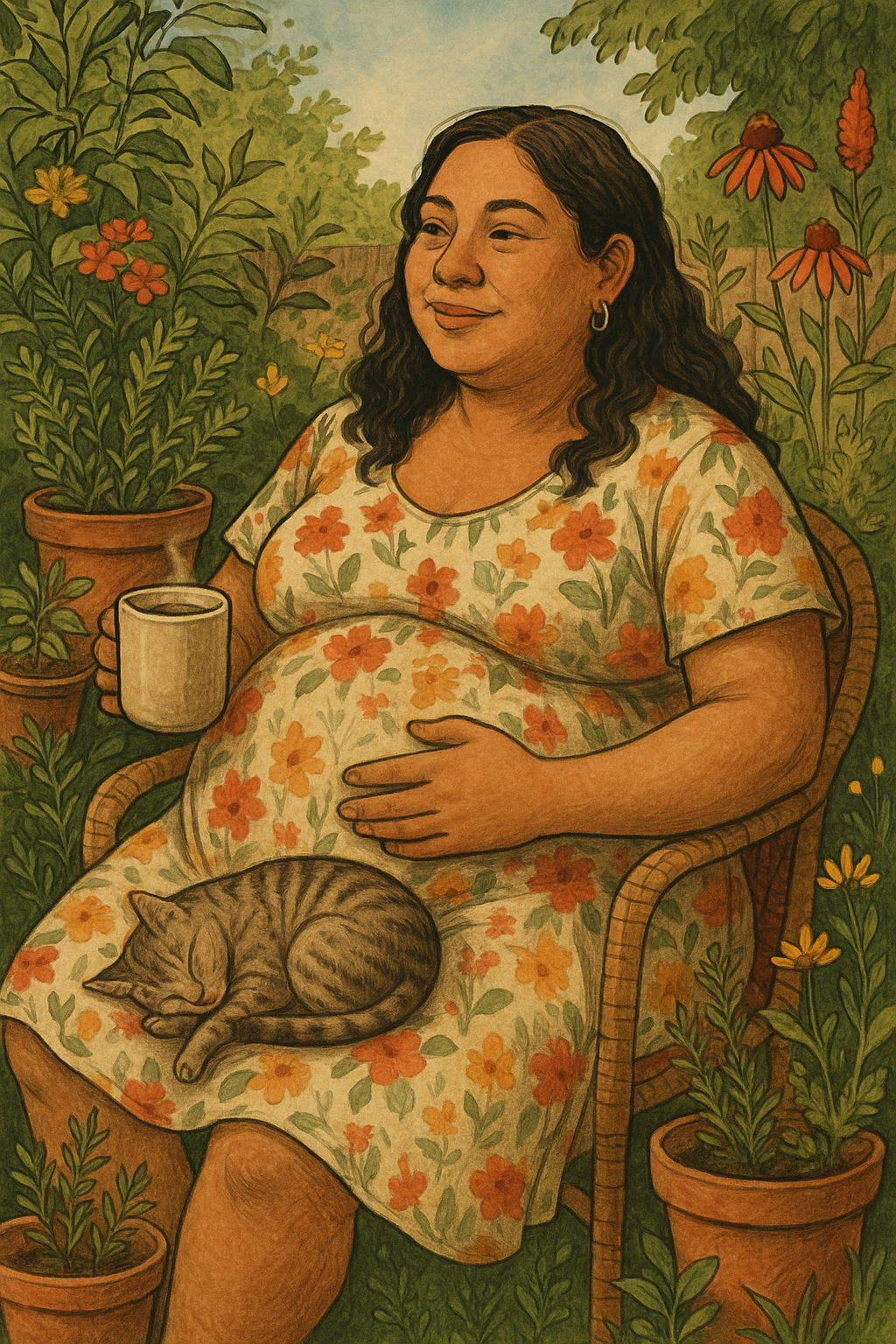
A pregnant woman sits in a wicker chair in the middle of a lush garden, one hand resting on her belly, the other holding a steaming mug. She wears a loose floral dress in cream with orange and green flowers, and her dark wavy hair falls past her shoulders. Her eyes are closed and she's smiling slightly—not posing, just genuinely comfortable. A tabby cat sleeps curled up on her lap.
The garden around her is abundant and a little wild. Terracotta pots crowd the ground near her feet, filled with greenery. Coneflowers, marigolds, and other blooms rise up on all sides, some taller than her head. A wooden fence is barely visible behind the dense foliage. A patch of blue sky shows through the leaves above her.
Everything in this scene suggests growth, rest, and plenty. The garden isn't manicured—it's productive and alive. The woman isn't doing anything in particular. She's just sitting in the middle of all this abundance, letting it happen around her.
The modern read
This Empress isn't ruling from a throne or draped in royal robes. She's growing things—a garden, a baby, maybe just a quiet afternoon. The card becomes about creation that happens through patience and care, not force or hustle. She's not working the garden right now; she's sitting in it. That's the point.
Placing The Empress in a backyard garden with a cat and a cup of coffee strips away the mythological distance. This is abundance you can actually touch: tomatoes on the vine, a pregnancy that's almost to term, a pet that trusts you enough to sleep in your lap. The message is that fertility and nurturing aren't abstract concepts—they're Tuesday afternoon in the garden.
How it connects to the Rider-Waite-Smith
The traditional RWS Empress sits on a cushioned throne in a field of wheat, wearing a crown of twelve stars and a gown patterned with pomegranates. A heart-shaped shield with the Venus symbol leans beside her. A stream flows through the landscape, and trees grow thick behind her. She represents fertility, sensuality, nature, and maternal abundance—the archetypal mother goddess figure.
The modern version keeps the core elements: a pregnant figure, surrounded by growing things, at rest rather than in action. The wheat field becomes a backyard garden. The throne becomes a wicker chair. The Venus symbol is gone, but the floral dress echoes the pomegranate pattern. What shifts is the scale—this isn't cosmic fertility, it's personal. The cat replaces any royal symbolism with domestic comfort. The meaning stays the same, but it's sized for an actual life.
Upright meaning
The Empress upright means things are growing, and your job is to let them. This card points to fertility in all its forms—creative projects taking shape, relationships deepening, bank accounts slowly filling up, actual pregnancy. The key is nurturing without forcing.
In love, this looks like a relationship that's become genuinely comfortable—you've stopped performing and started just being together. In work, it's the project that's finally gaining momentum after months of care and attention. In money, it's the savings account that's grown enough to feel like a cushion, or the garden that's producing enough vegetables to cut your grocery bill. In daily life, it's having people over for dinner because you actually want to, cooking something that took time, enjoying your home because you've made it somewhere good to be.
Reversed meaning
The Empress reversed points to neglect, creative blocks, or nurturing that's gone wrong somehow. Something that should be growing isn't, or you're pouring care into the wrong place, or you've forgotten to take care of yourself entirely.
In love, this can look like a relationship where one person does all the giving and gets nothing back, or where physical intimacy has dried up because nobody's tending to it. In work, it's the project you keep meaning to start but never do, or creative work that feels stuck and joyless. In money, it's overspending on comfort items while neglecting actual needs, or hoarding resources instead of letting them circulate. In daily life, it's the houseplant that's dying because you forgot about it, the friend you haven't called in months, the body you've stopped feeding properly. Something needs care and isn't getting it.