
Six of Pentacles
What the image shows
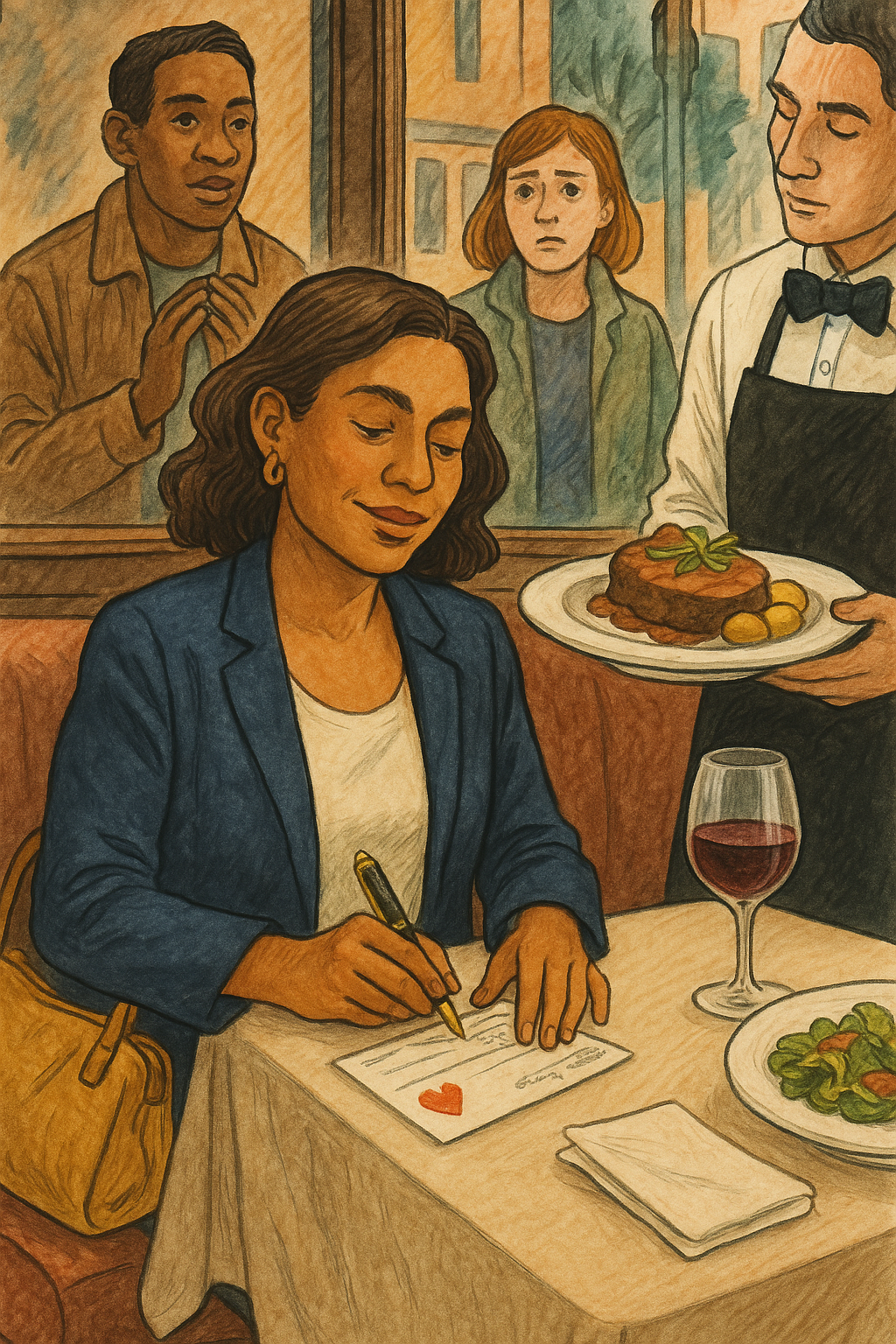
A woman in a blue blazer sits at a restaurant table, pen in hand, signing what appears to be a check or receipt with a small heart drawn on it. Her expression is calm and satisfied, eyes lowered to the paper in front of her. A glass of red wine sits nearby, along with a small plate of salad. She has a leather bag beside her, and everything about her posture suggests someone comfortable picking up the tab.
A waiter in formal attire — white shirt, black bow tie, dark apron — presents a plate of food, likely steak with potatoes and garnish. Behind the main scene, visible through what might be a window or in the background of the restaurant, two people watch. One has their hands pressed together near their chin in what looks like gratitude or slight nervousness. The other, a younger person with reddish hair, looks on with an expression that's harder to read — maybe uncertainty, maybe just observation.
The setting is clearly an upscale restaurant. The warm color palette and textured, almost hand-drawn quality of the illustration gives it an intimate editorial feel. The focus is on the act of paying — not just receiving food, but the social dynamics that come with who holds the wallet.
The modern read
This illustration nails what the Six of Pentacles is really about: the dynamics of giving, receiving, and the subtle power that comes with being the one who pays. The woman signing the check isn't just generous — she's in control. She gets to decide when, how much, and for whom. The people watching in the background aren't equals in this moment; they're on the receiving end, and their expressions reflect that complicated mix of gratitude and discomfort.
By placing this card in a restaurant scene, the illustration makes visible what we often don't want to admit about generosity: it comes with a hierarchy. Picking up the check is kind, sure. But it also puts you in a certain position. This modern setting asks us to think about whether our giving is truly free, or whether it comes with strings — even ones we don't consciously attach.
How it connects to the Rider-Waite-Smith
In the traditional RWS Six of Pentacles, a wealthy merchant stands holding a balanced scale in one hand while dropping coins into the hands of two kneeling beggars. The scale represents fairness and measured giving, while the posture of the figures makes the power imbalance explicit — one person stands, two people kneel.
This modern version keeps the core dynamic intact: one person gives, others receive, and there's an awareness of who holds the resources. The balanced scale is gone, but the check and pen serve the same function — the woman decides the amount. What's shifted is the setting. Instead of obvious poverty, we get social nuance. The people in the background aren't begging; they're just not the ones paying. It's a subtler take on the same question: what does it mean to be on either side of generosity?
Upright meaning
The Six of Pentacles upright is about generosity, sharing resources, and the flow of support between people. It points to situations where someone has more and chooses to give — or where you're the one receiving help. The card asks you to notice which side you're on and how that feels.
In love: One partner financially supports the other during a rough patch — paying rent, covering bills, or funding a career change. It works if both people are honest about it.
At work: A mentor takes time to coach you, or you're in a position to help a newer colleague. Someone's sharing knowledge, contacts, or opportunities.
With money: You lend a friend cash, donate to a cause, or receive unexpected help when you need it most. Could also mean getting approved for assistance or a loan.
In daily life: You buy coffee for the person behind you, or someone offers to help you move. Small acts of giving that acknowledge we all need each other sometimes.
Reversed meaning
Reversed, the Six of Pentacles points to generosity that's gone sideways. Maybe the giving comes with strings attached. Maybe you're stuck receiving when you'd rather stand on your own. Or maybe someone's hoarding resources they could easily share.
In love: One person holds financial power over the other and uses it — consciously or not — to control the relationship. "I pay for everything" becomes leverage.
At work: A boss dangles rewards but never delivers. Or you're asked to be grateful for the bare minimum while others get more.
With money: You keep giving to someone who never gets back on their feet — and starts to expect it. Or someone offers help but makes you feel small for needing it.
In daily life: Charity that's really about the giver feeling good, not the recipient's actual needs. Keeping score of every favor. Resentment building on either side of an unequal exchange.