
Page of Wands
What the image shows
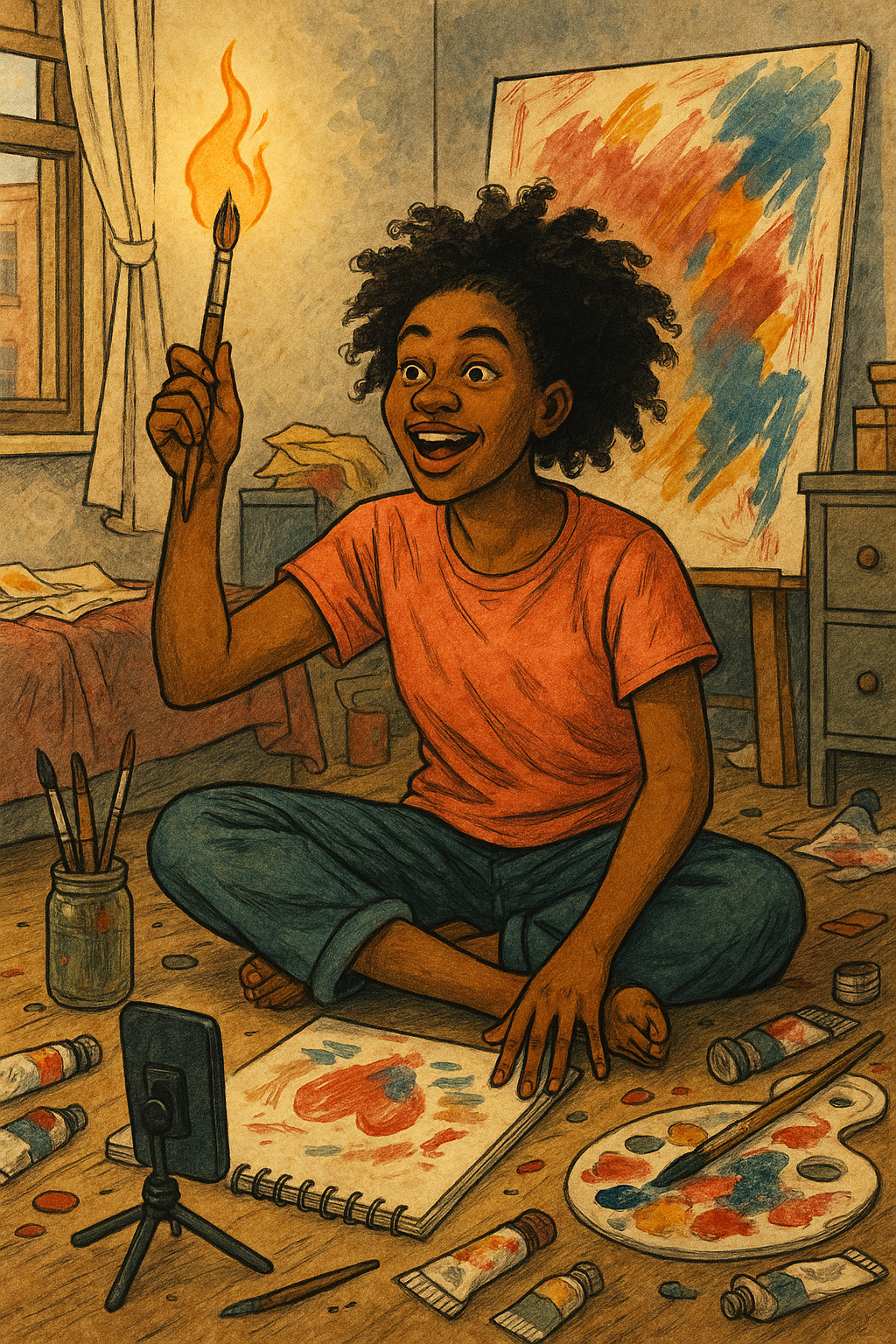
A young person sits cross-legged on the floor of what looks like their bedroom, surrounded by the happy chaos of a creative project in full swing. They're wearing a coral-orange t-shirt and jeans, holding a paintbrush aloft with obvious excitement—the brush tip appears to be on fire, a small flame dancing at its end. Their expression is pure enthusiasm: wide eyes, open mouth, the unmistakable look of someone who just had a breakthrough idea or is showing off something they made.
The room tells the story of someone deep in creative exploration. Paint tubes are scattered across the wooden floor, a palette with blobs of orange, blue, and red sits nearby, and a sketchbook lies open showing abstract color experiments. Behind them, a canvas on an easel displays bold, gestural brushstrokes in warm and cool tones. A phone mounted on a small tripod suggests they're filming themselves—maybe for social media, maybe a tutorial, maybe just documenting their process.
The setting feels lived-in and personal: a bed in the background, a dresser, curtains filtering afternoon light. This isn't a formal studio or classroom. It's someone's private space transformed into a creative laboratory, complete with the mess that comes from actually making things rather than just thinking about them.
The modern read
This illustration nails what the Page of Wands actually looks like in practice: someone at the beginning of something, fired up about a new interest, and not waiting for permission or perfect conditions to start. The flaming paintbrush is almost comically literal—this person's creativity is literally on fire—but it works because it captures that feeling of being so excited about an idea that it feels like it might burst out of you.
The phone on the tripod adds a layer the traditional card doesn't have. This Page isn't just creating in private; they're sharing it, putting themselves out there before they've mastered anything. That's distinctly modern and distinctly Page of Wands territory: the willingness to be a beginner in public, to document the messy middle of learning, to let enthusiasm outpace polish. The bedroom setting matters too—this is someone working with what they have, not waiting for a proper studio or the right equipment.
How it connects to the Rider-Waite-Smith
In the traditional Rider-Waite-Smith deck, the Page of Wands stands in a desert landscape, holding a tall wooden staff that's sprouting green leaves. He looks at the staff with curiosity and interest, dressed in a yellow tunic decorated with salamanders (symbols of fire and transformation). The barren landscape suggests potential rather than completion—nothing's growing yet except that staff, and the Page seems more fascinated by possibilities than concerned about the emptiness around him.
The modern version keeps the essential ingredients: a young figure, obvious enthusiasm, a creative tool that's practically alive with potential (sprouting leaves become literal flames), and an environment that's about possibility rather than finished results. What shifts is the context—from an empty mythic landscape to a cluttered bedroom—which actually makes the card's meaning more accessible. The RWS Page is contemplating potential in the abstract; this Page is already in motion, making things, sharing them, not overthinking it. The salamanders of the original become the fire itself, impossible to miss.
Upright meaning
The Page of Wands shows up when something new is sparking your interest and you're ready to explore it without knowing where it leads. This is beginner's mind with actual momentum—not just thinking about starting, but starting.
In love: You're excited about someone new, or you're bringing fresh enthusiasm to an existing relationship. Maybe you suggest a spontaneous road trip, sign up for a dance class together, or finally ask out the person you've been noticing. It's that early-crush feeling where everything seems possible.
At work: You volunteer for a project outside your usual scope, pitch an idea in a meeting even though you're junior, or start learning a skill that interests you without worrying about whether it fits your job description. You're not playing it safe.
With money: You invest a small amount in something you believe in, start a side project that might eventually make money, or spend on tools and supplies for a new hobby. This isn't reckless—it's seed money for something you care about.
In daily life: You sign up for a class, start a creative project, say yes to an invitation that scares you a little, or share something you made even though it's not perfect. You're in motion.
Reversed meaning
Reversed, the Page of Wands points to creative blocks, false starts, or enthusiasm that never converts into action. The spark is there but it's not catching—or it flared up and burned out before anything got made.
In love: You keep talking about what you want in a relationship but don't actually date. Or you get excited about someone, go on two dates, then ghost because the initial thrill wore off. Commitment to the process of getting to know someone feels boring compared to the high of new attraction.
At work: You have ideas but don't follow through. You start projects and abandon them. You talk about wanting more creative work but never make time for it or pitch anything. Fear of looking inexperienced keeps you from trying.
With money: You keep buying supplies for hobbies you never pursue. You have five half-finished courses you paid for. Your "someday" list is expensive and gathering dust.
In daily life: Procrastination dressed up as perfectionism. Waiting until you feel ready. Comparing your day one to someone else's year ten and deciding not to bother. Letting self-doubt talk louder than curiosity.