
Ace of Pentacles
What the image shows
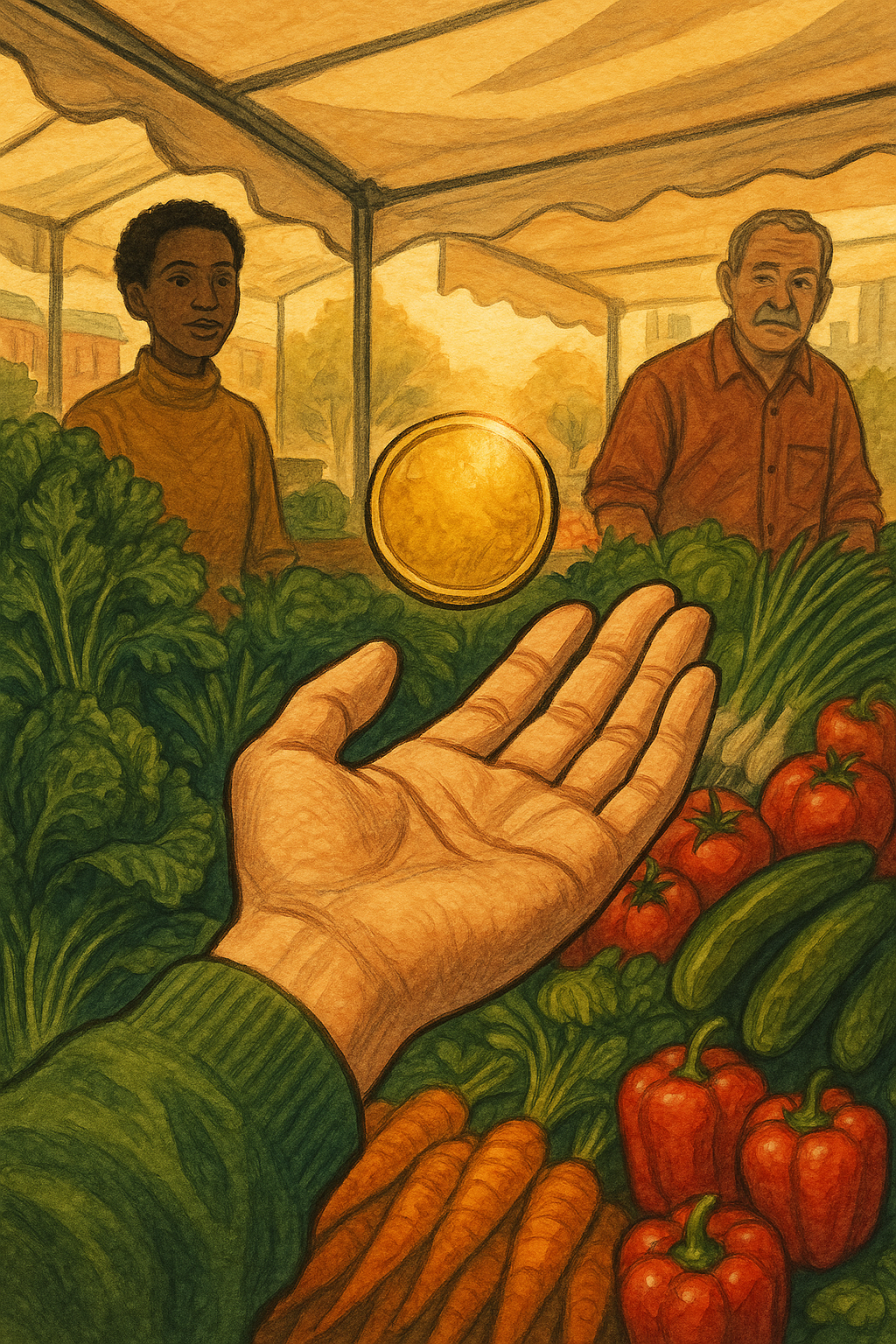
A hand reaches out from the lower left of the frame, palm up, as a golden coin hovers just above it—not quite caught, not quite falling. The hand belongs to someone in a green sweater, and there's a sense of anticipation in the open fingers, like they're about to receive something significant. The coin itself glows with a warm, almost sun-like quality, drawing the eye immediately.
Behind this central gesture, we're at a farmers market stall overflowing with fresh produce. Leafy greens, bright red tomatoes and bell peppers, orange carrots, dark cucumbers—the abundance is almost overwhelming. Two vendors stand behind their goods: a younger Black person in a mustard turtleneck on the left, and an older man with gray hair and a rust-colored shirt on the right. Both watch the transaction with calm attention.
The setting feels warm and golden, like late afternoon light filtering through the canvas tent overhead. Trees and buildings are visible in the soft background. Everything about this image says exchange, opportunity, and the tangible rewards of real work.
The modern read
This illustration grounds the Ace of Pentacles in something you can actually touch, smell, and eat. The farmers market is the perfect contemporary symbol for what this card represents: value that comes from effort, fair exchange, and things that nourish you in practical ways. This isn't abstract wealth—it's food someone grew, money someone earned, a transaction where both sides benefit.
What strikes me most is that the coin is still hovering. It hasn't landed in the hand yet. This captures something the traditional image also implies but doesn't emphasize as clearly: the Ace is an offer, not a guarantee. You still have to close your fingers around it. You still have to show up at the market, choose what you want, make the exchange.
The presence of both vendors—different ages, different backgrounds—suggests that material opportunity doesn't belong to any one type of person. It's available where people do honest work and create real value. The abundance of produce reinforces that this isn't about scarcity or competition. There's enough here. The question is whether you'll reach for it.
How it connects to the Rider-Waite-Smith
The traditional RWS Ace of Pentacles shows a divine hand emerging from clouds, holding a single golden coin marked with a pentacle. Below, a garden path leads through an archway covered in flowering vines, with mountains in the distance. The message is clear: here is material blessing, here is the opportunity for prosperity, and there's a path forward if you take it. The hand comes from above, suggesting the gift has spiritual or cosmic origins, while the garden represents the earthly realm where you'll actually use it.
This modern version keeps the essential elements: the hand, the golden coin, the abundance. But it shifts the source from divine to human. The coin isn't descending from clouds—it's part of an exchange between real people. The garden becomes a market stall; the archway becomes a tent. What carries over is the sense of potential and plenty. What shifts is the emphasis on participation. In the RWS, you receive. Here, you transact. Both are true to the Ace, but this version reminds you that material blessings usually require you to meet them halfway.
Upright meaning
The Ace of Pentacles is a green light for anything material, practical, or financial. A new job, a business idea, an investment opportunity, a health improvement, a chance to build something real—this is the card that says yes, this has solid potential. It's not promising you'll get rich overnight, but it's telling you the foundation is there. The seed is good.
This card asks you to pay attention to what's actually in front of you. Not the fantasy of wealth, but the real opportunity. Maybe it's smaller than you imagined. Maybe it's a farmers market stall instead of a corner office. But it's tangible, it's available, and if you put your hand out, it's yours to work with.
Reversed meaning
Reversed, the Ace of Pentacles is the opportunity that slips through your fingers. The job that falls through, the investment that doesn't pan out, the business idea that never gets past the planning stage. Sometimes this is bad luck or bad timing. Sometimes it's because you hesitated too long, or you were so focused on a bigger prize that you missed the solid offer right in front of you.
This reversal can also point to problems with how you relate to material things. Greed that blinds you to fair exchange. Fear of scarcity that makes you clutch too hard. Undervaluing yourself so you don't reach for what you deserve. Or maybe you're just distracted, spending money you don't have, ignoring the practical side of life while chasing something less concrete. The coin is still there, but you're not in position to catch it.