

Look at the Man Who Won't Sit Down
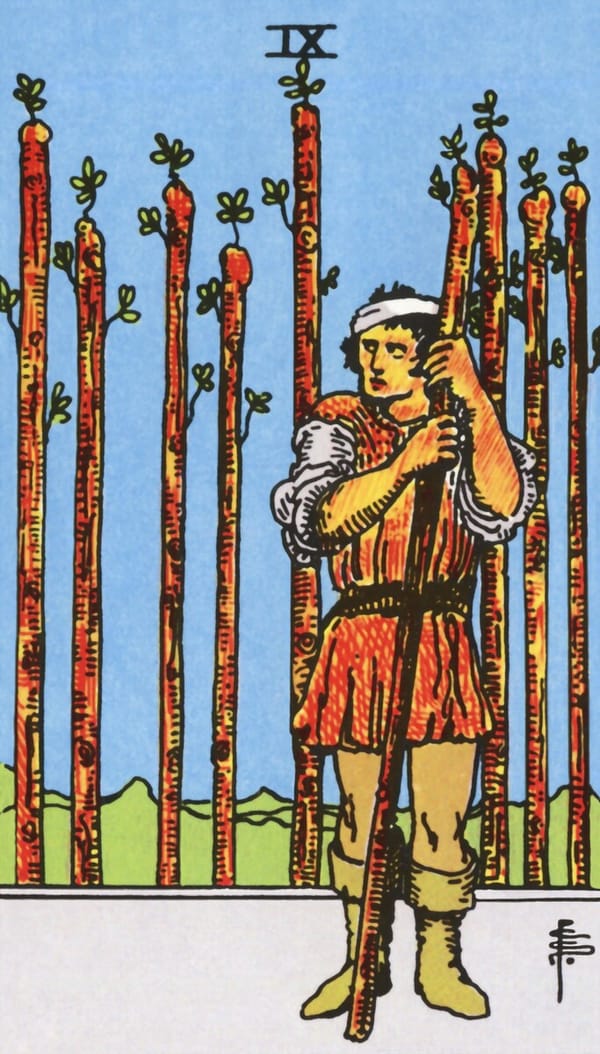
A man stands in front of eight tall wands planted upright behind him like a fence or palisade. He clutches a ninth wand in both hands, holding it against his body. A white bandage wraps around his head. His expression is wary, watchful, exhausted. He's looking over his shoulder as if expecting the next attack. Behind the row of wands, green hills roll into the distance.
Every wand behind him has small green leaves sprouting from its top. They're alive, still growing, but the man in front of them can barely stand. He's using the ninth wand as much for support as for defense.
Now reverse the card. The defender finally goes down.
If exhaustion is the real issue, tarot when burnt out shows which cards confirm you've pushed past your limit.
Waite's Pictorial Key to the Tarot from 1910 offers the original textual description, though Pamela Colman Smith's artwork carries layers of meaning that his words only begin to capture.
When Your Guard Collapses
Reversed, the bandaged man can no longer hold the ninth wand upright. His grip fails. The wand he's been clutching falls from hands too tired to grip anymore. The eight wands behind him stay standing, planted in the earth, but the one he held personally, the final defense, drops.
The Nine of Wands reversed shows up when you've been holding your ground for so long that you can't remember why you started fighting in the first place. Exhaustion has replaced determination. Your defenses have become more burden than protection.
The depleted resilience here connects to Strength reversed — both describe running out of the inner resource that kept you going.
The Burnout Warning System
Look at the bandage on his head. This man has already been wounded. He's not fresh for battle. He's been hit before and kept going. That's the Nine of Wands story, both upright and reversed. The difference is that upright, the man finds one more reserve of strength. Reversed, the reserve is empty.
Your body and mind have their own warning systems. Maybe you're working through lunch every day, saying yes to every request, or maintaining relationships that drain you completely. The bandage is already on. The wounds are already there. Reversed, your body stops covering for your stubbornness.
What this card shows is burnout approaching — you've fought too many rounds and the next one might not be in you.
Reassessing What's Worth Defending
The eight wands behind him form a barrier. They're his boundary, his territory, his line in the sand. Each one represents something he's been protecting: his job, his relationship, his reputation, his principles.
When the Nine of Wands appears reversed, it's time to audit those eight wands. Are they all worth standing in front of? Some of those wands have green leaves. They're alive and growing and worth protecting. Others might be dead wood that he planted so long ago the original purpose has been forgotten.
Are you still fighting wars that ended years ago? Are you defending principles or just habits? Sometimes the most strategic move is to let a few wands fall and focus on the ones that are still alive.
The Temptation to Abandon Everything
The flip side of reversed Nine of Wands is the urge to knock down all eight wands at once. When you're this exhausted, it's tempting to throw everything away rather than sort through what to keep and what to release.
The all-or-nothing thinking is part of the burnout pattern. Look at the card: the man can barely distinguish between the wand in his hands and the ones behind him. When you're running on empty, it's hard to tell what's worth preserving. The card warns against making major decisions from this depleted state.
Finding Rest Without Giving Up
The Nine of Wands reversed isn't telling you to tear down the fence. It's telling you to sit down in front of it for a while. The eight wands are planted. They'll stand without you gripping the ninth one. Rest isn't surrender. It's maintenance.
Let the ninth wand lean against the fence with the others. Unwrap the bandage and tend the wound underneath. Let the green hills behind the palisade remind you that there's a world beyond the boundary you've been guarding.
Sometimes dropping the guard means it's time to retreat and regroup — see The Hermit as a person for what that intentional withdrawal looks like.
Sometimes the strongest thing the bandaged man can do is admit he needs to stop. The wands will be there when he's ready to pick one up again.


