
Seven of Wands
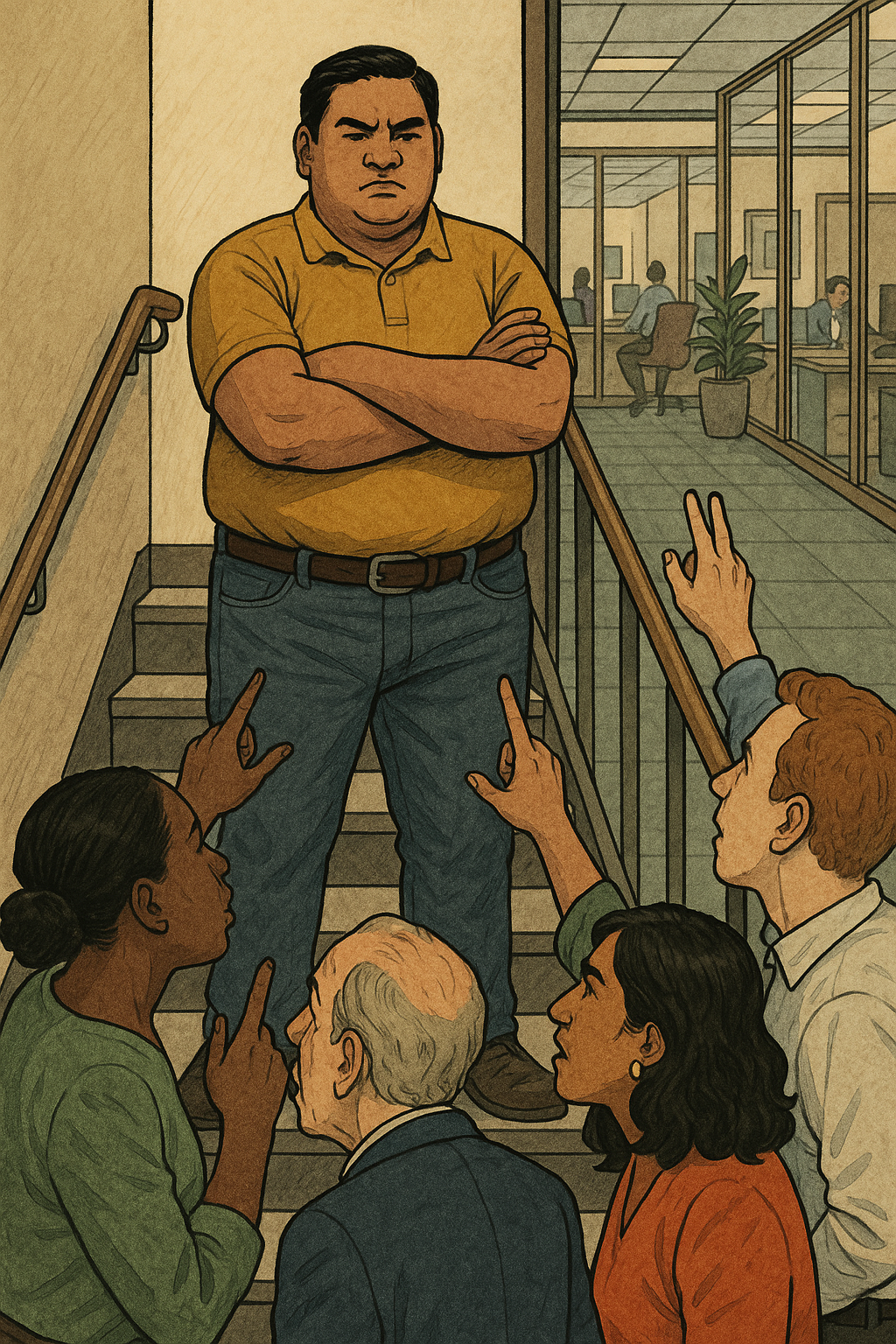
What the image shows
A heavyset man in a mustard-yellow polo shirt and jeans stands at the top of a staircase, arms crossed firmly over his chest, face set in a stern, unyielding expression. He's positioned like a wall—broad, solid, taking up the entire width of the stairs. Behind him, through glass walls, we can see what looks like a modern office space with workers at desks and a potted plant.
At the bottom of the stairs, five people crowd together, all looking up at him with hands raised in what appears to be protest, argument, or demand. They're dressed in everyday office-casual clothes—one older person in a dark suit, others in button-downs and simple tops. Their body language is urgent, pressing, insistent. Some point fingers, others gesture emphatically.
The composition puts the viewer right in the middle of a standoff. The man at the top isn't attacking or even arguing back—he's simply not moving. The staircase creates a literal hierarchy, with him holding the high ground while everyone below clamors for his attention or compliance.
The modern read
This illustration nails the Seven of Wands by making it about workplace pressure and the refusal to cave. The man isn't fighting anyone physically—he's just standing his ground while a group tries to push him off it. That's the real modern experience of this card: the moment when everyone has an opinion about what you should do, and you have to decide whether to hold your position or fold.
What deepens here is the emotional exhaustion visible in the scene. Traditional depictions show active combat, but this shows something more relatable—the quiet, stubborn resistance of someone who's tired of defending themselves but isn't ready to quit. The office setting makes it clear this isn't about glory or battle. It's about staying planted when the pressure to conform, capitulate, or just get out of the way is coming from all directions.
How it connects to the Rider-Waite-Smith
The traditional RWS Seven of Wands shows a young man on a hill or ledge, wielding a wooden staff against six wands rising from below. He's wearing mismatched shoes—one boot, one bare or differently clad foot—suggesting he was caught off guard and had to scramble to defend his position. His stance is active, almost athletic, pushing back against challengers we can't fully see.
This modern version keeps the high ground and the one-versus-many dynamic, but replaces physical combat with social pressure. The crossed arms mirror the defensive staff position, and the staircase serves the same function as the hill—an advantage that must be held. What's shifted is the nature of the fight: it's no longer about wands and physical struggle, but about willpower, boundaries, and the exhausting work of not giving in when a crowd wants something from you.
Upright meaning
Seven of Wands upright means you're under pressure and need to hold your position. You've achieved something or taken a stance, and now you have to defend it. This isn't about starting a fight—it's about not backing down from one that came to you.
At work: You proposed an idea in a meeting and now three colleagues are poking holes in it. Stand by your reasoning instead of immediately deferring to keep the peace.
In love: Your family doesn't approve of your partner or your relationship choices. You're being asked—directly or through guilt—to change course. This card says maintain your boundary.
With money: You set a budget or made a financial decision, and people around you (friends wanting expensive outings, family asking for loans) are pressuring you to break it. Don't.
In daily life: You've made a choice about how you live—your schedule, your priorities, your boundaries around time—and others keep pushing back. Keep holding the line.
Reversed meaning
Reversed, Seven of Wands points to capitulation, exhaustion, or giving up ground you shouldn't. You're either caving to pressure when you should stand firm, or you've been fighting so long you've lost sight of whether the hill is even worth it anymore.
At work: You had a strong position on a project but let a louder colleague override you, even though you knew you were right. Now you're watching it play out badly.
In love: You keep compromising on things that actually matter to you—where you live, how you spend weekends, whether you want kids—because you're tired of the argument.
With money: You said no to something, then caved when pushed. You lent money you needed, agreed to an expense you couldn't afford, or abandoned a financial plan because someone made you feel guilty.
In daily life: You're burned out from constant defending and you've stopped trying altogether. Or you're picking every single battle, exhausting yourself over things that don't warrant this much fight.