
King of Pentacles
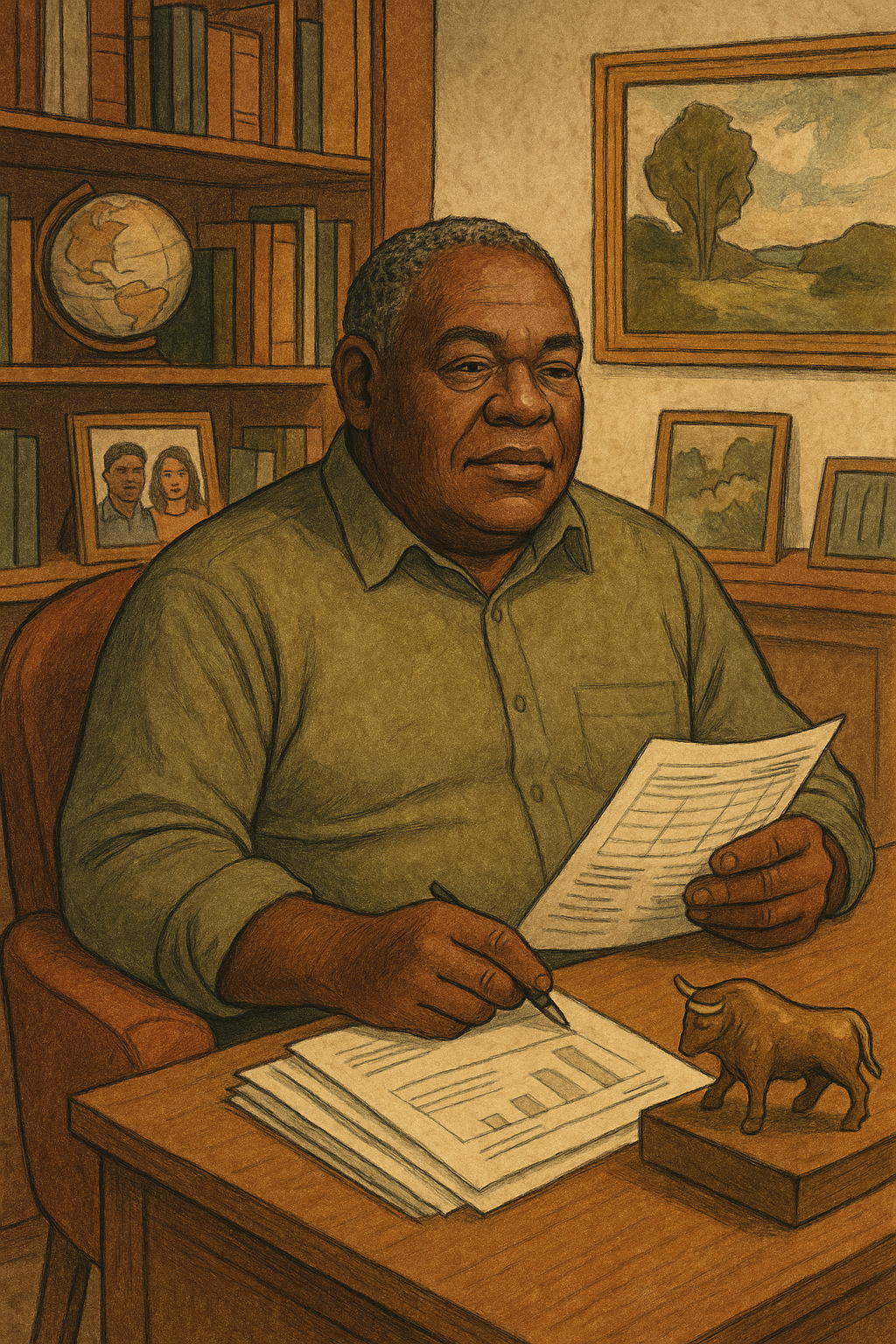
What the image shows
An older man sits at a wooden desk in what appears to be a home office or study. He wears a simple olive-green button-down shirt and holds a document in one hand while making notes with a pen in the other. His expression is calm and focused—this is someone comfortable with paperwork, with numbers, with the quiet work of managing things. A stack of documents with charts and graphs sits on the desk in front of him.
The room around him tells a story of stability and accumulated life. Behind him, a bookshelf holds a globe, rows of books, and a framed photo of what looks like family members. Landscape paintings hang on the wall. On his desk sits a small bronze bull figurine—a nod to financial markets, to strength, to patient accumulation.
Everything here is warm wood tones and earth colors. Nothing flashy, nothing ostentatious. This is wealth that doesn't need to announce itself. The details suggest someone who has built something real over time and now maintains it with steady attention.
The modern read
This illustration frames the King of Pentacles as the person who actually does the work of wealth—not the flashy entrepreneur or the risk-taking investor, but the one who reviews the statements, keeps the records, and makes sure the foundation stays solid. He's the dad who knows where every dollar goes, the business owner who still personally signs off on the big decisions, the person whose stability everyone else relies on without quite noticing it.
Placing this card in a home office rather than a throne room makes the message clear: mastery over the material world doesn't require a crown. It requires consistency, attention, and the kind of quiet competence that comes from years of doing the work. The family photo in the background reminds us that for this king, wealth isn't abstract—it's about providing, protecting, and building something that lasts beyond himself.
How it connects to the Rider-Waite-Smith
The traditional RWS King of Pentacles sits on a throne decorated with bull heads, wearing robes covered in grapes and vines—symbols of abundance and fertility. He holds a golden pentacle and a scepter, surrounded by his flourishing garden and castle. Everything screams material success achieved and maintained. He's often depicted as solid, grounded, almost part of the landscape itself.
This modern version keeps the bull (now a desk figurine), the sense of groundedness, and the comfortable wealth that doesn't need to prove itself. What shifts is the context—from royal imagery to domestic reality. Instead of ruling a kingdom, he's managing a household, a portfolio, a life. The pentacle becomes paperwork; the throne becomes a desk chair. The meaning stays the same, but now it looks like someone you might actually know.
Upright meaning
The King of Pentacles upright is about having your material life handled. You've built something solid, and now you maintain it with competence and care. This is financial stability, practical wisdom, and the ability to provide—for yourself and others.
In love, this looks like the partner who handles the mortgage, remembers to schedule the car maintenance, and makes sure there's always money in the emergency fund. They're not romantic in a dramatic way, but they're reliable in a way that matters.
At work, you're either becoming this person or need to find one. It's the boss who promotes from within, pays fairly, and runs a tight ship without drama. It's being good at your job in a way that's hard to argue with.
With money, the card says you're in a position of security—or you're being asked to build toward one. This means budgeting, investing sensibly, thinking long-term rather than chasing quick returns.
In daily life, it's the satisfaction of looking at your bank account and knowing you're okay. It's the ability to handle an unexpected expense without panic. It's competence made tangible.
Reversed meaning
Reversed, the King of Pentacles points to material stability gone wrong—either through excess or absence. The grounded king becomes stuck, stingy, or obsessed with wealth at the cost of everything else.
In relationships, this shows up as the partner who controls all the money, who measures everything in terms of cost, or who's so focused on work that the relationship starves. Alternatively, it's financial irresponsibility that puts the household at risk.
At work, it's the boss who won't spend money on anything—not raises, not equipment, not growth. Or it's you, stuck in a job purely for the paycheck while everything else in your life suffers.
With money, the reversal often points to poor decisions: spending beyond your means, refusing to invest in yourself, hoarding resources out of fear, or gambling with what you can't afford to lose.
In daily life, it's feeling like money runs your life rather than supports it. It's either the scarcity mindset that makes you miserable or the materialism that makes you hollow.