
Judgement
What the image shows
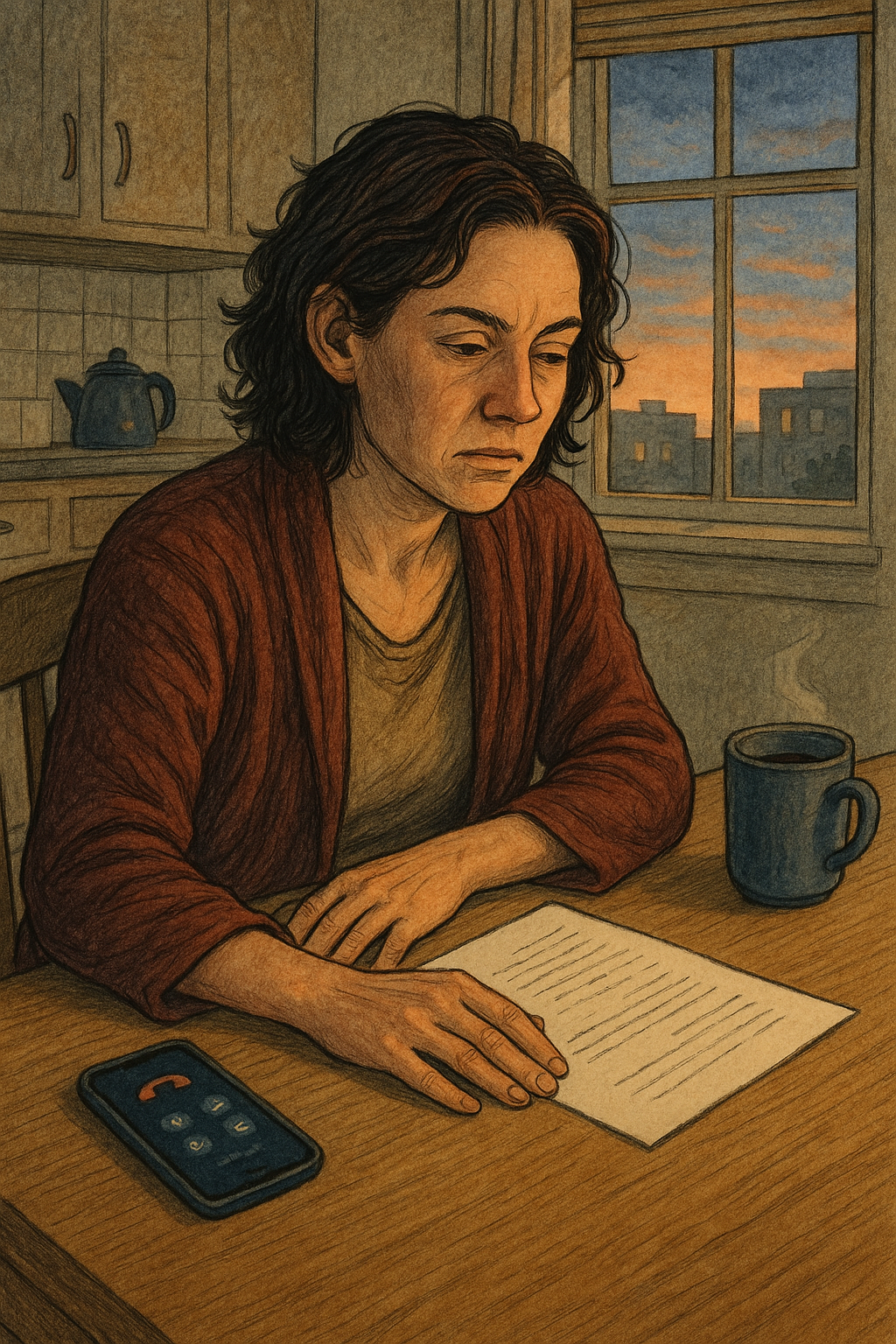
A middle-aged person sits alone at a wooden kitchen table during what appears to be either dawn or dusk—the window behind them shows a sky streaked with orange and blue, and city buildings are visible in the distance. They're wearing a rust-colored cardigan over a simple olive shirt, their dark wavy hair falling past their shoulders. Their posture is still, contemplative, focused entirely on a piece of paper in front of them.
The paper appears to be a letter or document with typed lines of text. Their hands rest on either side of it, as if they've just finished reading or are about to read it again. A blue coffee mug sits to their right, a smartphone lies face-up to their left showing what looks like a call screen with an orange phone icon. The phone feels significant—someone is calling, or could be called—but they're not reaching for it. Not yet.
The kitchen behind them is ordinary: wooden cabinets, a kettle on the counter. This is a private moment in a lived-in space. The lighting is warm but the mood is serious—this person is clearly processing something important, sitting with a decision that carries weight.
The modern read
This illustration strips Judgement down to its most human element: the moment of reckoning with yourself. There's no angel, no trumpet, no rising bodies—just one person sitting with information that demands a response. The letter could be medical results, a job offer, divorce papers, an apology from someone they'd written off, or their own unfinished draft of something they need to say. Whatever it is, it's asking them to make a call about who they are and what they're going to do next.
The ignored phone is doing a lot of work here. Judgement isn't about what other people think or what's urgent right now—it's about taking the time to truly evaluate before you act. This person isn't reacting; they're sitting with the weight of the moment, which is exactly what real judgement requires. The contemporary setting reminds us that these pivotal moments don't happen on mountaintops. They happen at kitchen tables, early in the morning, before anyone else wakes up.
How it connects to the Rider-Waite-Smith
The traditional RWS Judgement shows the angel Gabriel blowing a trumpet in the sky while naked figures rise from coffin-like boxes below, arms raised toward the heavens. It's dramatic, final, unmistakably religious in tone—the Last Judgement, the moment when souls are called to account. The image emphasizes awakening, resurrection, and answering a call that comes from outside yourself.
This modern version keeps the core concept—being called to account, facing a moment of truth—but makes it internal and personal. There's no angel, no divine summons; the call is coming from the letter, the phone, the quiet demand of the situation itself. The figure isn't rising from the dead but sitting very much alive with the consequences of their past and the weight of their next move. What carries over is the sense of significance, the feeling that this moment matters. What shifts is the source: the judgement here is self-directed, the reckoning is private, and the trumpet is just a smartphone they haven't answered yet.
Upright meaning
Judgement upright is about honest self-assessment and being ready to act on what you find. It's the moment when you look clearly at your past—your choices, your patterns, your impact—and decide what comes next. This isn't about guilt or punishment; it's about clarity and the willingness to make a change based on what you now understand.
In love: You realize a relationship has run its course and it's time to have the conversation you've been avoiding. Or you finally see that you've been repeating the same pattern with different partners and you're ready to break it.
At work: You get feedback—a performance review, a passed-over promotion, a project that flopped—and instead of getting defensive, you honestly assess what's yours to own and what to do differently.
With money: You look at your actual financial situation instead of the story you tell yourself about it. You pull up the accounts, face the debt, and make a plan based on real numbers.
In daily life: You get a health scare that makes you reconsider how you've been living. Or a call from an estranged family member forces you to decide what kind of relationship you want going forward.
Reversed meaning
Reversed, Judgement points to avoidance, self-deception, or refusing the call. You know something needs to change but you won't look at it directly. You might be drowning in guilt without taking action, or dismissing feedback that's actually accurate because it's uncomfortable to hear.
In love: You know the relationship isn't working but you keep telling yourself it'll get better on its own. Or you refuse to acknowledge your part in why things keep going wrong.
At work: You ignore warning signs—missed deadlines, frustrated colleagues, a job that's clearly not the right fit—because admitting it would mean making a hard decision.
With money: You avoid opening the bills, checking your balance, or facing how much you actually owe. The problem compounds because you won't look at it.
In daily life: You keep hitting snooze on the wake-up calls life sends you. Doctor's appointments get rescheduled, important conversations get postponed, and the thing you know you need to address keeps getting pushed to "later."