
Eight of Cups
What the image shows
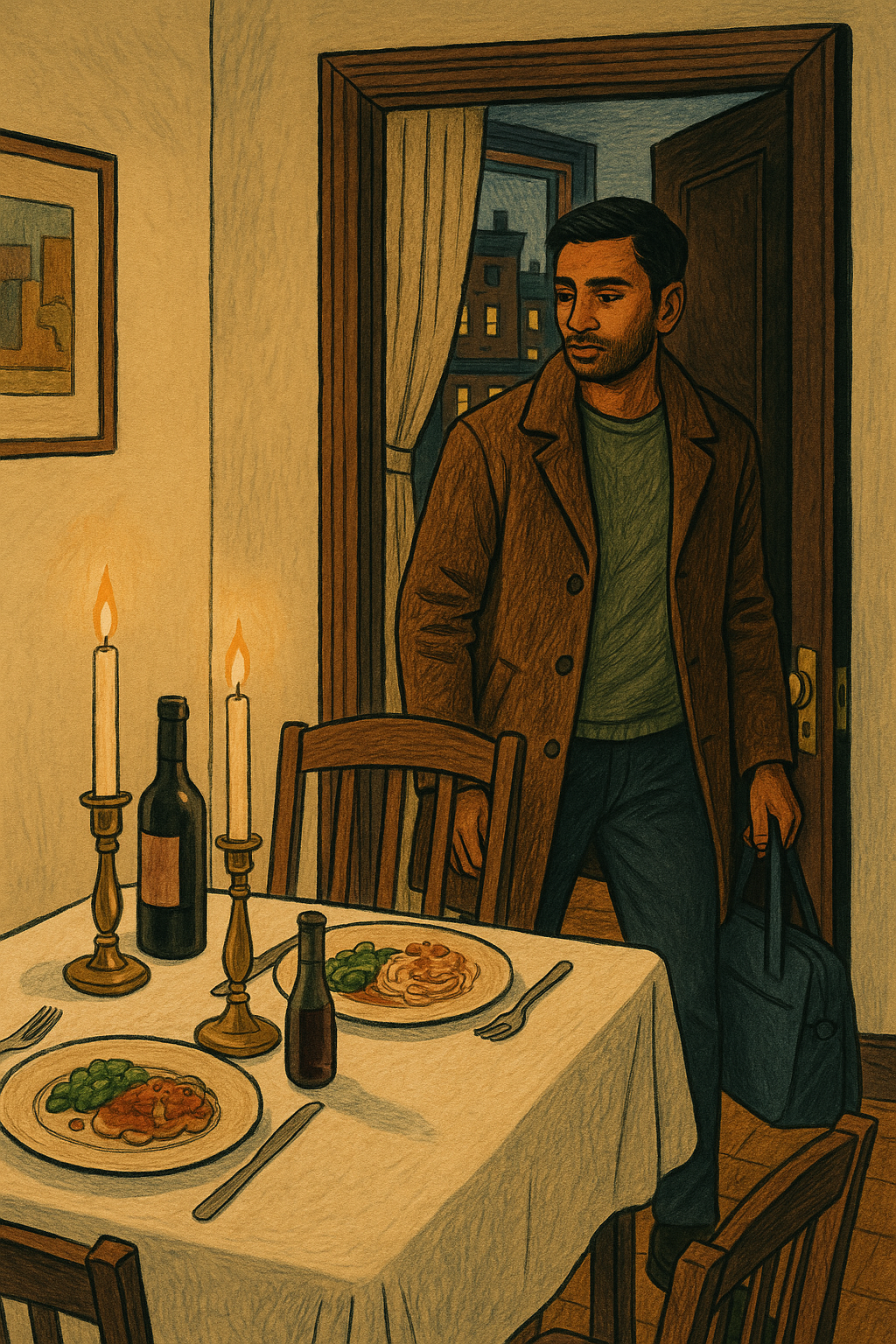
A man in a brown coat stands in a doorway, one hand still on the door handle, a bag slung over his shoulder. He's clearly just arrived home—or perhaps he's about to leave. His expression is complicated: not happy, not devastated, but something quieter. Resigned, maybe. Like he's looking at something he already knows he has to walk away from.
The table in front of him is set for two. Lit candles, wine bottles, plates of pasta with what looks like Brussels sprouts on the side. Someone prepared this meal with care. Someone was expecting a dinner together, maybe a romantic evening. Through the doorway behind him, you can see a window with city buildings outside, curtains pulled back. It's nighttime.
The scene is heavy with what's not there: the other person. Either they've already left, or he's the one leaving. The meal sits untouched, the candles still burning. Everything is ready for something that isn't going to happen.
The modern read
This illustration nails the particular ache of the Eight of Cups—leaving something that isn't broken, exactly, but isn't enough. The romantic dinner setup makes it visceral. This isn't a dramatic blowup or a clear-cut betrayal. It's the slow realization that you can't keep showing up to this table and pretending it feeds you.
Placing the card in an apartment, with a real meal going cold, strips away any abstraction. This is about actual evenings spent together, actual efforts made, actual disappointment. The man isn't angry. He's just done. The modern setting reminds us that walking away rarely looks like a grand exit—it often looks like standing in a doorway with your coat on, knowing you're not going to sit down this time.
How it connects to the Rider-Waite-Smith
The traditional RWS Eight of Cups shows a cloaked figure walking away from eight stacked cups, heading toward distant mountains under a moon. The cups are upright—nothing is spilled or broken—but the figure turns their back on them anyway. The moonlight suggests this departure happens in emotional darkness, guided by instinct rather than logic.
This modern version keeps the core gesture: someone turning away from something carefully arranged and seemingly fine. The eight cups become the dinner setting—wine, candles, two place settings. The mountains become the city outside the window, another life waiting. What shifts is the intimacy. The RWS figure is solitary, anonymous. Here, we see the coat, the bag, the specific meal. It's personal. The departure costs something specific.
Upright meaning
The Eight of Cups upright is about leaving. Not because something exploded, but because staying would cost you more than going. It's the decision to stop investing in something that doesn't return what you need, even when it looks fine from the outside.
In love: Ending a relationship that's comfortable but empty. You're not fighting—you're just done pretending this is enough. It might mean moving out of a shared apartment even though nothing "bad" happened.
At work: Quitting a stable job because you've hit a ceiling and you know it. Turning down a promotion because the role would trap you in something you've outgrown.
With money: Walking away from a business partnership that's profitable but draining. Deciding not to chase a deal that would pay well but compromise something you care about.
In daily life: Letting a friendship fade because the dynamic no longer works. Stopping a habit or routine that used to serve you but now just takes up time. Moving cities, even when your current life is "fine."
Reversed meaning
Reversed, the Eight of Cups points to stuckness. You know you should leave, but you don't. Maybe you're scared, maybe you're hoping things will change, maybe you're just exhausted by the idea of starting over. The departure that needs to happen keeps getting postponed.
In love: Staying in a dead relationship because breaking up feels too hard. Telling yourself "it's not that bad" when you know it's not good either. Going back to an ex you already left once.
At work: Refusing to quit a job you hate because you're afraid of the gap on your resume. Staying in a toxic team because you've "already put in so many years."
With money: Holding onto an investment that's clearly not going anywhere because selling feels like admitting failure. Keeping a side hustle going long past the point where it made sense.
In daily life: Returning to situations you've already outgrown. Avoiding necessary endings because the known discomfort feels safer than unknown possibility.